
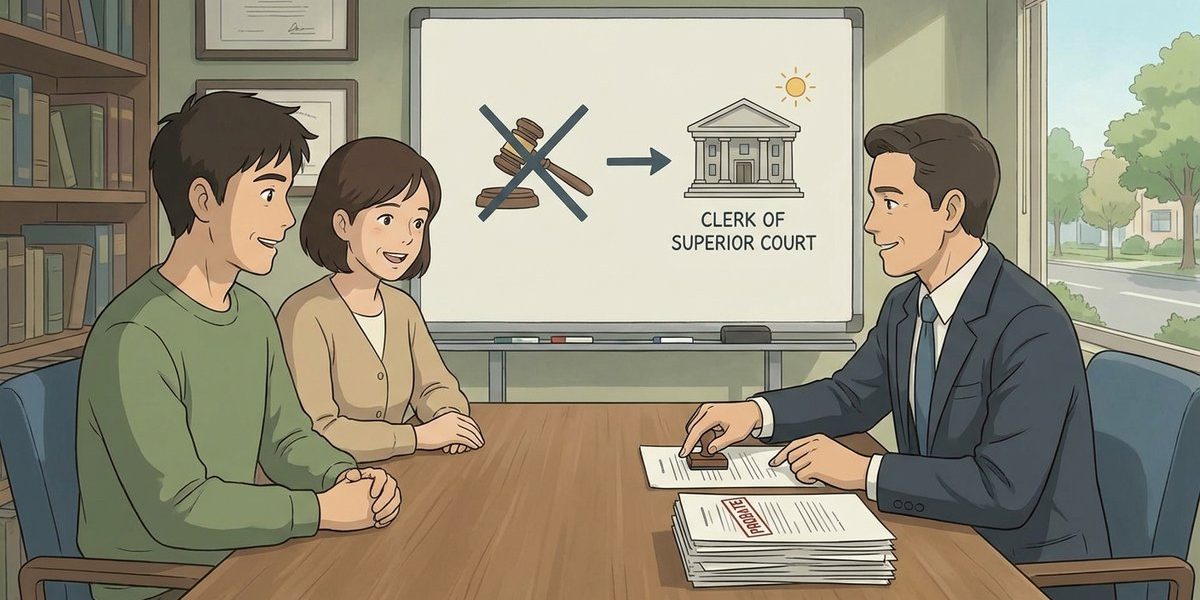
What happens after a probate hearing is dismissed in a small estate case? – NC
Short Answer
In North Carolina, a dismissed hearing in a small estate case often means the clerk no longer needs to hold that hearing because the required filing or procedural step has been completed. The matter usually stays with the Clerk of Superior Court for review of the affidavit, supporting papers, and any final approval needed to move the estate forward. If the clerk approves the filing, the small estate process continues without that hearing; if something is still missing, the clerk may require corrections or a different probate procedure.
Understanding the Problem
In a North Carolina small estate matter, the main question is what the Clerk of Superior Court does next after a scheduled probate hearing is dismissed and the file is left pending review. The issue is not whether the estate is over, but whether the clerk can finish reviewing the small estate paperwork and enter the next order or approval without another hearing. The answer depends on whether the required affidavit procedure was properly completed and whether the estate still qualifies for small estate handling.
Apply the Law
North Carolina allows certain estates to use a small estate procedure called collection by affidavit instead of full estate administration. In general, the affidavit may be used only after at least 30 days have passed since death, and only if the decedent’s personal property falls within the statutory value limits. The Clerk of Superior Court in the county where the decedent was domiciled reviews the filing, decides estate matters, and may enter an order or require further action if the paperwork is incomplete or the estate no longer fits the small estate rules.
Key Requirements
- Waiting period and filing: The affiant must wait at least 30 days after death before filing the small estate affidavit with the Clerk of Superior Court.
- Value limits and property type: The procedure applies to personal property only, subject to statutory dollar limits, and it does not by itself authorize the sale of real estate.
- Complete follow-through: After collecting the property, the affiant must later file a final affidavit showing what was collected and how it was disbursed or distributed, generally within 90 days after filing the qualifying affidavit unless the clerk grants an extension of up to one year.
What the Statutes Say
- N.C. Gen. Stat. § 28A-25-1 (Collection of Property by Affidavit) – sets out when a small estate may be handled by affidavit and the basic eligibility rules.
- N.C. Gen. Stat. § 28A-25-3 (Duties and Final Affidavit) – requires the affiant to account for collected property and file the closing affidavit.
- N.C. Gen. Stat. § 28A-25-5 (Appointment of Personal Representative) – allows a shift from small estate handling to formal administration if needed.
- N.C. Gen. Stat. § 1-301.3 (Clerk Decides Estate Matters; Appeal) – confirms that the clerk decides estate issues and sets the appeal deadline for an aggrieved party.
Analysis
Apply the Rule to the Facts: Here, the hearing was dismissed after the required steps were completed, and the estate is now pending review and approval. Under North Carolina practice, that usually means the clerk no longer needs live testimony or argument on that setting and can return to reviewing the affidavit, supporting documents, and any proposed order in the file. If the estate still falls within the small estate limits and the paperwork is complete, the next event is usually clerk review and approval rather than another contested hearing.
A second point matters in small estate cases: the affidavit procedure is limited and does not replace full probate in every situation. If later review shows that additional personal property pushes the estate over the limit, or that real estate action is needed to pay debts or complete administration, the clerk may require appointment of a personal representative instead of finishing the matter as a small estate.
Process & Timing
- Who files: The affiant, such as a qualified heir, devisee, named executor, or creditor. Where: The office of the Clerk of Superior Court in the North Carolina county where the decedent was domiciled. What: The small estate affidavit and any follow-up forms the clerk requires, often including the final affidavit after collection and distribution are completed. When: The initial affidavit cannot be filed until at least 30 days after death, and the final affidavit is generally due within 90 days after filing the qualifying affidavit, subject to any extension the clerk allows.
- After the hearing is dismissed, the clerk reviews the file for completeness, eligibility, and compliance. If the papers are in order, the clerk may approve the matter without resetting the hearing. If something is missing, the clerk may issue a notice, request corrections, or direct the estate into a different procedure.
- The final step is usually entry of the clerk’s approval, acceptance of the final affidavit, or another estate order showing what action was taken. If a party is aggrieved by an order the clerk enters, that party generally must file written notice of appeal within 10 days of service of the order.
Exceptions & Pitfalls
- If the estate includes personal property above the small estate limit, the small estate process may stop and formal estate administration may be required.
- A dismissed hearing does not always mean the estate is approved. It may only mean the hearing is no longer needed while the clerk finishes review. Checking the file status and any entered order matters.
- Real estate creates a common problem. A small estate affidavit does not by itself give authority to sell real property, so a separate probate step may be needed.
- Failure to file the final affidavit or to explain how property was distributed can delay closure.
- If the clerk enters an order and a party wants review, missing the 10-day appeal deadline can forfeit that challenge.
For a broader look at whether a hearing is even necessary in this setting, see move forward without going to a hearing. It may also help to compare how the clerk signals completion in approved everything in a small estate matter.
Conclusion
After a probate hearing is dismissed in a North Carolina small estate case, the matter usually returns to the Clerk of Superior Court for paper review rather than ending outright. If the affidavit procedure was properly completed, the estate still meets the small estate limits, and no further issue blocks approval, the clerk can approve the filing and let the matter continue. The next step is to file any remaining affidavit or correction with the clerk promptly, and any appeal from a clerk order must usually be filed within 10 days of service.
Talk to a Probate Attorney
If a small estate matter is pending after a dismissed hearing, it helps to confirm whether the clerk still needs a form, correction, or final affidavit before approval. Our firm has experienced attorneys who can help explain the next probate step and the deadlines that may control the case. Call us today at 919-341-7055.
Disclaimer: This article provides general information about North Carolina law based on the single question stated above. It is not legal advice for your specific situation and does not create an attorney-client relationship. Laws, procedures, and local practice can change and may vary by county. If you have a deadline, act promptly and speak with a licensed North Carolina attorney.

