
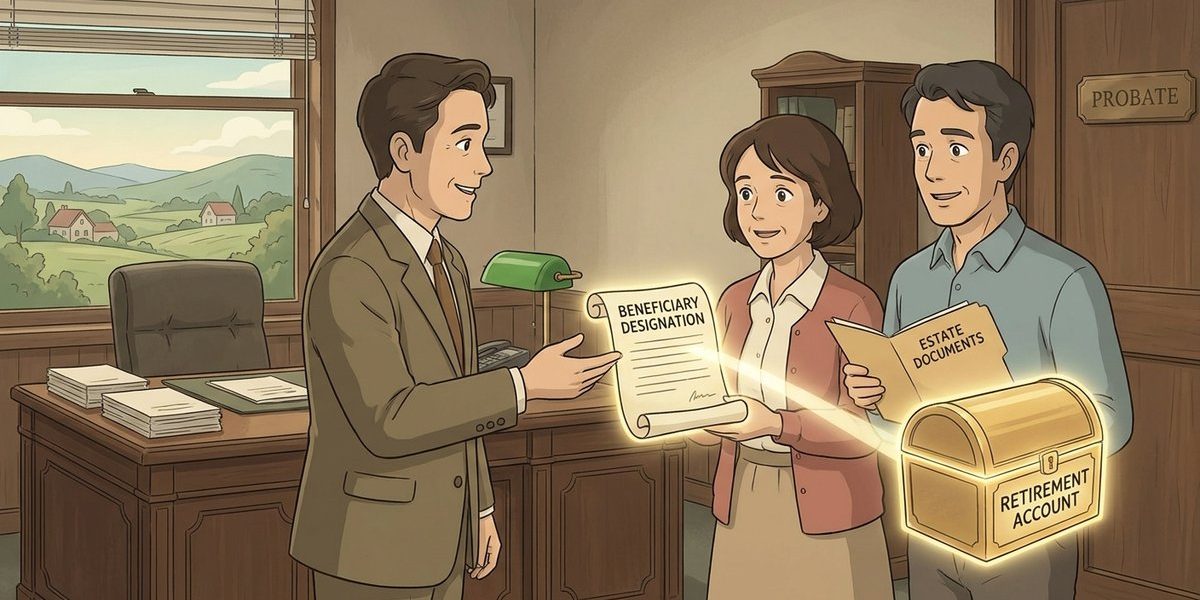
Does a retirement account have to go through probate after someone dies? – NC
Short Answer
Usually, no. In North Carolina, a retirement account such as an IRA or 401(k) usually passes directly to the named beneficiary and does not become part of the probate estate. It may need probate only if there is no valid living beneficiary, the estate is named as beneficiary, or the account contract requires payment to the estate under its default rules.
Understanding the Problem
In North Carolina probate, the main question is whether a retirement account belongs to the estate that the personal representative handles, or whether it passes outside the estate to a named beneficiary at death. That decision usually turns on the beneficiary designation on file with the plan or account custodian and whether a living beneficiary can claim the account when the owner dies. If the account passes outside probate, the Clerk of Superior Court and the estate file may still need to note it for administration purposes, but the account itself is not collected and distributed as a probate asset.
Apply the Law
North Carolina law treats many death benefits as transfers that can pass by contract rather than by will or intestacy. For a retirement account, the first place to look is the beneficiary designation kept by the plan administrator or custodian. If a valid beneficiary is alive, that person usually claims the account directly from the financial institution. If no beneficiary survives, if the designation failed, or if the estate is the named beneficiary, the account may become an estate asset and then the personal representative must handle it through the estate proceeding before the Clerk of Superior Court. When an estate lacks enough assets to pay valid claims, North Carolina law can also allow recovery from certain nonprobate transfers in limited situations, which means “outside probate” does not always mean “untouchable for every estate purpose.”
Key Requirements
- Valid beneficiary designation: The account agreement or plan records control first. A named, living beneficiary usually receives the account directly.
- Estate status if no beneficiary: If no valid beneficiary can take, or the estate is named, the retirement account is generally handled by the personal representative as an estate asset.
- Proper estate appointment: Only a duly appointed personal representative has authority to collect an account payable to the estate, and any change in who serves is handled through the estate file before the Clerk of Superior Court.
What the Statutes Say
- N.C. Gen. Stat. § 28A-15-10 (Liability of nonprobate transfers for debts and claims) – allows recovery from certain nonprobate transfers when estate assets are not enough to pay valid claims.
- N.C. Gen. Stat. § 28A-15-12 (Procedure to recover assets for claims) – explains how a personal representative may seek recovery when nonprobate assets must contribute to estate obligations.
- N.C. Gen. Stat. § 29-14 (Intestate share of surviving spouse) – matters only if the retirement account becomes part of the estate and distribution then follows intestacy rules.
- N.C. Gen. Stat. § 31A-1 (Effect of divorce on certain rights) – divorce can affect whether a former spouse has rights at death, depending on the asset and governing documents.
Analysis
Apply the Rule to the Facts: The known asset here is a retirement account, so the first issue is whether the account has a valid beneficiary designation on file. If the adult child is the named beneficiary, the account will usually pass directly to that child and stay outside probate. If the former spouse is still listed, the result may depend on the account documents, applicable federal law, and the effect of North Carolina law on divorce-related rights, so the plan records and divorce history need review before assuming the estate controls the funds. If no beneficiary survives or the estate is named, then the account likely becomes a probate asset.
The fact that there may be no real estate does not change the basic rule. Probate is driven by how each asset is titled or designated at death, not by whether the estate owns land. The possible receipt of facility-related public benefits matters because even a nonprobate transfer can become relevant if the estate does not have enough assets to address valid claims or recovery rights. That is one reason personal representatives are usually cautioned not to make early distributions before the estate picture is clear.
The request for the current executor to step aside and have a nephew appointed instead is a separate estate administration issue. If the retirement account is payable to the estate, only the person currently holding letters from the Clerk of Superior Court has authority to request information or collect the funds for the estate. If the current appointee wants to resign or renounce and another relative is to serve, that change should be handled in the estate file first so the correct fiduciary can act with the account custodian.
Process & Timing
- Who files: the named beneficiary, if the account passes outside probate; or the personal representative, if the estate is the beneficiary or no beneficiary can take. Where: with the retirement plan administrator or account custodian, and if estate authority is needed, with the Clerk of Superior Court in the county where the estate is administered. What: beneficiary claim forms from the custodian, plus estate qualification or substitution papers if a new personal representative must be appointed. When: as soon as the death certificate and account records are available; estate deadlines and creditor periods can affect when distributions should safely occur.
- Next, the custodian reviews the beneficiary designation and its default payout rules. If the file is unclear, the custodian may require additional proof, and the Clerk may need to issue updated letters before an estate representative can act.
- Final step: the custodian either pays the beneficiary directly or pays the estate. If paid to the estate, the funds are reported in the estate administration and distributed only after the proper claims and estate procedures are addressed.
Exceptions & Pitfalls
- A former spouse listed as beneficiary can create a dispute. Divorce may affect rights, but the answer can depend on the governing plan documents, applicable federal law, and the type of account.
- A missing, outdated, or failed beneficiary designation can push the account into the estate even when the family assumed it would avoid probate.
- Even when an account passes outside probate, the personal representative may still need to evaluate whether nonprobate assets are reachable if estate assets are insufficient for valid claims, notice obligations, or recovery issues.
Conclusion
In North Carolina, a retirement account usually does not go through probate if a valid living beneficiary is named with the account custodian. It may become a probate asset if no beneficiary can take or if the estate is the named beneficiary. The key next step is to obtain the beneficiary designation from the plan administrator and, if the estate must receive the account, have the proper personal representative file for authority with the Clerk of Superior Court before requesting payment.
Talk to a Probate Attorney
If a retirement account may be the main asset in an estate, and there are questions about beneficiary status, a former spouse, or changing who serves as personal representative, our firm has experienced attorneys who can help explain the probate process, authority issues, and timing. Call us today at 919-341-7055. For more on related issues, see if the retirement account is not payable to a beneficiary and retirement account records are properly noted in the probate process.
Disclaimer: This article provides general information about North Carolina law based on the single question stated above. It is not legal advice for your specific situation and does not create an attorney-client relationship. Laws, procedures, and local practice can change and may vary by county. If you have a deadline, act promptly and speak with a licensed North Carolina attorney.

