
Can I keep living in a home I moved into with a relative’s permission if that relative has lifetime living rights under a will? – NC
Short Answer
Usually not as a permanent matter unless the life tenant still has the legal right to possess the home and the other ownership interests are respected. In North Carolina, a person with lifetime living rights under a will generally controls possession during that life estate, so that person may allow someone else to occupy the home while the life estate continues. But the remaindermen still own the future interest, a sale may require their participation, and a power of attorney only works if it actually grants authority over real property.
Understanding the Problem
In North Carolina probate matters, the single issue is whether a person who moved into a house with the permission of a relative holding lifetime living rights under a will can remain there when the house was also left to other family members after that relative’s death. The answer turns on who currently has the right to possess the property, whether that lifetime right is still active, and what authority the co-owners or an agent under a power of attorney have to act about the home.
Apply the Law
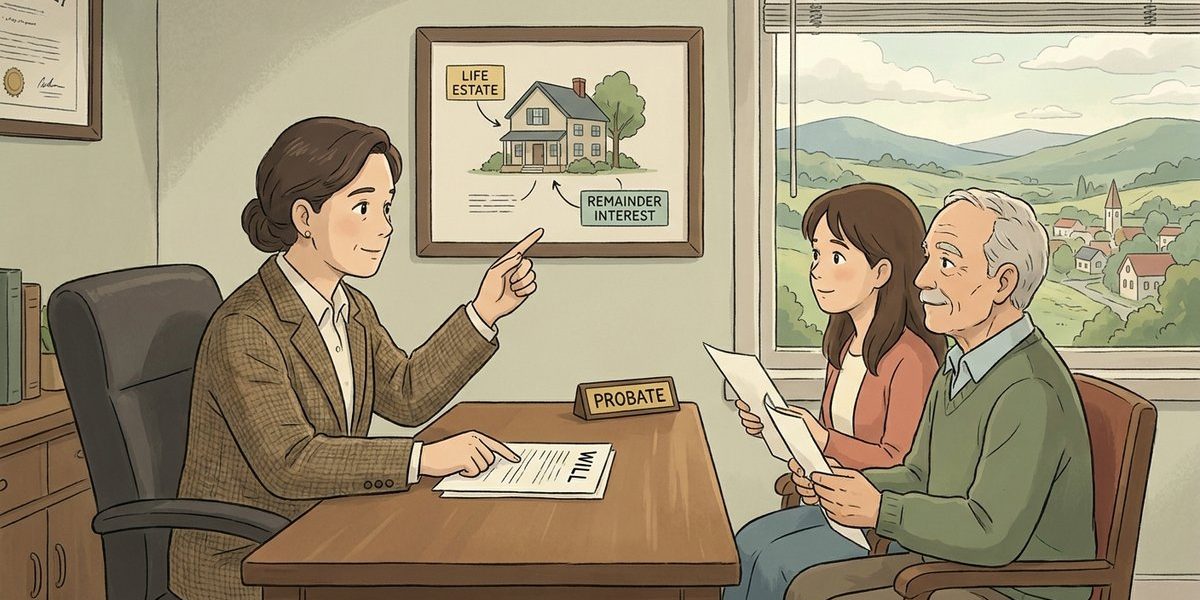
Under North Carolina law, a will can divide ownership of a home into a present right to possess the property for life and a future ownership interest that takes full possession later. Once the will is probated, title passes under the will, and the person holding the life estate generally has the present right to occupy and control day-to-day possession of the home during life. The children or other devisees who hold the remainder interest cannot simply ignore that possessory right, but they may still seek a partition sale of their remainder interests, and that sale cannot interfere with the life tenant’s possession unless the life tenant joins in a sale of the whole property. If an agent is acting under a power of attorney, the document must actually grant authority over real property, and any real-property transfer signed by the agent should comply with North Carolina recording requirements for powers of attorney.
Key Requirements
- Current possessory right: The life tenant usually controls who may occupy the home while the life estate remains in effect.
- Separate ownership interests: The remaindermen own the future interest, so a long-term solution usually requires agreement among all affected owners if the family wants to sell or restructure rights.
- Valid agent authority: A sibling acting under power of attorney can only act within the powers actually granted by the document, especially for real estate decisions.
What the Statutes Say
- N.C. Gen. Stat. § 31-39 (Probate necessary to pass title) – a probated will is effective to pass title to real property.
- N.C. Gen. Stat. § 46A-79 (Partition sale of remainder or reversionary interest) – a life estate does not block partition of the remainder interest, but the sale cannot interfere with the life tenant’s possession.
- N.C. Gen. Stat. § 46A-78 (Partition sale of property subject to a life estate) – if the life tenant joins in a partition sale, the court values the life estate and pays that share from the proceeds.
- N.C. Gen. Stat. § 47-28 (Powers of attorney affecting real property) – a power of attorney used for a real-property transfer should be recorded in the proper register of deeds office, although failure to do so does not by itself invalidate the conveyance.
Analysis
Apply the Rule to the Facts: Here, the will appears to give one relative a life estate and the three children the remainder interest. That means the relative with lifetime living rights likely had the present right to possess the home and could likely permit one child to live there while that right remained active. But that permission does not usually give the occupant a separate ownership right against the remaindermen, and it becomes much weaker if the life tenant has surrendered possession, permanently moved out, or joins in a sale.
The fact that the life tenant is in a care facility and says they do not want to return matters because it raises a practical question about whether the life estate is still being exercised, not whether it automatically vanished. In many cases, moving to a facility does not by itself end a life estate. Still, if the family wants to sell the entire property now, the cleanest path is usually consent from both the life tenant and all remainder owners, rather than relying only on the occupant’s permission to stay.
If one co-owner wants to be bought out, that does not automatically remove the occupant. The co-owner may negotiate a buyout, or may pursue a partition remedy concerning the remainder interest. As sell a house when one co-owner died and the heirs can’t agree on the sale details explains in a related context, disagreement among heirs often shifts the issue from family permission to formal title and partition rules.
Process & Timing
- Who files: a co-owner of the remainder interest, or all interested owners together if they agree. Where: the Clerk of Superior Court or Superior Court in the North Carolina county where the real property is located, depending on the proceeding. What: the probated will should already be in the estate file, and a partition proceeding may be needed if the owners cannot agree on sale or division. When: there is no single short deadline for a partition claim, but action should happen promptly once a co-owner demands a buyout or sale.
- If the family wants a voluntary sale of the whole property, the parties usually confirm title, review the will language creating the life estate, and determine whether the life tenant will join. If an agent will sign for the life tenant, the power of attorney must grant real-property authority, and the document or certified copy should be recorded with the register of deeds in compliance with North Carolina law.
- If the owners do not agree, the court may address partition of the remainder interest, but the life tenant’s present possessory rights remain protected unless the life tenant is also part of a sale that affects the whole property. If the property is sold with the life tenant’s participation, the court may allocate a value to the life estate from the proceeds.
Exceptions & Pitfalls
- A life tenant’s permission to occupy the home is not the same as a deeded ownership interest, so the occupant may not be able to stay if the life estate ends or the property is sold with proper authority.
- A statement that the life tenant does not plan to return does not automatically mean the life estate ended; the exact will language and later conduct matter.
- A sibling’s power of attorney does not create ownership and does not allow actions beyond the document’s terms. A health care power of attorney is not enough for real-estate control, and even a financial power of attorney must cover real property.
- Families often overlook that the remainder owners may sell or partition their future interests without immediately displacing the life tenant, which can complicate any informal living arrangement. For a related discussion, see forcing a sale through a partition action.
- If the estate is still within the administration period, title, creditor issues, and the personal representative’s role may also affect timing and paperwork.
Conclusion
In North Carolina, a person who moved into a home with the life tenant’s permission may usually remain only while that life tenant still holds the present right to possess the property and no court order or valid sale changes that arrangement. The occupant does not gain a separate ownership right just from permission. The key next step is to review the will and any power of attorney, then confirm whether all owners and the life tenant must join in a sale or buyout before any transfer is filed with the county register of deeds.
Talk to a Probate Attorney
If a family is dealing with a house subject to a life estate, co-owner disagreement, or questions about whether an occupant can stay, our firm has experienced attorneys who can help explain the title issues, sale options, and timing. Call us today at 919-341-7055.
Disclaimer: This article provides general information about North Carolina law based on the single question stated above. It is not legal advice for your specific situation and does not create an attorney-client relationship. Laws, procedures, and local practice can change and may vary by county. If you have a deadline, act promptly and speak with a licensed North Carolina attorney.

