
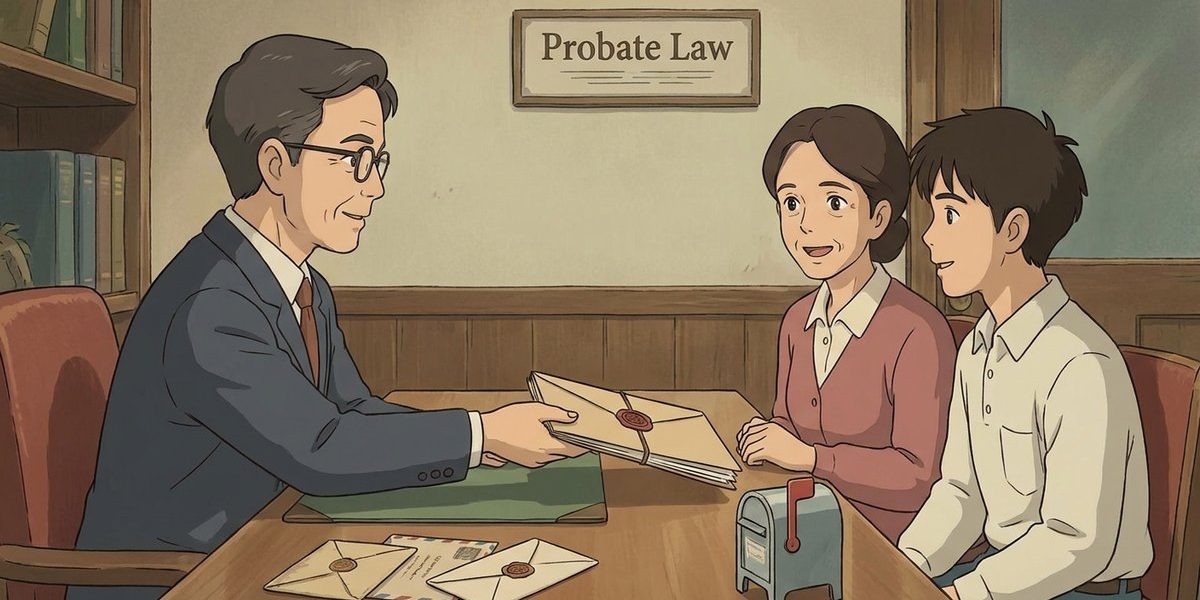
How can I prove that I have authority to forward a deceased relative’s mail? – NC
Short Answer
In North Carolina, the usual way to prove authority to forward a deceased relative’s mail is to show that the clerk of superior court has appointed a personal representative for the estate and issued court letters. Those letters are usually called Letters Testamentary if there is a will or Letters of Administration if there is not. A death certificate may also be requested, but the key document is the court-issued proof that the person handling the estate has legal authority to act.
Understanding the Problem
In North Carolina probate matters, the main question is whether the person asking the post office to forward a deceased relative’s mail has legal authority to act for the estate. The decision point is usually simple: has the clerk of superior court appointed that person to serve as the estate’s personal representative, and is there current court paperwork proving that authority. This issue often comes up early, because mail can contain bills, account notices, and other estate information that must be gathered promptly.
Apply the Law
Under North Carolina law, authority to act for a deceased person’s estate usually comes from the estate proceeding before the clerk of superior court. The person with that authority is the personal representative, meaning the executor named in a will or the administrator appointed when there is no will. In practice, third parties often want certified or sealed court letters because those letters show that the appointment is official and current. If a smaller estate qualifies for a simplified procedure, a filed small estate affidavit or a summary administration order may also serve as proof in some settings.
Key Requirements
- Court appointment: The person seeking mail access usually must be formally appointed through the estate file in the county where the decedent’s estate is being handled.
- Proof of authority: The usual proof is certified or sealed Letters Testamentary or Letters of Administration issued by the clerk of superior court.
- Supporting records: A certified death certificate and matching identity information may also be required so the post office can confirm the death and the representative’s connection to the estate.
What the Statutes Say
- N.C. Gen. Stat. § 36F-7 (Disclosure of content of electronic communications of deceased user) – addresses proof of authority for a personal representative seeking disclosure from a custodian of a deceased user’s electronic communications, not mail forwarding through the post office.
- N.C. Gen. Stat. § 36F-8 (Disclosure of other digital assets of deceased user) – similarly addresses digital assets and custodians, not postal mail forwarding.
- N.C. Gen. Stat. § 7A-241 – provides that probate and administration of decedents’ estates are within the superior court division and exercised by the clerks of superior court as judges of probate, which supports the statement that estate authority is established through the clerk’s appointment process.
Analysis
Apply the Rule to the Facts: Here, [INDIVIDUAL] is involved in the will and estate matters, but involvement alone does not usually prove legal authority to the post office. The stronger proof is a court-issued document showing that [INDIVIDUAL] has been appointed as the personal representative for [DECEDENT]’s estate. If that appointment has already happened, certified or sealed letters from the estate file are usually the most direct way to show authority to forward the mail.
If no appointment has been made yet, the post office may refuse the request until the estate paperwork is in place. That is consistent with common probate practice, because third parties usually rely on the clerk’s letters rather than a family relationship, a copy of the will by itself, or a power of attorney that generally ends at death. For a related discussion of court appointment documents, see what documents show that I’m the legally appointed personal representative or executor.
Process & Timing
- Who files: the person seeking authority to handle the estate. Where: the Estates Division before the Clerk of Superior Court in the North Carolina county handling the estate. What: the probate application and estate opening documents needed for appointment, followed by a request for certified or sealed Letters Testamentary or Letters of Administration. When: as soon as practical after death, especially if important bills, account statements, or legal notices may arrive by mail.
- After the clerk reviews the filing and qualifies the personal representative, the clerk issues the estate letters. The representative can then present those letters, along with a certified death certificate if requested, to the post office or other institutions. Local office practices can vary by county and by the agency receiving the documents.
- The final step is to obtain mail forwarding or other mail access based on the court appointment. The representative should keep extra certified copies because banks, account custodians, and other institutions may ask for the same proof. For more on getting those court letters, see how do I get sealed estate letters from the court.
Exceptions & Pitfalls
- A will alone usually does not prove current authority. The will normally must be admitted through the clerk, and the clerk must issue letters.
- A power of attorney usually does not solve the problem after death, because that authority generally ends when the principal dies.
- Using the wrong document can cause delays. Many institutions want certified or sealed copies, not plain photocopies, and names and addresses should match the decedent’s records closely.
Conclusion
In North Carolina, the usual way to prove authority to forward a deceased relative’s mail is to show court-issued Letters Testamentary or Letters of Administration from the clerk of superior court, often with a certified death certificate. The key threshold is formal appointment as the estate’s personal representative. The most important next step is to open the estate and request certified or sealed letters from the clerk handling the estate as soon as practical.
Talk to a Probate Attorney
If a deceased relative’s mail is being held up because the post office wants proof of estate authority, our firm has experienced attorneys who can help explain the probate process, the right court documents, and the next steps. Call us today at 919-341-7055.
Disclaimer: This article provides general information about North Carolina law based on the single question stated above. It is not legal advice for your specific situation and does not create an attorney-client relationship. Laws, procedures, and local practice can change and may vary by county. If you have a deadline, act promptly and speak with a licensed North Carolina attorney.

