
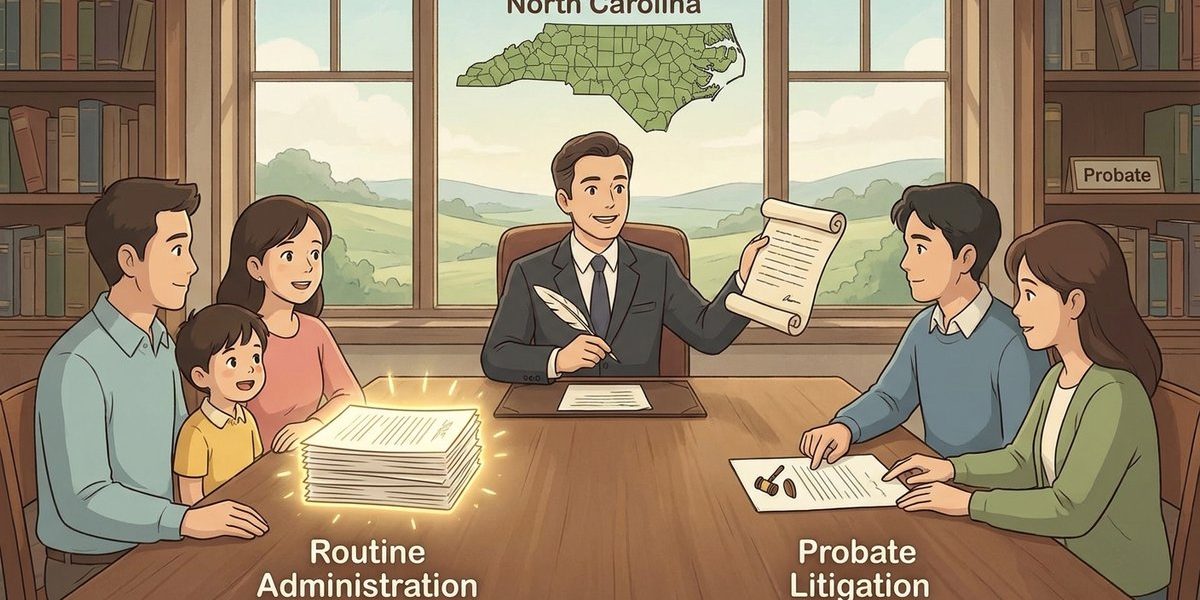
What is the difference between regular probate administration and probate litigation? – NC
Short Answer
In North Carolina, regular probate administration is the routine court-supervised process of collecting estate property, paying valid debts, and distributing what remains. Probate litigation is different. It begins when someone contests how the estate is being handled, challenges a will or fiduciary conduct, or asks the clerk or court to decide a dispute instead of simply processing the estate.
Understanding the Problem
In North Carolina probate matters, the main decision point is whether an estate is moving through the normal administration process or whether a dispute has turned it into contested probate litigation. That difference matters when a co-executor is removed, one family member claims estate property was mishandled, or the clerk must decide who should control the estate going forward. The question is not whether an estate exists, but whether the estate is simply being administered or is now in a contested proceeding before the clerk of superior court.
Apply the Law
North Carolina gives the superior court division original probate jurisdiction, and the clerk of superior court usually handles estate administration as the judge of probate. In a regular administration, the personal representative gathers assets, gives required notices, inventories property, pays proper claims, files accountings, and closes the estate. Probate litigation starts when there is a live dispute that requires the clerk or a judge to resolve contested facts or legal rights, such as removal of a personal representative, objections to accountings, disputes over estate property, or challenges about who should serve. Practice materials also note that clerk-handled estate disputes can be referred to mediation in some cases, which shows that a routine estate file can shift into a contested matter when interested persons disagree.
Key Requirements
- Regular administration: A duly appointed personal representative manages the estate under the clerk’s supervision and follows filing, notice, inventory, and accounting rules.
- Contested issue: Probate litigation exists when an heir, devisee, creditor, co-fiduciary, or other interested person asks the clerk or court to decide a dispute instead of allowing the estate to proceed routinely.
- Court involvement: The clerk of superior court remains the main probate forum, but contested matters may involve hearings, evidence, removal requests, appeals, and sometimes mediation.
What the Statutes Say
- N.C. Gen. Stat. § 7A-241 (Probate and estate administration jurisdiction) – gives the superior court division exclusive original jurisdiction over probate and estate administration, exercised in large part by the clerk of superior court.
Analysis
Apply the Rule to the Facts: The facts describe more than routine estate paperwork. A co-executor was removed after a court hearing, there are accusations that a sibling sold jewelry and blocked access to estate contents, and a public administrator has been appointed. Those facts point to probate litigation because the clerk had to resolve conflict over fiduciary conduct and estate control, rather than simply oversee ordinary collection, payment, and distribution tasks. For related issues, North Carolina readers may also want to understand remove the executor or personal representative if they are mishandling the estate or whether a removal request must be filed in the same county where the estate is pending in the county where the person died and the estate was opened.
If the estate were moving normally, the file would usually focus on appointment, notice to creditors, inventory, accountings, and final distribution. Once one side claims assets were sold without authority, access to estate property was restricted, or a fiduciary should be removed, the matter changes from administration to litigation because the clerk must hear evidence and decide who is right. That is also why the appointment of a neutral administrator often signals that the court is trying to stabilize the estate while the dispute is addressed.
Process & Timing
- Who files: an interested person, such as a co-executor, heir, devisee, or creditor. Where: before the Clerk of Superior Court in the North Carolina county where the estate is open. What: usually a petition, motion, objection, or other estate filing asking the clerk to decide a contested issue or enter an order. When: as soon as the dispute affects estate control, property access, or compliance with estate duties; waiting can make tracing assets and protecting property harder.
- The clerk may set a hearing, require notice to interested persons, review the estate file, and take evidence. In some estate disputes within the clerk’s jurisdiction, mediation may also be ordered to try to resolve the conflict more efficiently.
- The clerk then enters an order, which may leave the administration in place, remove or replace a fiduciary, require further accounting, or direct how the estate should proceed under court supervision.
Exceptions & Pitfalls
- Not every disagreement becomes probate litigation. Routine delays, ordinary paperwork, or family tension alone do not always require a contested hearing.
- A person may suspect misconduct, but the clerk usually needs specific facts tied to estate duties, property control, missing assets, accountings, or disobedience of court orders.
- Notice and service problems can slow the case. Delay can also create tracing problems if estate property has already been sold, moved, or mixed with other property.
Conclusion
In North Carolina, regular probate administration is the normal process of managing and closing an estate under the clerk’s supervision, while probate litigation begins when a contested issue requires the clerk or court to decide rights, conduct, or control of estate property. When removal, mishandling, or blocked access to assets is at issue, the matter has usually crossed into litigation. The key next step is to file the appropriate contested estate request with the Clerk of Superior Court promptly.
Talk to a Probate Attorney
If a North Carolina estate has shifted from routine administration into a dispute over executor removal, missing property, or control of estate assets, our firm has experienced attorneys who can help explain the process, the probate forum, and the timelines that may matter. Call us today at 919-341-7055.
Disclaimer: This article provides general information about North Carolina law based on the single question stated above. It is not legal advice for your specific situation and does not create an attorney-client relationship. Laws, procedures, and local practice can change and may vary by county. If you have a deadline, act promptly and speak with a licensed North Carolina attorney.

