
Who keeps the original documents after an estate matter is closed? – NC
Short Answer
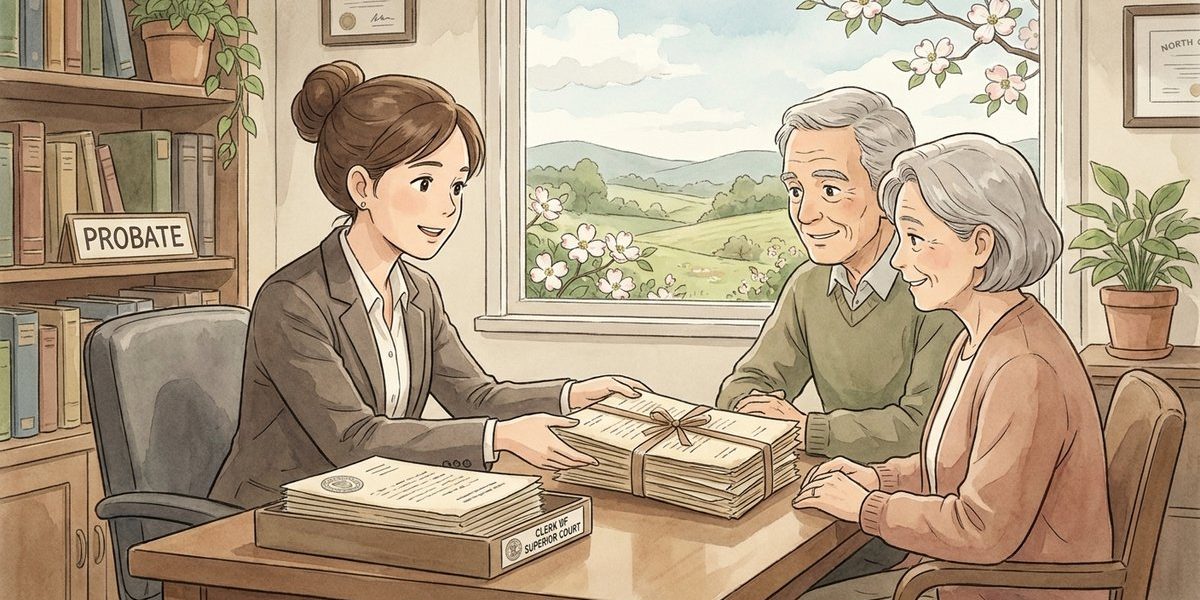
In North Carolina, the clerk of superior court keeps the official probate court file, but the personal representative or the law firm usually keeps original estate papers that were not filed with the court. Once the estate is closed with a final account, original documents such as correspondence, financial backup, and other unfiled records are often returned to the estate representative for safekeeping. If new property or information later turns up, the estate can often be reopened and those records may matter again.
Understanding the Problem
In a North Carolina probate matter, the main question is whether the original estate documents stay with the court, stay with the lawyer, or go back to the executor or administrator after the estate is closed. The answer usually turns on the role of the document in the estate process: filed court papers remain in the estate file maintained by the clerk, while original papers that were never filed are commonly held by the personal representative after administration ends. This issue often comes up when an estate is being closed for now because no more information is available, even though a later reopening may still be possible.
Apply the Law
Under North Carolina law, estate administration runs through the clerk of superior court. The personal representative must account for estate receipts and disbursements, and the clerk reviews the filed account. That means the court keeps the official filed record, but North Carolina probate practice also depends on the personal representative maintaining supporting records, vouchers, and other estate papers outside the court file. When the final account shows no balance and the clerk accepts the closing papers, the estate is closed administratively, but later-discovered assets or issues can still require more filings.
Key Requirements
- Official court file: Papers filed in the estate proceeding stay with the clerk of superior court as part of the probate record.
- Supporting estate records: The personal representative should keep the backup documents needed to support the account, including receipts, statements, and other proof of transactions.
- Possible reopening: Closing the estate does not always end the need for records, because newly found assets or unresolved issues may require additional estate proceedings.
What the Statutes Say
- N.C. Gen. Stat. § 1-339.32 (Final account includes sale receipts and disbursements) – A personal representative must include receipts and disbursements from estate sales in the next annual or final account.
- N.C. Gen. Stat. § 1-339.12 (Clerk may compel a complete report or account) – The clerk can order a correct and complete report or account if the filing is incomplete.
- N.C. Gen. Stat. § 1-301.3 (Clerk decides estate administration matters) – The clerk of superior court handles fact and law issues in estate administration matters.
Analysis
Apply the Rule to the Facts: Here, the estate appears ready to close because no outside information has arrived to support any remaining issue, and the plan is to file a final account showing no balance. In that situation, the clerk would keep the filed probate papers in the estate file, while the deceased parent’s original file and other unfiled originals would usually be returned to the estate representative rather than held indefinitely by the firm. That approach fits North Carolina probate practice because the official record stays with the court, but the estate representative may still need the original backup papers if the matter later resumes.
The same rule matters if additional estate proceedings are later needed. For example, if a bank account is discovered later, the prior personal representative or a newly appointed representative may need the old statements, correspondence, and prior accounting records to show what was already handled and what remains. That is one reason original unfiled estate papers are commonly kept by the estate representative after closing rather than destroyed or left in limbo. For related issues, see can the probate case be closed if no new assets are found, and can it be reopened later if something turns up and how do we reopen a closed estate.
Process & Timing
- Who files: The executor or administrator. Where: The Estates Division before the clerk of superior court in the county where the estate is pending in North Carolina. What: The final account and any required closing papers for the estate file. When: When administration is complete enough to report that no estate balance remains and no further action can be taken with the information currently available.
- The clerk reviews the filing and may require corrections or more detail if the account is incomplete. If the account is accepted, the estate is closed on the court’s docket, even though later-discovered property can still lead to more proceedings.
- After closing, the court keeps the filed probate record, and the original unfiled estate papers are commonly returned to the personal representative for safekeeping in case additional estate proceedings are later needed.
Exceptions & Pitfalls
- Some originals belong in the court file because they were filed as part of the probate proceeding, while others are only supporting records and should be kept outside the court file.
- A common mistake is assuming that closing the estate means the records no longer matter. If new assets, debts, or title issues appear later, the old file may be needed.
- Another mistake is filing a final account without enough backup. The clerk can require a corrected or more complete account, so receipts, statements, and sale records should be preserved.
Conclusion
In North Carolina, the clerk of superior court keeps the official probate file after an estate is closed, but the executor or administrator usually keeps the original estate documents that were not filed with the court. If the final account shows no remaining balance, the next step is to file the closing account with the clerk and keep the returned original records in a safe place, because additional estate proceedings may be needed if new information or assets are later found.
Talk to a Probate Attorney
If an estate is being closed now but original records may still matter later, our firm has experienced attorneys who can help explain the closing process, document handling, and possible reopening steps. Call us today at [919-341-7055].
Disclaimer: This article provides general information about North Carolina law based on the single question stated above. It is not legal advice for your specific situation and does not create an attorney-client relationship. Laws, procedures, and local practice can change and may vary by county. If you have a deadline, act promptly and speak with a licensed North Carolina attorney.

