
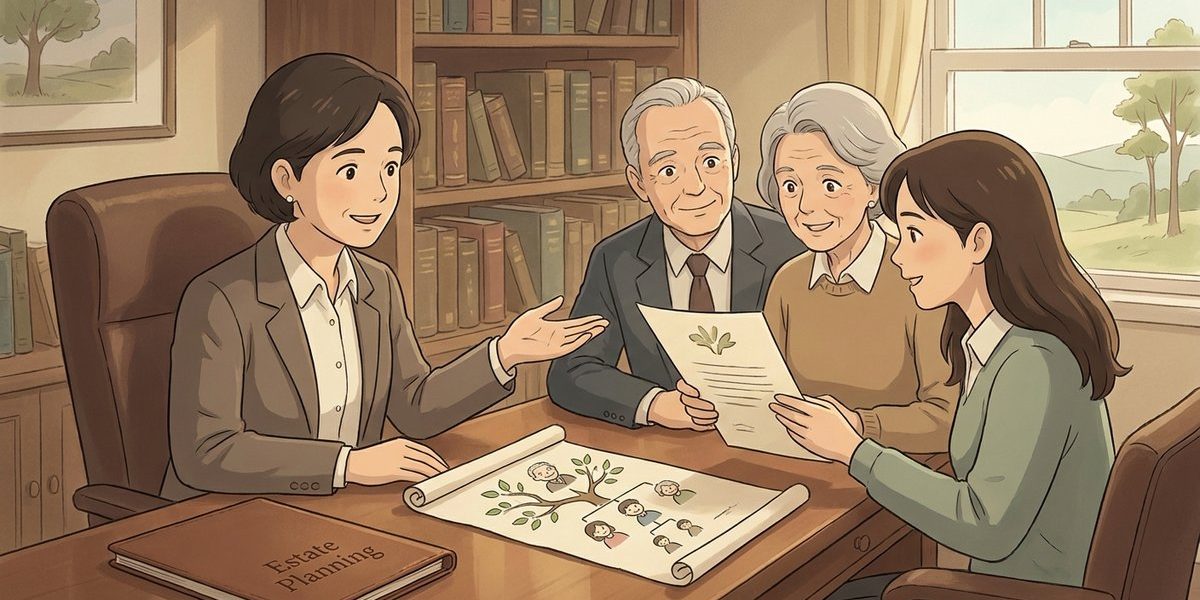
What happens if one of my children dies before me and I want that child’s share to go to their children? – NC
Short Answer
In North Carolina, a parent can direct that if a child dies before the parent, that child’s share passes to that child’s own children instead of being redistributed among the surviving children. That result is usually handled with clear will or trust language such as a gift to descendants by branch, often called per stirpes. If the documents are not clear, North Carolina’s lapse and intestacy rules may control the outcome, so the wording in the trust and pour-over wills matters.
Understanding the Problem
In North Carolina estate planning, the single issue is whether a deceased child’s share will pass down that child’s family line when a parent dies. The actors are the parent making the plan, the child who dies first, and that child’s descendants. The key timing point is survival: the answer turns on whether the child survives the parent and what the trust or will says if the child does not.
Apply the Law
North Carolina law generally allows a parent to structure a will or trust so each child receives a share, but if one child dies first, that child’s descendants step into that child’s place. In a will, North Carolina also has an anti-lapse rule that can save a gift to certain relatives if the named beneficiary dies before the testator, unless the will shows a different intent. If there is no effective will or trust direction for a failed gift, the property may pass under the residuary clause or, in some cases, by intestacy. For a trust-based plan, the trust terms control trust assets, while any pour-over will is handled through the estate before the Clerk of Superior Court in the county of domicile.
Key Requirements
- Clear substitute-taker language: The document should say that if a child dies before the parent, that child’s share passes to that child’s descendants, by branch, rather than to the surviving siblings.
- Consistent wording across documents: The joint trust and the pour-over wills should use matching distribution terms so the same rule applies whether an asset is in the trust or reaches the estate first.
- Defined descendant class: The plan should make clear who counts as that child’s descendants, because adopted children generally are treated as descendants, while inheritance questions involving children born out of wedlock can depend on legal parentage rules.
What the Statutes Say
- N.C. Gen. Stat. § 31-42 (Failure of devises by lapse or otherwise) – if a will beneficiary who is a grandparent of or a descendant of a grandparent of the testator dies before the testator, that beneficiary’s issue usually take the share unless the will says otherwise.
- N.C. Gen. Stat. § 29-16 (Distribution among classes) – explains how descendants of a deceased child take by family branch under North Carolina intestacy rules.
- N.C. Gen. Stat. § 29-15 (Shares of others than surviving spouse) – directs that when a person dies intestate leaving children and descendants of deceased children, those shares are determined under the class-distribution rules.
Analysis
Apply the Rule to the Facts: The stated plan already points in the right direction because it says one child receives an extra share first for caregiving, the remaining assets are divided among five children, and a deceased child’s share passes to that child’s descendants. In North Carolina, that outcome should be stated directly in both the joint trust and the pour-over wills so the deceased child’s branch takes that child’s share instead of having the share absorbed by the surviving children. The caregiving share should also be described as a separate first step before the remaining balance is divided, so there is less room for conflict about whether descendants inherit before or after that adjustment.
North Carolina practice also favors careful use of family-line terms because a short phrase can change the result. For example, a gift “to my surviving children” can cut out grandchildren of a child who dies first, while a gift to children with substitution for descendants can preserve that branch. The same point matters in a trust because trust assets do not rely on the probate anti-lapse statute in the same way a will gift does; the trust should contain its own substitute-beneficiary language.
Another drafting point is defining descendants clearly. Adopted children are generally treated the same as biological children for inheritance through written instruments unless the document excludes them, and questions involving children born out of wedlock can depend on whether legal parentage was established. That is one reason a North Carolina estate plan should define descendants in plain terms instead of assuming everyone will agree later.
Process & Timing
- Who files: the parent creating the plan, usually with counsel preparing the documents. Where: the trust is signed privately, while any pour-over will is later filed with the Clerk of Superior Court in the North Carolina county where the decedent lived. What: a joint trust and matching pour-over wills that state the caregiving share first, then the remaining shares, and then the substitute gift to a deceased child’s descendants. When: before incapacity or death, and updated promptly after any death, birth, adoption, or major family change.
- Next step with realistic timeframes; after signing, assets meant to avoid probate should be retitled into the trust as soon as practical, because an unfunded trust can leave more property to pass under the estate and will.
- Final step and expected outcome/document; at death, the successor trustee follows the trust terms for trust assets, and the personal representative uses the probated pour-over will to move remaining estate assets into the trust or distribute them under the estate plan.
Exceptions & Pitfalls
- Using words like “surviving children” or naming children without backup language can change the result and may cut out a deceased child’s descendants.
- Leaving the trust unfunded can force assets through probate first, which may make the will’s wording do more work than intended.
- Family-tree issues can create disputes if the documents do not define descendants clearly, especially when adoption, stepchildren, or parentage questions are involved.
Conclusion
In North Carolina, if a parent wants a child’s share to pass to that child’s own children when the child dies first, the estate plan should say so clearly in the trust and pour-over wills. The key threshold is survival of the parent, and the most important next step is to sign or update documents that direct the deceased child’s share to that child’s descendants by branch and keep the trust funded so the plan works as written.
Talk to a Estate Planning Attorney
If a family wants a deceased child’s share to pass to that child’s children while keeping the rest of the estate plan coordinated, our firm has experienced attorneys who can help explain the options, wording, and timing. Call us today at [919-341-7055]. For related planning questions, see trust or will(s) and estate plan now that our child is married and we’re expecting a grandchild.
Disclaimer: This article provides general information about North Carolina law based on the single question stated above. It is not legal advice for your specific situation and does not create an attorney-client relationship. Laws, procedures, and local practice can change and may vary by county. If you have a deadline, act promptly and speak with a licensed North Carolina attorney.

