
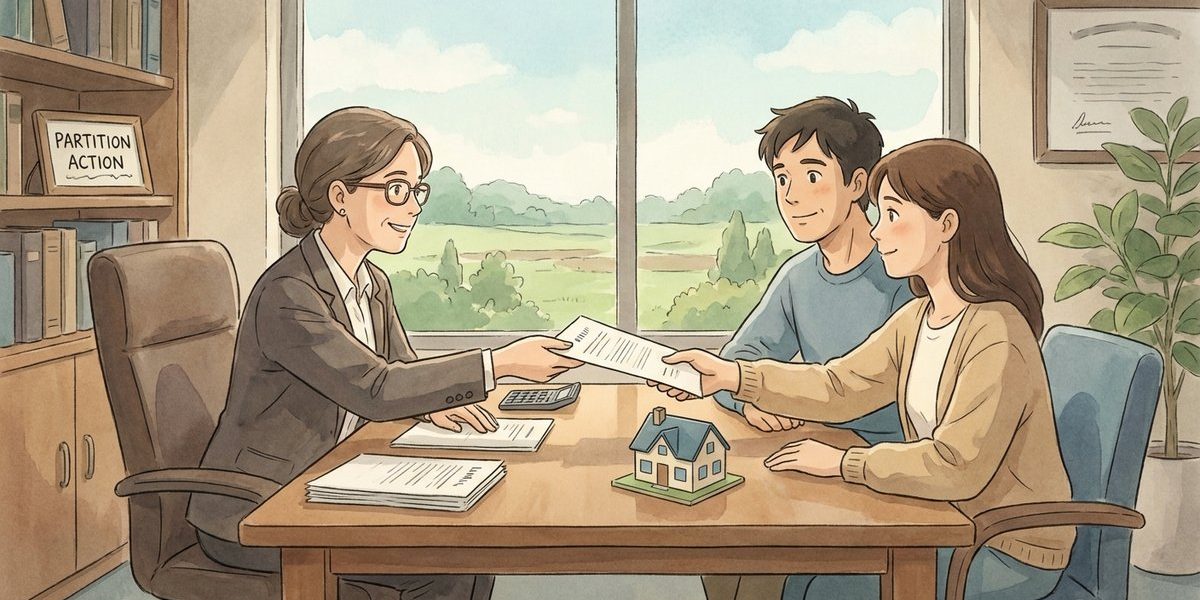
How do we settle a co-owned property dispute without going through a court-ordered sale? – NC
Short Answer
In North Carolina, co-owners can often settle a property dispute without a court-ordered sale by reaching a written buyout agreement. One owner may keep the home by refinancing, paying the other owner an agreed amount, and securing any unpaid balance with a deed of trust. The parties should also address credits for mortgage payments, taxes, insurance, and other carrying costs, because North Carolina law recognizes contribution claims between cotenants.
Understanding the Problem
In North Carolina, the main question is whether co-owners of a home can resolve a partition dispute by agreement instead of having the court order a sale. The usual decision point is whether one cotenant can keep the property by buying out the other cotenant’s interest on terms both sides accept. Timing matters because once a partition case moves forward, deadlines, valuation disputes, and requests for credits can affect settlement leverage and the final paperwork needed to end the dispute.
Apply the Law
North Carolina law favors an actual partition over a forced sale unless a sale is necessary to avoid substantial injury. In practice, that means a negotiated buyout can be a workable alternative when one owner wants to keep the property and can fund the deal through refinancing, cash, or a secured payout over time. The clerk or court handling the partition matter can also consider contribution issues, including certain carrying costs paid by one cotenant, and the law allows equitable adjustments similar to owelty when one side receives the more valuable share in an actual partition.
Key Requirements
- Clear ownership and agreed value: The parties need to confirm each owner’s interest and agree on a buyout number, often using an appraisal or another reliable valuation method.
- Contribution and credits: If one owner paid mortgage installments, taxes, insurance, or repairs that preserved the property, those payments may support a claim for contribution and can be built into the settlement math.
- Transfer and security documents: The owner leaving the property usually signs a deed, and if part of the buyout is paid later, the remaining balance is commonly secured by a deed of trust with written payment terms.
What the Statutes Say
- N.C. Gen. Stat. § 46A-75 (Sale in lieu of actual partition) – A sale is not automatic; the party seeking a sale must prove by a preponderance of the evidence that actual partition cannot be made without substantial injury.
- N.C. Gen. Stat. § 46A-51 (Owelty and equitable partition) – North Carolina allows money adjustments when one party receives a disproportionately greater share in an equitable actual partition.
- N.C. Gen. Stat. § 46A-27 (Carrying costs; improvements; contribution) – A cotenant may seek contribution for carrying costs such as property taxes, homeowner’s insurance, repairs, and payments for a loan to acquire the property.
- N.C. Gen. Stat. § 105-363 (Taxes paid by one cotenant) – A cotenant who pays more than that cotenant’s share of property taxes may have a lien or reimbursement claim against the other owner’s share.
Analysis
Apply the Rule to the Facts: Here, the reported goal is to avoid a court-ordered sale by having one co-owner keep the home through refinancing and a buyout. That approach fits North Carolina law if the parties can agree on value, ownership shares, and how to treat the mortgage and other carrying costs paid by only one owner. The claimed solo payment of mortgage and other expenses for several years matters because contribution for carrying costs can affect the amount owed at closing or the size of any remaining balance secured by a deed of trust. If the parties also agree on an upfront payment and a secured payout schedule, they can often resolve the dispute without asking the court to complete a partition sale.
That said, settlement usually works best when the parties separate three issues: present fair market value, credits for preserving the property, and the mechanics of transfer. For example, the buyout figure may start with the home’s agreed net value, then adjust for any provable contribution claim, then set the payment structure. Related issues about expense credits in a sale setting are discussed in credit for mortgage payments, taxes, and other expenses, and mortgage-title mismatches can also affect negotiations as explained in the mortgage is only in one co-owner’s name but the deed is in both names.
Process & Timing
- Who files: Usually no new filing is needed if the parties reach a full settlement before a final partition order, though one or both parties may need to file a dismissal, consent order, or other closing papers in the pending partition case. Where: The Clerk of Superior Court in the North Carolina county where the real property is located. What: A written settlement agreement, deed transferring the departing owner’s interest, payoff or refinance documents, and if part of the price will be paid later, a promissory note and deed of trust. When: Before the court enters and carries out a partition sale, and any contribution request in an actual partition must be raised before the commissioners file their report.
- Next, the parties usually confirm title, obtain a payoff statement for any existing loan, set a value date, and document credits for carrying costs with records such as payment histories, tax bills, insurance statements, and repair receipts. If refinancing is part of the deal, the lender’s timing often controls the closing schedule.
- Final step and expected outcome/document: the departing owner signs a deed, the staying owner closes the refinance or other funding, the agreed upfront amount is paid, and any unpaid balance is secured by a recorded deed of trust. If a court case is pending, the parties then file the papers needed to end the partition proceeding.
Exceptions & Pitfalls
- Contribution claims are not automatic. The paying cotenant should be ready to prove which payments preserved the property and whether any offset applies, such as exclusive use or other agreed adjustments.
- A refinance promise without lender approval can derail settlement. The parties should avoid signing a final transfer plan unless the funding source, payment dates, default terms, and release conditions are clear.
- Tax payments have their own rules. North Carolina limits some property-tax contribution claims in partition proceedings to taxes paid during the 10 years before the partition petition, and notice, recording, or payoff mistakes can leave title or lien problems unresolved.
Conclusion
Yes. In North Carolina, co-owners can often settle a property dispute without a court-ordered sale by using a written buyout that sets value, accounts for contribution for carrying costs, and transfers title with any unpaid balance secured by a deed of trust. The key threshold is reaching agreement on ownership shares, credits, and payment terms before the partition case advances to sale. The next step is to prepare and sign a settlement package and file any needed dismissal or consent papers with the Clerk of Superior Court promptly.
Talk to a Partition Action Attorney
If a co-owned home dispute involves a buyout, refinance, expense credits, or a deed of trust to avoid a forced sale, our firm has experienced attorneys who can help explain the options and timelines under North Carolina law. Call us today at 919-341-7055.
Disclaimer: This article provides general information about North Carolina law based on the single question stated above. It is not legal advice for your specific situation and does not create an attorney-client relationship. Laws, procedures, and local practice can change and may vary by county. If you have a deadline, act promptly and speak with a licensed North Carolina attorney.

