
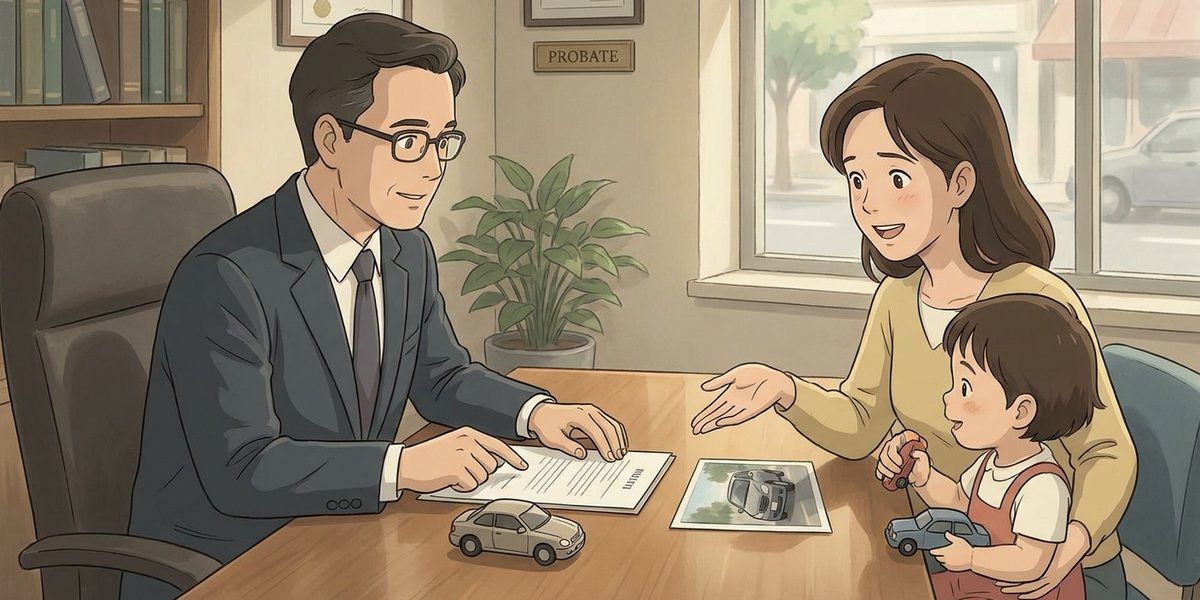
How do I get a vehicle titled in a deceased person’s name transferred to me if the family agrees I can keep it for my minor child? – NC
Short Answer
In North Carolina, family agreement alone does not transfer a vehicle title out of a deceased person’s name. The transfer usually must go through either the estate’s personal representative or, in limited cases, a DMV affidavit process when no administration is pending or expected. If the vehicle is still part of an open or expected estate, the safer path is to have the estate decide the vehicle’s distribution first and then complete the DMV title transfer with the proper estate documents.
Understanding the Problem
In North Carolina probate, the main question is whether a person who was not married to the decedent can receive a vehicle that remains titled only in the decedent’s name when the decedent’s family agrees the vehicle should be kept for the parties’ minor child. The key decision point is who has legal authority to transfer that title under North Carolina law, and whether the transfer can happen now or must wait until the estate’s vehicle issues are sorted out.
Apply the Law
Under North Carolina law, a vehicle titled only in a decedent’s name does not pass by informal agreement. The North Carolina Division of Motor Vehicles will issue a new title only when the transfer is supported by the right probate authority and the required title documents. The usual forum is the Clerk of Superior Court handling the estate, and the transfer is completed through the NC Division of Motor Vehicles or a local license plate agency. If no estate administration is pending or expected, North Carolina allows a narrower affidavit-based transfer in some cases; if an estate is open or likely, the personal representative usually must handle the transfer.
Key Requirements
- Proper authority: Someone with legal authority must sign for the decedent’s interest. That is usually the estate’s executor or administrator, not simply a family member who agrees with the transfer.
- Correct estate posture: The affidavit route works only in limited situations, such as when no administration is pending or expected. If the estate still has unresolved assets or debts, that shortcut may not fit.
- DMV title paperwork: The original title, title application if needed, lien information, and supporting estate documents must match the transfer being requested. If the original title is missing, DMV may require a duplicate-title form instead.
What the Statutes Say
- N.C. Gen. Stat. § 20-77 (Transfer by operation of law) – lets DMV issue a new title when ownership passes by law, including certain inheritance or devise transfers supported by estate documents or a qualifying affidavit.
- N.C. Gen. Stat. § 20-52 (Application for registration and certificate of title) – requires the new owner to apply for a North Carolina title and provide the information DMV requires.
Analysis
Apply the Rule to the Facts: Here, the vehicle is still titled in the decedent’s name, and the person seeking the transfer was not the decedent’s spouse. That means the transfer cannot be completed just because the adult children agree. If the estate is already open, or if the estate still needs to decide what to do with other vehicles and other property, the person with authority to sign is usually the personal representative after the estate determines that this vehicle can be distributed or sold. If no administration is pending or expected, North Carolina does allow an affidavit process, but that process generally requires all heirs to sign and also requires the affidavit to state that debts are paid or that transfer proceeds will be used for that purpose.
Two practical points matter here. First, North Carolina practice treats vehicle-title transfers cautiously when estate assets may still be needed to pay creditors, so unresolved estate issues can block an immediate handoff of one vehicle. Second, DMV practice often requires more paperwork than people expect, including the original title if available, and local offices may differ in how they handle deceased-owner transfers, especially if the title is missing or there is an old lien showing in DMV records.
If the goal is to keep one vehicle for the minor child, the cleanest route is usually for the estate to decide, through the personal representative or through a qualifying no-administration affidavit process, that this specific vehicle will be transferred to the intended recipient. Because the child is a minor, the title normally would not simply be placed in the child’s name without considering who will hold and manage it. The transfer documents should therefore match the actual legal owner DMV will list on the new title.
Process & Timing
- Who files: usually the executor or administrator, or in a limited no-administration case all heirs through a qualifying affidavit. Where: first with the Clerk of Superior Court handling the estate in the North Carolina county where the estate matter belongs, then with the NC Division of Motor Vehicles or a local license plate agency. What: the original certificate of title if available, a title application if needed, and the supporting estate document such as Letters Testamentary, Letters of Administration, or an affidavit executed by all heirs under N.C. Gen. Stat. § 20-77(b). When: after the estate confirms the vehicle is not needed for creditor issues and before anyone tries to register or tag the vehicle in a new name.
- Next, the authorized signer completes the title assignment and any required odometer and tax forms. If the original title cannot be found, DMV may require a duplicate-title process before or with the transfer. If a lien still appears in DMV records, a release or payoff issue may need to be resolved first.
- Finally, DMV reviews the paperwork, collects title and registration fees, and issues a new title in the approved transferee’s name. If the transfer is being claimed as exempt from highway use tax, the exemption form must be supported by the relationship or transfer category that actually applies.
Exceptions & Pitfalls
- A family agreement does not override the rights of estate creditors or the authority of the personal representative.
- The affidavit route can fail if administration is already pending, expected, or demanded by an interested party, or if not all heirs sign when the statute requires it.
- Common mistakes include trying to sign the decedent’s name without authority, transferring one vehicle before the estate decides whether vehicles are needed to satisfy debts, overlooking an unreleased lien, or assuming a minor child’s interest automatically lets another adult title the vehicle personally.
Conclusion
In North Carolina, a vehicle titled only in a deceased person’s name must be transferred through proper estate authority, not just family agreement. If the estate is open or likely, the executor or administrator should sign the title transfer after confirming the vehicle is not needed for estate debts; if no administration is pending or expected, a qualifying all-heirs affidavit may work. The next step is to file the correct estate paperwork with the Clerk and then submit the title documents to DMV before using or retitling the vehicle.
Talk to a Probate Attorney
If a deceased owner’s vehicle needs to be transferred and the estate still has open questions about other vehicles, debts, or a house issue, our firm has experienced attorneys who can help explain the proper probate and DMV steps. Call us today at 919-341-7055. For related guidance, see open probate, or is there a simplified small-estate option just to retitle a vehicle and who is allowed to sign an estate vehicle title.
Disclaimer: This article provides general information about North Carolina law based on the single question stated above. It is not legal advice for your specific situation and does not create an attorney-client relationship. Laws, procedures, and local practice can change and may vary by county. If you have a deadline, act promptly and speak with a licensed North Carolina attorney.

