
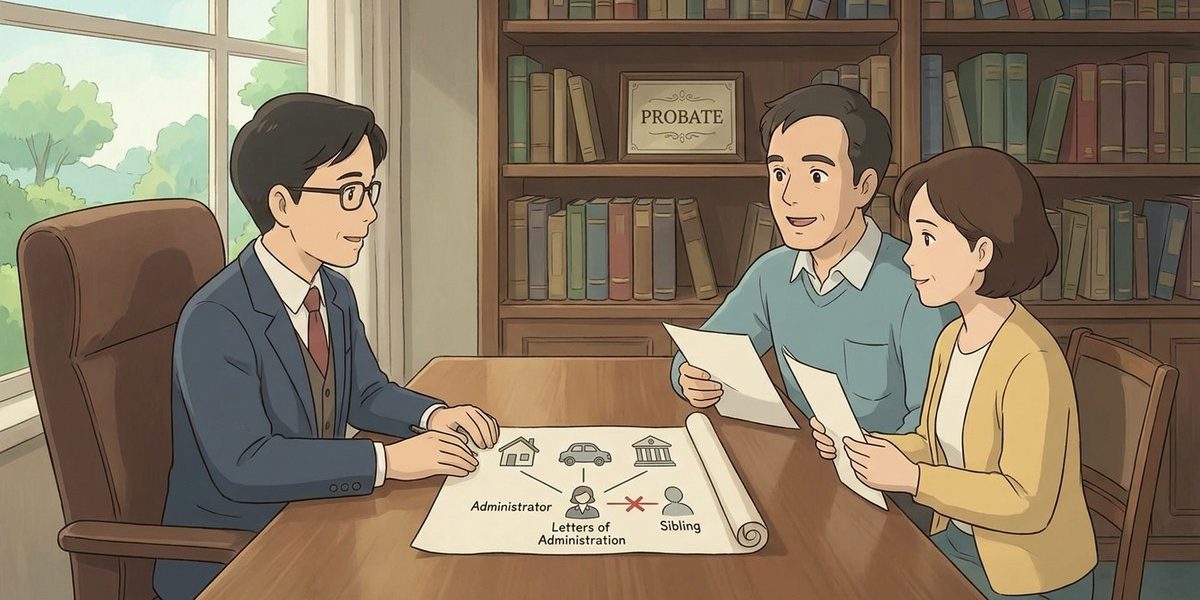
What happens if my sibling tries to access or divide my parent’s bank account or property before probate is opened? – NC
Short Answer
In North Carolina, a sibling does not have authority to take control of a deceased parent’s solely owned bank account or personal property just because that parent died. Until the Clerk of Superior Court appoints an administrator and issues Letters of Administration, no heir has general authority to collect, divide, sell, or transfer estate assets. If someone moves money or property before probate is opened, that can create a contested estate issue and may require the administrator to demand records, recover assets, and ask the court to step in.
Understanding the Problem
In North Carolina probate, the main question is whether an adult child can access or split a deceased parent’s bank account, vehicles, home, land, or other property before the estate is opened and an administrator is appointed. The issue usually comes up when a parent dies without a will, family members disagree about who should serve, and property could be removed or handled before anyone has formal authority from the clerk. This article explains who has authority, what property must wait for probate, and what happens if a sibling acts first.
Apply the Law
North Carolina gives the Clerk of Superior Court original probate authority, and estate administration begins through that office. In an intestate estate, the person who will manage estate assets must qualify as administrator, take the required oath, satisfy any bond requirement, and receive Letters of Administration before acting for the estate. A practical point under North Carolina procedure is that the clerk may require renunciations from others with equal priority to serve, and if no one with priority applies within 90 days after death, the clerk may treat those rights as renounced and appoint another suitable person. Another important point is that the administrator’s authority is evidenced by the issued letters, which banks and title offices usually require before releasing solely owned assets.
Key Requirements
- Court appointment first: The estate must be opened with the Clerk of Superior Court, and the administrator’s authority starts when Letters of Administration are issued.
- Estate assets stay intact: Solely owned bank accounts, vehicles, and personal property generally must remain part of the estate until the administrator collects, inventories, and administers them.
- Distribution comes after administration: Heirs do not get to divide property first. Intestate shares are subject to administration costs, valid claims, and any higher-priority statutory allowances.
What the Statutes Say
- N.C. Gen. Stat. § 7A-241 (Probate jurisdiction) – the clerk of superior court has original jurisdiction over probate and estate administration.
- N.C. Gen. Stat. § 29-13 (Intestate estates subject to claims) – intestate property passes subject to administration costs and lawful claims against the estate.
- N.C. Gen. Stat. § 29-14 (Surviving spouse share) – sets the surviving spouse’s intestate share in real and personal property.
- N.C. Gen. Stat. § 30-15 (Spouse’s allowance) – gives a surviving spouse a statutory allowance that has priority over claims against the estate.
- N.C. Gen. Stat. § 30-20 (Clerk’s order on allowance) – the clerk determines and orders certain family allowances from estate personal property.
Analysis
Apply the Rule to the Facts: Here, the parent died without a will and left a bank account, vehicles, land, a home, and other personal property, with conflict already developing over death certificates, who should serve, and whether property could be handled while one child is away. Under North Carolina law, a sibling cannot simply step in and divide a solely owned bank account or other probate property before appointment as administrator. The estate must first be opened, the proper person must qualify, and the administrator must then gather and protect assets before any lawful distribution occurs.
If some assets are still titled in a predeceased spouse’s name or were used informally without updated title work, that creates another reason not to self-divide property. Title questions, spouse-share issues, and creditor issues must be sorted through the estate process before anyone assumes an item belongs to one heir or another. The same is true if there are credit card, medical, or loan-related issues, because intestate property passes subject to estate costs and lawful claims rather than immediate family agreement.
If a sibling removes cash from a solely owned account after death, takes vehicle titles, or starts giving away household items before letters are issued, the later-appointed administrator may need bank records, title records, and an inventory of what was taken. In a similar situation, families often need account statements and transaction history to trace whether money moved before or after death; that issue is discussed in bank statements and account records. If the dispute is really about who may manage the account before appointment, a related explanation appears in who is allowed to manage the deceased person’s bank accounts.
Process & Timing
- Who files: a person with priority to serve, often a surviving spouse or adult child. Where: the Estates Division before the Clerk of Superior Court in the proper North Carolina county. What: an Application for Letters of Administration, commonly AOC Form E-202, plus any renunciations, oath, and bond paperwork the clerk requires. When: as soon as practical after death; if no one otherwise entitled applies within 90 days after death, the clerk may treat those rights as renounced and appoint another suitable person.
- After qualification, the clerk issues Letters of Administration. The administrator then uses those letters to request death certificates, secure the home, contact banks, gather vehicles and personal property, and identify what is probate property versus nonprobate property. County practice can vary on forms, bond, and supporting documents.
- Next, the administrator inventories assets, addresses creditor notice and claims, and only then moves toward lawful distribution or transfer. If property was taken early, the administrator may have to demand its return, seek records, or raise the issue in a contested estate proceeding before the clerk.
Exceptions & Pitfalls
- Some assets may pass outside probate, such as accounts with a valid payable-on-death beneficiary or jointly owned assets with survivorship rights, so not every asset is automatically controlled by the estate.
- A common mistake is assuming heirs can divide personal property informally before debts, allowances, title issues, and the administrator’s inventory are handled. That can create accounting problems and delay the estate.
- Another common problem is confusing possession with authority. Holding keys, a death certificate, or online account access does not create legal authority to act for the estate. Notice, recordkeeping, and prompt filing with the clerk help prevent later disputes.
Conclusion
In North Carolina, a sibling generally cannot access or divide a deceased parent’s solely owned bank account or probate property before the Clerk of Superior Court appoints an administrator and issues Letters of Administration. Intestate property must stay subject to estate administration, lawful claims, and any family allowances before distribution. The most important next step is to file an application for Letters of Administration with the Clerk of Superior Court promptly, ideally before the 90-day mark affects appointment priority.
Talk to a Probate Attorney
If a family dispute has started over a parent’s bank account, home, vehicles, or other property before probate is opened, our firm has experienced attorneys who can help explain the estate process, authority issues, and timing. Call us today at 919-341-7055.
Disclaimer: This article provides general information about North Carolina law based on the single question stated above. It is not legal advice for your specific situation and does not create an attorney-client relationship. Laws, procedures, and local practice can change and may vary by county. If you have a deadline, act promptly and speak with a licensed North Carolina attorney.

