
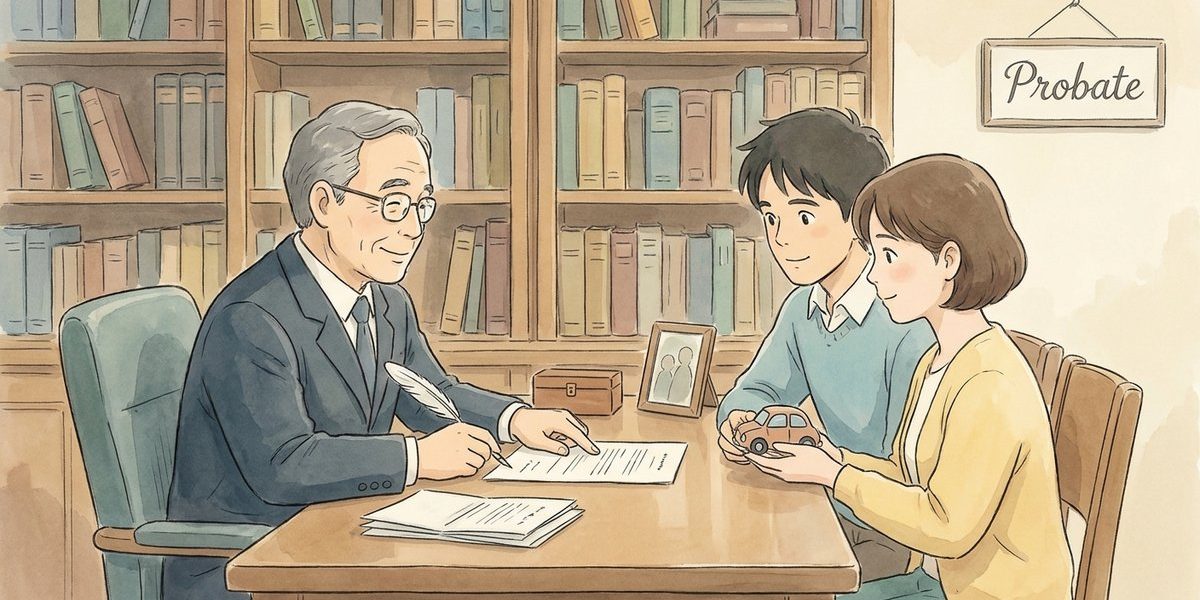
What documents do I need to sign to protect my rights in an estate involving a vehicle? – NC
Short Answer
In North Carolina, the right documents depend on who has legal authority to transfer the vehicle after death. Before signing anything, the key issue is whether the transfer is being handled by a personal representative with court-issued Letters, by all heirs through a DMV affidavit, or through a surviving spouse allowance process. If a lender is involved, lien paperwork and title documents also matter, and signing the wrong form can waive objections to who receives title.
Understanding the Problem
In North Carolina probate matters involving a deceased owner’s vehicle, the main question is what an heir, beneficiary, or family member can sign without giving up a claim to the vehicle. The decision point is whether the document only helps DMV process the title or instead approves a transfer into one person’s name. Timing matters because title paperwork, lender notices, and estate filings often move at the same time, and the person with legal authority to act may change depending on whether an estate has been opened.
Apply the Law
Under North Carolina law, a vehicle owned by a deceased person is usually transferred in one of three ways: through a duly appointed personal representative, through a limited DMV affidavit signed by all heirs when the statute allows that process, or through an assignment tied to a surviving spouse’s year’s allowance. The usual forum is the Clerk of Superior Court for estate authority and the North Carolina Division of Motor Vehicles for title work. A core trigger is the owner’s death, followed by the need to show who has authority to sign the title and whether any lien must be released or assumed before DMV will complete the transfer.
Key Requirements
- Authority to transfer: The signer must have legal authority, such as court-issued Letters Testamentary or Letters of Administration, or authority under a DMV affidavit executed by all heirs in the circumstances allowed by N.C. Gen. Stat. § 20-77(b).
- Correct title package: DMV usually needs the certificate of title or a duplicate-title process, and often also wants a certified death certificate and proof of estate authority before issuing a new title.
- Lien handling: If the vehicle has a lender lien, the lien must be released or properly assumed. A lender notice does not by itself decide ownership, but it signals that title cannot be cleared without addressing the lien.
What the Statutes Say
- N.C. Gen. Stat. § 20-77 (Transfer by operation of law) – allows DMV title transfer after death through estate authority, a clerk’s certificate showing assignment to a surviving spouse as part of the spousal year’s allowance, or an affidavit process in certain qualifying situations.
- N.C. Gen. Stat. § 31-39 (Probate necessary to pass title) – provides that no will is effectual to pass real or personal property unless it has been duly proved and allowed in probate.
Analysis
Apply the Rule to the Facts: Here, a lender letter about the vehicle title suggests the title is still tied to a lien and that DMV or the lender is waiting for proof of who may act for the estate. If documents are being sent for signature and notarization, the critical question is whether they merely confirm facts needed for transfer or instead consent to placing title in only one parent’s name. If the transfer is being handled without a full estate, North Carolina law allows an affidavit executed by all heirs only in the situations described in N.C. Gen. Stat. § 20-77(b), so one heir should not sign unless the affidavit correctly identifies all heirs, states the required facts, and accurately names the transferee.
If a personal representative has already qualified, the safer title path is usually through that personal representative’s authority rather than through informal family signatures. North Carolina DMV practice also often requires a title document, certified Letters, and a certified death certificate, and if the original title is missing, a duplicate-title form may be needed. If the lender still shows an unreleased lien, a lien release or assumption document may be necessary before any transfer can be completed.
Process & Timing
- Who files: either the duly appointed personal representative, or all heirs in a limited transfer authorized by N.C. Gen. Stat. § 20-77(b). Where: the estate authority issue is handled with the Clerk of Superior Court in the county where the estate is administered, and the title issue is handled with the North Carolina Division of Motor Vehicles or a local license plate agency. What: commonly the certificate of title, certified death certificate, certified Letters Testamentary or Letters of Administration if a personal representative has qualified, and in some cases DMV affidavit paperwork or duplicate-title paperwork such as MVR-4 if the title cannot be found. When: as soon as the vehicle needs to be retitled, sold, refinanced, or released from a lien hold.
- Next, confirm whether an estate is open and whether the signer is being asked to approve a transfer, disclaim an interest, or simply verify heirship. County clerk practice and DMV counter practice can vary, especially when the transfer is based on a qualifying affidavit under N.C. Gen. Stat. § 20-77(b) or a surviving spouse allowance.
- Final, DMV issues a new title once it accepts the authority documents, title paperwork, and any lien release or assumption documents. If the paperwork is incomplete or the wrong person signed, DMV may reject the transfer or issue the title in a way that creates a later estate dispute.
Exceptions & Pitfalls
- A surviving spouse year’s allowance can change who may receive the vehicle and what substitute paperwork DMV will accept.
- A no-administration affidavit under N.C. Gen. Stat. § 20-77(b) usually requires all heirs to execute it, so a missing heir, wrong family history, or incorrect transferee name can undermine the transfer.
- If the original title is lost or DMV still shows an old lien, the transfer may stall until duplicate-title and lien-release issues are fixed. For related background, see open probate, or a simplified small-estate option just to retitle a vehicle and court order or an affidavit to handle motor vehicles from an intestate estate.
Conclusion
In North Carolina, the documents needed to protect rights in an estate vehicle depend on who has legal authority to transfer title: a personal representative with certified Letters, all heirs through a DMV affidavit in the situations allowed by N.C. Gen. Stat. § 20-77(b), or a spouse-based assignment process. The most important next step is to identify the exact transfer path and review the title, lien, and notarized forms before signing anything with DMV or the Clerk of Superior Court.
Talk to a Probate Attorney
If a vehicle title is being moved through an estate and there is concern that one family member may receive title without proper authority, our firm has experienced attorneys who can help explain the paperwork, the probate path, and the timing issues involved. Call us today at [919-341-7055].
Disclaimer: This article provides general information about North Carolina law based on the single question stated above. It is not legal advice for your specific situation and does not create an attorney-client relationship. Laws, procedures, and local practice can change and may vary by county. If you have a deadline, act promptly and speak with a licensed North Carolina attorney.

