
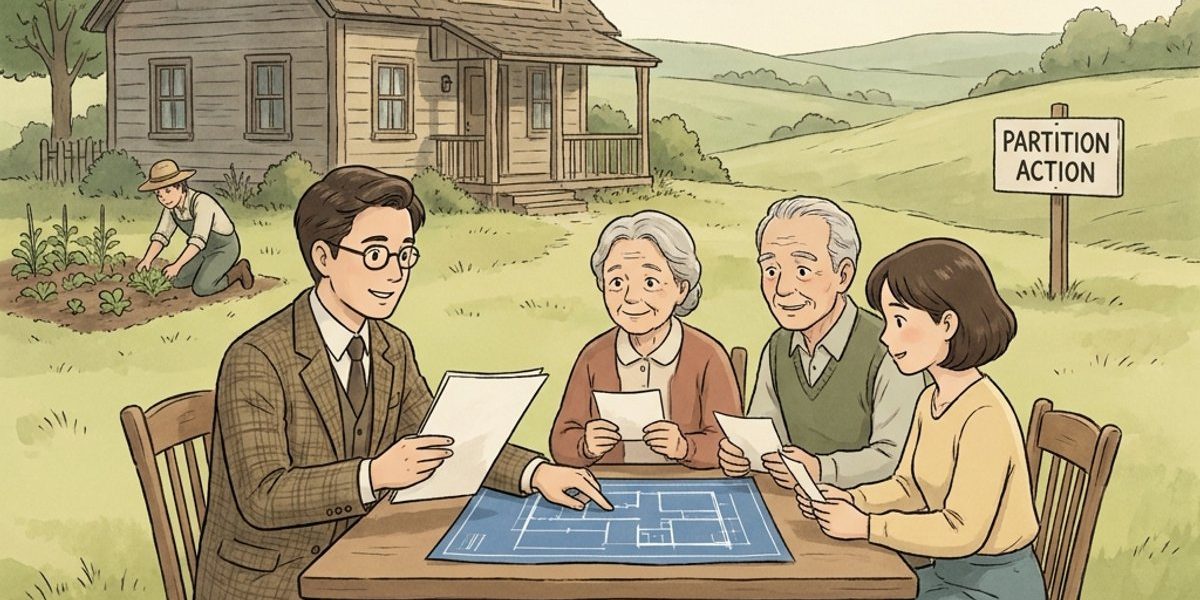
What happens if I am living in inherited property and the other heirs want to sell it? – NC
Short Answer
In North Carolina, one heir who owns an interest in inherited real estate usually cannot be forced out by another heir acting alone, but any cotenant can ask the court for a partition. If the house cannot be fairly divided, the court can order a sale and divide the net proceeds according to each heir’s ownership share, while also addressing certain claims for taxes, carrying costs, or other credits. Living in the property does not automatically give one heir the right to keep it, but it does not erase that heir’s right to notice, participation, and a proper share of the proceeds.
Understanding the Problem
In North Carolina, the question is whether an heir who is living in inherited property can stop a sale when other heirs who also own the property want to sell it. The issue usually arises after family members inherit a house together as cotenants, one person remains in possession, and the others want either a division of the land or a court-ordered sale. The main decision point is whether the property can be fairly partitioned in kind or whether a sale must occur through the court.
Apply the Law
North Carolina law allows a tenant in common or joint tenant to file a partition proceeding in superior court. The court must first decide the method of partition. It may divide the property physically, divide part and sell part, or order a partition sale if actual partition cannot be made without substantial injury to one or more parties. In practice, a single-family house usually cannot be split into usable shares, so the dispute often moves toward a sale, with posting and publication notice requirements and an upset-bid period if the property is sold publicly.
Key Requirements
- Ownership interest: The person asking for partition must hold an ownership interest as a cotenant, such as an heir who inherited part of the property.
- All owners must be joined: The petition must include and serve all known cotenants so no heir is left out of the case.
- Sale requires substantial injury: A court should order a sale instead of physical division only if dividing the property would cause substantial injury, such as materially reducing each owner’s value or impairing ownership rights.
What the Statutes Say
- N.C. Gen. Stat. § 46A-21 (Petition by cotenant; necessary parties) – A cotenant may file for partition in superior court, and all cotenants must be joined and served.
- N.C. Gen. Stat. § 46A-26 (Methods of partition) – The court may order actual partition, partition by sale, a combination approach, or leave part in cotenancy if no cotenant objects.
- N.C. Gen. Stat. § 46A-75 (Sale in lieu of actual partition) – A sale may be ordered only if actual partition cannot be made without substantial injury, and the party seeking sale has that burden.
- N.C. Gen. Stat. § 1-339.17 (Public sale; posting and publishing notice of sale of real property) – Public sale notice of real property must be posted for at least 20 days before the sale and published once a week for at least two successive weeks.
- N.C. Gen. Stat. § 1-339.25 (Upset bids on real property) – After a reported sale, a higher bid may be filed within 10 days, and each timely upset bid opens another 10-day period.
- N.C. Gen. Stat. § 46A-27 (Contribution for carrying costs and improvements) – A cotenant may seek contribution for certain taxes, insurance, repairs, loan payments, and some improvement value during the partition case.
- N.C. Gen. Stat. § 41-85 (Rents and profits from property held as cotenants) – Cotenants share rents and profits proportionally, and a cotenant who received more than a fair share may face an accounting claim.
Analysis
Apply the Rule to the Facts: Here, multiple heirs appear to own the family house together, so no single relative can simply sell the entire property outside the rights of the other owners. If the other heirs file a partition action, the heir living in the home has the right to be joined, served, and heard in the case. If the house is a typical single residence that cannot be fairly split into separate parcels, the court may order a sale, but the proceeds should be distributed through the case rather than relying on one relative to pass along the money informally.
If the heir in possession has paid property taxes, insurance, necessary repairs, or other carrying costs, those issues may be raised in the partition proceeding as contribution claims. On the other hand, if one cotenant collected rent from third parties or kept more than that cotenant’s share of income from the property, another cotenant may seek an accounting. That means the final division is not always a simple equal split of gross sale proceeds; the court can address certain credits and offsets before distribution.
If title shares are disputed among relatives, North Carolina law still allows the court to move forward with partition without deciding every ownership dispute first. That matters in inherited-property cases where family members disagree about exact percentages or whether an estate step was completed correctly. It also reduces the risk that one heir can stall the process indefinitely by raising a title dispute alone.
Process & Timing
- Who files: any cotenant heir or other owner. Where: the superior court in the North Carolina county where the real property is located. What: a partition petition naming all known cotenants and requesting actual partition, partition by sale, or other appropriate relief. When: there is no single short statute deadline to file, but once a public sale is reported, an upset bid must be filed by the close of normal business hours on the 10th day after the report of sale or last upset bid, and public sale notice of real property must be posted at least 20 days before the sale and published as required by statute.
- The court determines ownership and the proper method of partition. If a sale is sought, the party asking for sale must prove that actual partition would cause substantial injury. The clerk or court may appoint a commissioner to conduct the sale, and timing can vary by county and by whether heirs dispute shares, credits, or sale terms.
- After the sale process ends and the upset-bid period closes, the sale is finalized and the net proceeds are distributed according to ownership interests, subject to approved costs, liens, and any contribution or accounting issues raised in the case.
Exceptions & Pitfalls
- Living in the house does not by itself block partition. A cotenant in possession may still lose possession if the court orders a sale.
- A relative’s promise to divide the money later is risky. A cotenant should insist that distribution happen through the court process so the share is documented and paid properly.
- Failing to raise contribution claims for taxes, insurance, repairs, or loan payments during the partition case can reduce recovery. Service problems, missing heirs, and title disputes can also delay the case if not addressed early. For related issues, see multiple heirs are on the title and sell a house when one co-owner died.
Conclusion
In North Carolina, an heir living in inherited property usually cannot stop a partition case just by remaining in the home. If the property cannot be fairly divided without substantial injury, the court may order a sale and distribute the net proceeds according to each heir’s share, while also addressing approved credits and offsets. The key next step is to file or respond in a partition proceeding in superior court and, if a sale is reported, watch the 10-day upset-bid deadline closely.
Talk to a Partition Action Attorney
If a dispute over inherited property is turning into a forced sale or a fight over sale proceeds, our firm has experienced attorneys who can help protect ownership rights, make sure all heirs are included, and address credits, offsets, and timelines in the partition case. Call us today at 919-341-7055.
Disclaimer: This article provides general information about North Carolina law based on the single question stated above. It is not legal advice for your specific situation and does not create an attorney-client relationship. Laws, procedures, and local practice can change and may vary by county. If you have a deadline, act promptly and speak with a licensed North Carolina attorney.

