
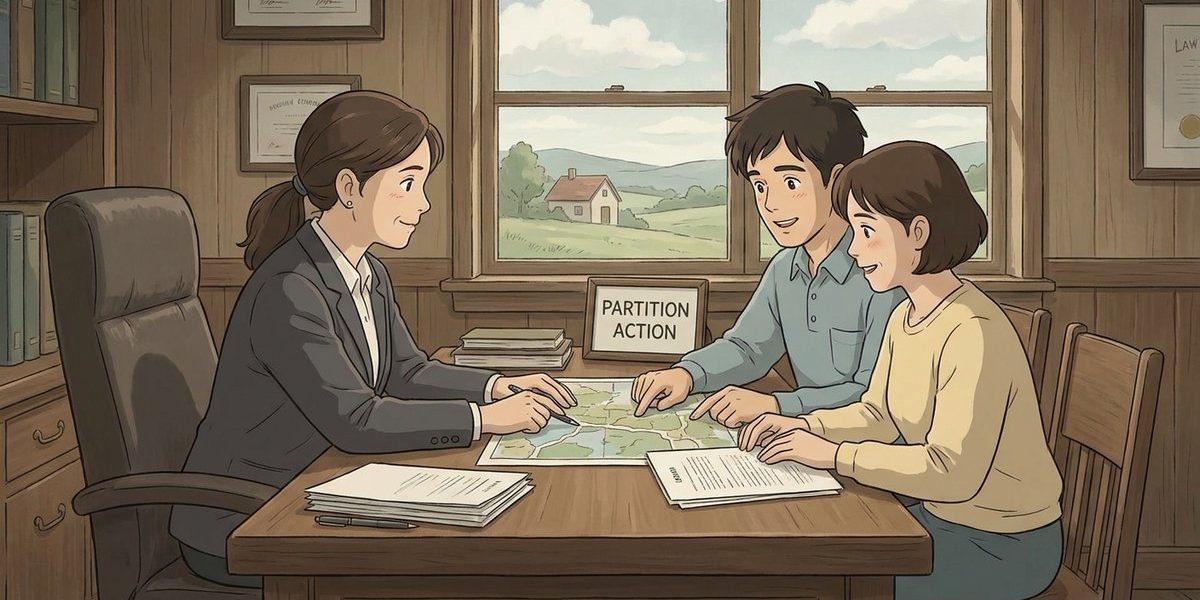
How do I deal with a house foreclosure when I only want to keep making payments? – NC
Short Answer
In North Carolina, simply wanting to keep making payments usually does not stop a foreclosure if the loan is in default and title or decision-making is tied up among co-owners. When other owners will not cooperate, a partition action may help clear the ownership problem, allow a buyout, or force a sale, but it does not automatically pause the foreclosure. The key is to act quickly in the foreclosure file with the clerk of superior court while also evaluating whether a partition case in superior court can create a path to keep or sell the property before the foreclosure rights become fixed.
Understanding the Problem
In North Carolina, the question is whether a co-owner tied to a home in foreclosure can keep the property by continuing payments when the other interested parties will not sign, respond, or cooperate. The issue usually turns on two things: whether the foreclosure is already moving on a short court timeline, and whether the ownership can be separated, bought out, or sold through a partition process in superior court. This discussion focuses on that single decision point under North Carolina partition and foreclosure procedure.
Apply the Law
North Carolina law treats foreclosure and partition as separate tracks. A foreclosure under a deed of trust usually proceeds before the clerk of superior court, and once a sale occurs, upset-bid deadlines can move quickly. A partition action is filed in superior court by a cotenant to divide the property, sell it if division would cause substantial injury, or separate only part of the interests if that fits the case. When title is disputed or some owners are unknown or uncooperative, the court can still move forward without deciding every ownership dispute before ordering partition or sale. In practice, that means a person who wants to keep the home often needs both a realistic payoff or buyout plan and a fast response to the foreclosure timeline.
Key Requirements
- Cotenancy must exist: A partition case generally requires co-owned real property, such as tenants in common or joint tenants, rather than a simple borrower-lender dispute alone.
- Actual partition comes first in theory: The court looks at whether the property can be fairly divided, but a sale may be ordered if dividing it would substantially injure one or more parties.
- Foreclosure deadlines still control: Even if a partition option exists, the foreclosure case can keep moving unless the default is cured, the loan is otherwise resolved, or a court enters relief that affects the sale process.
What the Statutes Say
- N.C. Gen. Stat. § 46A-26 (Methods of partition) – allows actual partition, partition by sale, a mixed approach, or partition of only part of the property.
- N.C. Gen. Stat. § 46A-75 (Sale in lieu of actual partition) – permits a partition sale only if actual division cannot be made without substantial injury, and the party seeking sale must prove that point.
- N.C. Gen. Stat. § 46A-52 (Partition where cotenants unknown or title disputed) – lets the court proceed even when some ownership claims are disputed or some cotenants are unknown.
- N.C. Gen. Stat. § 45-21.27 (Upset bid on real property) – gives a 10-day upset-bid period after a foreclosure sale or last upset bid, with a required deposit and minimum increase.
Analysis
Apply the Rule to the Facts: The facts suggest a co-owned home in North Carolina where foreclosure is moving forward but one owner wants to keep paying and keep the property. If that owner cannot refinance or modify the loan alone because other owners must sign, a partition action may help by forcing the ownership issue into court, allowing a buyout discussion, or creating a sale path before foreclosure finishes. But if the loan default is not cured and the foreclosure timeline keeps running, the desire to keep paying by itself may not preserve the property.
If the ownership shares are clear but the other parties simply refuse to cooperate, a partition case can put the matter before superior court instead of leaving the property frozen. If the title is disputed or some parties are not responding, North Carolina law still allows the court to move the partition case forward without first resolving every competing claim to the same undivided interest. That can matter when delay is the main problem and the foreclosure file is already active.
A practical first step may be trying a negotiated buyout or private resolution before filing, especially where the goal is to keep the house rather than force an auction. If cooperation fails, filing for partition may create leverage and a court-managed process. In some situations, a related article on buy out the other co-owners if they will not cooperate may help explain that option, and another on a private sale or settlement agreement may help when a court filing can still be avoided.
Process & Timing
- Who files: a cotenant or other party with a recognized partition interest. Where: the superior court in the North Carolina county where the real property is located. What: a partition petition asking for actual partition, partition by sale, or another permitted method under Chapter 46A, while separately monitoring the foreclosure file before the clerk of superior court. When: as soon as the ownership problem blocks a refinance, modification, or payoff plan, and before the foreclosure sale rights become fixed; after a foreclosure sale, the upset-bid period is generally 10 days from the report of sale or last upset bid.
- Next step with realistic timeframes; note county variation if applicable.
- Final step and expected outcome/document.
Exceptions & Pitfalls
- Partition does not automatically stop a foreclosure; the loan default and foreclosure procedure still need immediate attention.
- A person may want to keep paying but still lack authority to refinance, modify, or transfer title without the signatures of other owners or lienholders.
- Waiting too long is a common mistake. Service problems, disputed heirs, and unclear title can slow a partition case, while the foreclosure file may keep moving on a much shorter schedule.
Conclusion
In North Carolina, wanting to keep making payments is usually not enough to stop a house foreclosure when co-owners will not cooperate. If the property is co-owned, a partition action in superior court may help separate interests, support a buyout, or force a sale, but the foreclosure timeline still controls. The most important next step is to file the appropriate partition petition in the county superior court and address the foreclosure immediately, especially before the 10-day upset-bid period expires after any sale.
Talk to a Partition Action Attorney
If a co-owned North Carolina home is heading toward foreclosure and one owner wants to keep the property or buy out the others, our firm has experienced attorneys who can help explain the available options and the deadlines that matter. Call us today at 919-341-7055.
Disclaimer: This article provides general information about North Carolina law based on the single question stated above. It is not legal advice for your specific situation and does not create an attorney-client relationship. Laws, procedures, and local practice can change and may vary by county. If you have a deadline, act promptly and speak with a licensed North Carolina attorney.

