
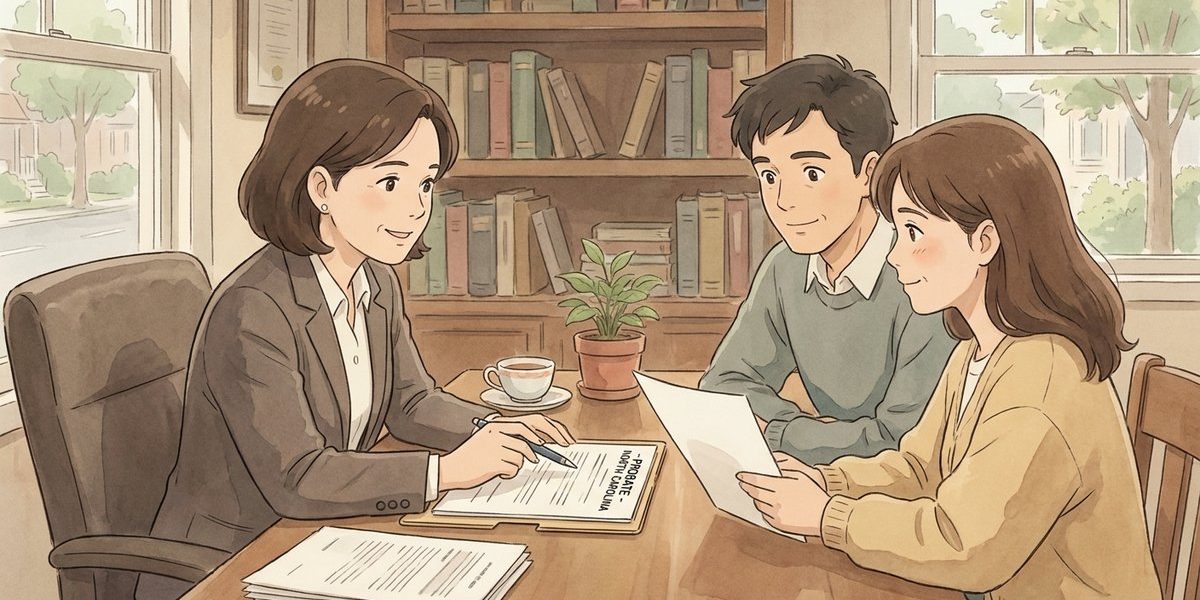
What happens if the clerk will not accept probate forms that were already signed and notarized? – NC
Short Answer
In North Carolina, a clerk of superior court may require probate papers to be corrected, updated, or re-signed before filing if the forms do not match current requirements or county filing practice. A prior notarization does not force the clerk to accept a form that is incomplete, outdated, inconsistent with the estate record, or missing required supporting information. If the issue involves a spouse’s or child’s year’s allowance, the safest next step is usually to revise the papers promptly and refile with the clerk in the proper county, because some estate deadlines run from the issuance of letters.
Understanding the Problem
In North Carolina probate matters, the main question is whether the clerk of superior court must accept estate forms simply because they were already signed and notarized. The decision point is narrow: if a surviving spouse or other filer presents probate papers for an estate filing, a year’s allowance, or a related affidavit, can the clerk require new signatures, new notarization, or corrected forms before the filing goes forward. The answer usually turns on whether the papers meet the clerk’s filing requirements for that estate and county at the time they are submitted.
Apply the Law
North Carolina estate proceedings are handled through the clerk of superior court in the county where venue is proper. The clerk decides issues of fact and law in estate administration matters and may require enough proof to support the filing. In practice, county clerks do not all handle form preparation the same way. Some expect counsel to prepare nearly all estate forms before filing, while others prepare more of the paperwork in the clerk’s office. That means a notarized document can still be rejected if the form version is wrong, the caption or estate information has changed, the petition is no longer accurate, or the clerk wants the filing submitted through the county’s required process.
Key Requirements
- Correct form and content: The document must match the current estate filing, include the right parties and estate information, and contain all required statements.
- Proper forum and filing method: The filing must go to the clerk of superior court in the proper county, and local practice may require e-filing of qualification papers with delivery of originals where required.
- Sufficient proof for the relief requested: The clerk may ask for supporting records or other evidence if the petition depends on proof of death, family status, or entitlement to a spouse’s or child’s allowance.
What the Statutes Say
- N.C. Gen. Stat. § 1-301.3 (Estate matters decided by clerk) – the clerk decides trust and estate matters, and an aggrieved party may appeal a clerk order within 10 days of service.
- N.C. Gen. Stat. § 30-15 (Spouse’s year’s allowance) – a surviving spouse claims the allowance by verified petition filed with the clerk, and if a personal representative has been appointed, the claim must be made within six months after letters issue.
- N.C. Gen. Stat. § 30-17 (Child’s year’s allowance) – eligible children under 21 may claim an allowance by verified petition filed with the clerk, subject to the same six-month limit if letters have issued.
- N.C. Gen. Stat. § 30-20 (Procedure for assignment of allowance) – the clerk determines entitlement and enters an order awarding the allowance; if the clerk determines a hearing is necessary, the clerk directs the petitioner to commence a contested estate proceeding.
- N.C. Gen. Stat. § 130A-118 (Amendment of death certificates) – after a death certificate is accepted for registration, changes are made by a request for amendment with proof required by the State Registrar.
- N.C. Gen. Stat. § 130A-115 (Death registration) – the death certificate is filed by the funeral director, but personal data may come from next of kin or the best qualified source available.
Analysis
Apply the Rule to the Facts: Here, the surviving spouse is working on probate filings, affidavits, and a year’s allowance while the clerk has questioned whether earlier signed papers can still be used. Under North Carolina practice, the fact that a document was already notarized does not end the issue. If the clerk believes the form needs updated estate information, a different caption, added verification, corrected family details, or a current version of the form, the clerk may require the papers to be redone before accepting them.
The death certificate issue matters because probate filings often depend on accurate proof of death and family relationships. North Carolina law allows the clerk to rely on a certified death certificate or other competent evidence the clerk finds sufficient. So an incorrect death certificate does not always stop the estate filing, but it can slow down a spouse’s allowance petition or create questions about whether the listed spouse and children match the petition.
As for survivor benefits for children, the probate clerk does not decide federal or agency benefit eligibility. An inaccurate death certificate may create practical proof problems with another agency, but North Carolina law provides a process to request amendment of the death certificate. That correction process is separate from the estate file, even though the same family information may matter in both places.
Process & Timing
- Who files: the surviving spouse, child representative, or counsel. Where: the Clerk of Superior Court, Estates Division, in the North Carolina county where venue is proper. What: the corrected verified petition, affidavit, or allowance filing, using the form version and supporting documents the clerk requires. When: as soon as possible; for a spouse’s or child’s year’s allowance, within six months after letters testamentary or letters of administration issue if a personal representative has been appointed.
- If the clerk questions the filing, counsel usually revises the papers, obtains fresh signatures and notarization if needed, and resubmits them. County practice can vary on whether documents are prepared by counsel, filed electronically, or require original delivery.
- If the clerk enters an order on a disputed estate issue, the matter may proceed as a contested estate proceeding or be appealed. An aggrieved party generally must file written notice of appeal with the clerk within 10 days of service of the order.
Exceptions & Pitfalls
- A clerk may accept other evidence of death if the death certificate is being corrected, but the clerk does not have to rely on incomplete or inconsistent paperwork.
- A common mistake is assuming a notarized signature makes the document permanently usable. If facts changed, the form changed, or the clerk requires a different filing method, the papers may need to be signed again.
- Another common problem is mixing probate issues with vital-record corrections. A death certificate amendment goes through the vital records process, while a year’s allowance or estate filing goes through the clerk. Delay in one process can affect proof in the other.
- If the clerk enters a formal order rather than giving an informal filing instruction, missing the 10-day appeal window can forfeit review of that ruling.
- For more on proof issues tied to a spouse’s allowance, see documents to prove surviving spouse status and what happens if the clerk denies a year’s allowance request.
Conclusion
In North Carolina, the clerk does not have to accept probate forms just because they were already signed and notarized. The papers still must be accurate, complete, filed in the proper estate, and submitted in the form and manner the clerk requires. If the filing involves a spouse’s or child’s year’s allowance, the key step is to file a corrected verified petition with the clerk of superior court promptly, and if letters have issued, do so within six months.
Talk to a Probate Attorney
If a clerk is refusing probate papers that were already signed and notarized, it helps to address the form problem, proof issue, and filing deadline at the same time. Our firm has experienced attorneys who can help explain the clerk’s concerns, prepare corrected filings, and keep the estate on track. Call us today at 919-341-7055.
Disclaimer: This article provides general information about North Carolina law based on the single question stated above. It is not legal advice for your specific situation and does not create an attorney-client relationship. Laws, procedures, and local practice can change and may vary by county. If you have a deadline, act promptly and speak with a licensed North Carolina attorney.

