
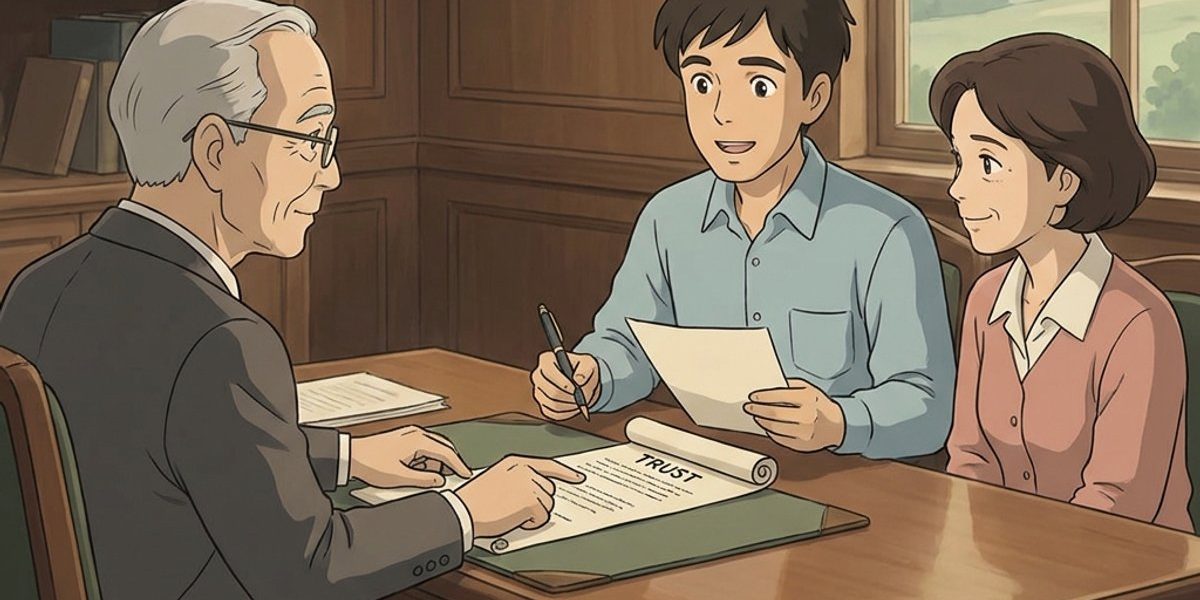
If one co-grantor tries to revoke the trust and the other disagrees, what happens next? – NC
Short Answer
In North Carolina, the first place to look is the trust document. If the trust says both co-grantors must act together, one co-grantor usually cannot revoke the trust alone. If the trust does not clearly answer the issue, North Carolina law often treats each settlor as having power over the portion of the trust property that settlor contributed, so a dispute may lead to only a partial revocation rather than termination of the entire trust.
Understanding the Problem
In North Carolina estate planning, the decision point is whether a revocable living trust created by two co-grantors can be revoked when one grantor wants out and the other does not. The answer turns on the role of each co-grantor as a settlor, the revocation terms written into the trust, and whether the trust property came from one co-grantor, the other, or both. The key timing issue is when the attempted revocation is delivered in the manner the trust requires, because that usually determines whether a bank or trustee can act on it.
Apply the Law
Under North Carolina law, a revocable trust is generally controlled first by its own terms. That means the trust language on amendment and revocation usually comes before any default rule. When there are multiple settlors, the practical rule is often that each settlor may revoke or amend the trust as to the portion of the trust property attributable to that settlor, unless the trust requires joint action. The main forum is usually not a courtroom at first. Instead, the issue is handled through the acting trustee and the financial institution holding trust assets, and a court becomes involved only if the parties dispute authority or ask for instructions or other relief.
Key Requirements
- Trust language controls: The revocation clause usually answers whether both co-grantors must sign together or whether one may act alone.
- Contribution matters: If the trust uses default revocation rules, each co-grantor’s power often tracks that person’s contributed share of the trust property.
- Proper notice and method: A revocation attempt usually must follow the method stated in the trust, such as a signed written notice delivered to the trustee.
What the Statutes Say
- N.C. Gen. Stat. § 31-47 (Testamentary additions to trusts) – recognizes that a revocable trust may be amended or revoked and that a will’s gift to that trust can lapse if the trust is revoked before death.
- N.C. Gen. Stat. § 1-56.1 (Actions to reform, terminate, or modify a trust) – confirms that North Carolina courts can hear actions involving trust modification or termination when a dispute cannot be resolved informally.
Analysis
Apply the Rule to the Facts: Here, the trust was set up as a revocable living trust with two co-grantors, and the immediate question arose during a bank meeting. That means the bank should start with the trust’s revocation section and any definition of each grantor’s rights while both are living. If the document requires joint written action, one co-grantor’s solo demand to revoke should not be enough for the bank or trustee to treat the whole trust as revoked. If the document is silent or uses default-style language, the next issue is which assets each co-grantor contributed, because one co-grantor may have authority only over that person’s share rather than over the entire trust.
That approach matches two common practice points in trust administration. First, multiple-settlor revocation disputes usually turn on tracing contributions, not just on who signed the original trust. Second, banks and trustees often need the exact writing required by the trust before they will retitle or release assets, which is why a disagreement often pauses action until the document is reviewed closely. For related issues, see whether the trust says revocation must be done jointly by both co-grantors and revoke only their share of the trust assets.
Process & Timing
- Who acts: usually the co-grantor seeking revocation, or both co-grantors if acting together. Where: first with the acting trustee and the bank or other institution holding trust assets in North Carolina. What: the written revocation or amendment required by the trust, often signed and dated, plus a certificate or excerpt of trust if the institution requests it. When: on the date and in the manner the trust requires; if the trust sets no special deadline, the key timing point is delivery before the institution changes title or processes a transaction.
- If the other co-grantor objects, the trustee or bank will often freeze action on the disputed request until it receives joint instructions, a clearer legal opinion, or a court order. Local institution procedures can vary.
- If the dispute continues, one party may ask a North Carolina court for instructions, modification, termination, or related relief, and the court can decide whether the attempted revocation was effective in whole, in part, or not at all.
Exceptions & Pitfalls
- Joint-action language can override the default assumption that one co-grantor controls only that person’s contributed share.
- Mixed or hard-to-trace assets can make partial revocation difficult, especially when both co-grantors funded the same account or property.
- Service and notice problems matter. A signed document that is never delivered to the trustee or accepted by the institution under the trust’s terms may not change anything.
Conclusion
In North Carolina, if one co-grantor tries to revoke a revocable trust and the other disagrees, the next step is to read the trust’s revocation clause first. If the trust requires joint action, the trust usually stays in place unless both co-grantors sign. If the trust does not require that, one co-grantor may be able to revoke only that person’s contributed share. The key next step is to deliver the written revocation or objection to the trustee exactly as the trust requires.
Talk to a Estate Planning Attorney
If a co-grantor dispute is affecting whether a revocable trust can be revoked, amended, or honored by a bank, our firm has experienced attorneys who can help clarify the trust language, the parties’ authority, and the next steps. Call us today at 919-341-7055.
Disclaimer: This article provides general information about North Carolina law based on the single question stated above. It is not legal advice for your specific situation and does not create an attorney-client relationship. Laws, procedures, and local practice can change and may vary by county. If you have a deadline, act promptly and speak with a licensed North Carolina attorney.

