
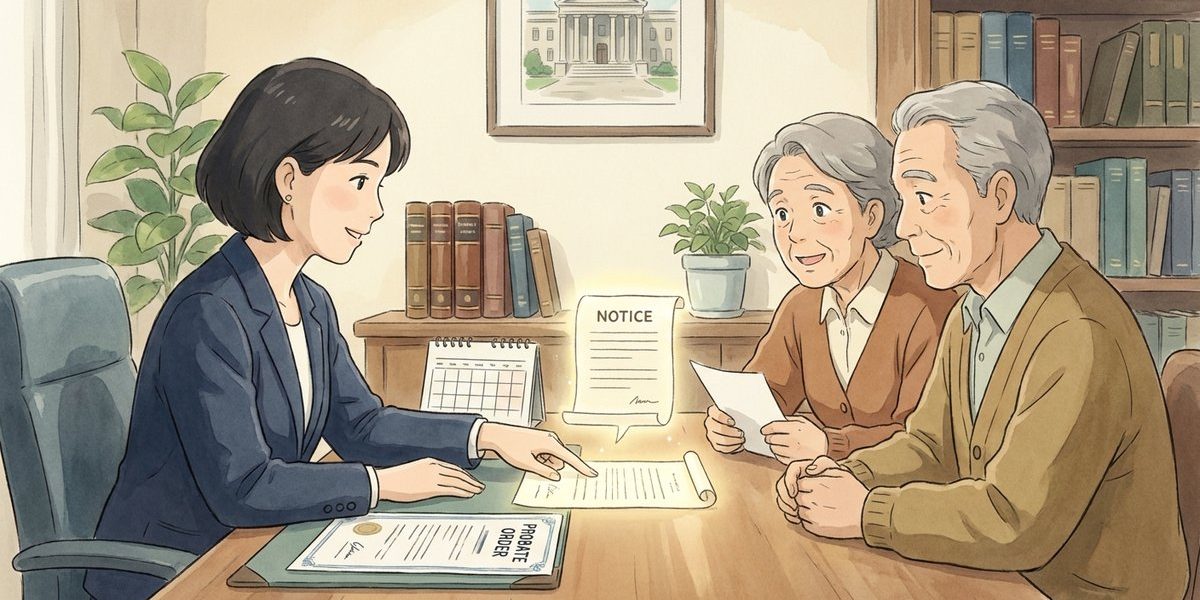
Who is responsible for serving a signed continuance order on all parties in an estate case? – NC
Short Answer
In North Carolina estate proceedings, the safest practice is to make sure all parties receive notice of the continued hearing, but the person who actually mails or serves the signed continuance order can depend on what the clerk or judge directed in that case. If the signed order does not say the clerk will serve it, the party who requested the continuance or submitted the order will often need to serve the filed order and any new notice of hearing on all parties and file proof of service. In probate matters, notice rules matter because a hearing can be delayed or challenged if parties do not get proper notice.
Understanding the Problem
In a North Carolina probate estate case, the question is who must give notice after the court signs an order continuing a hearing to a new date. The issue is not whether a continuance may be granted, but who carries the duty to send the signed order or updated hearing notice to the parties once the hearing has been reset. The answer usually turns on what the signed order says, what the clerk directed, and whether a new notice of hearing is needed to show the new date and service.
Apply the Law
North Carolina probate matters often proceed before the Clerk of Superior Court as estate or special proceeding matters, and notice remains important whenever a hearing date changes. As a practical rule, once the court signs a continuance order, someone must serve notice of the new setting on all parties entitled to notice, and proof of that service should be filed. If the clerk’s office does not expressly take on that task, counsel or the party who prepared the order should not assume the court will mail it. Instead, that party should promptly serve the signed order and, if needed, a separate notice of hearing with a certificate of service under the North Carolina Rules of Civil Procedure.
Key Requirements
- Notice to all parties: Everyone entitled to notice in the estate matter should receive the continued hearing information.
- Service in the proper manner: Service generally follows the Rules of Civil Procedure for papers served after the case is already pending, often by mail under Rule 5 unless the clerk orders otherwise.
- Proof filed with the clerk: A certificate of service or other proof should be filed so the record shows who sent the papers, when, and to whom.
What the Statutes Say
- N.C. Gen. Stat. § 28C-5 (Service of notices) – notices required under Chapter 28C must be served on all parties in the manner prescribed by the Rules of Civil Procedure.
Analysis
Apply the Rule to the Facts: Here, a continuance was requested for a respondent, the court signed an order resetting the hearing, and the remaining question is who will mail or otherwise serve that signed order and whether a notice of hearing with a certificate of service will also be filed. Under North Carolina practice, the safest reading is that notice should not be left uncertain. If the signed order does not state that the clerk will serve it, the law office that requested the continuance or prepared the order will often need to serve the filed order and any updated notice of hearing on all parties, then file a certificate of service so the record is clear.
That approach fits two common practice points. First, once a case is already pending, later papers and notices are often served under Rule 5 rather than by new original process. Second, courts and clerks rely on the file to show that all parties received notice of the new hearing date, so a separate notice of hearing with a certificate of service may still be useful even when the continuance order itself lists the new date.
Process & Timing
- Who files: often the party or attorney who requested the continuance or drafted the order, unless the signed order says the clerk will handle service. Where: with the Clerk of Superior Court in the county where the estate matter is pending in North Carolina. What: the signed continuance order, and often a notice of hearing or certificate of service showing service on all parties. When: promptly after the signed order is filed, and early enough to give fair notice of the new hearing date.
- Next, copies are mailed or otherwise served on all parties entitled to notice. Local practice can vary by county, so some clerks may mail conformed copies, but parties should confirm that rather than assume it happened.
- Finally, proof of service is filed. That creates a record showing the continued hearing date was sent to all parties and reduces the risk of a later objection based on lack of notice.
Exceptions & Pitfalls
- If the signed order expressly says the clerk will serve the order, follow that direction and confirm the mailing occurred.
- A common mistake is assuming the judge’s signature alone gives everyone notice; the file should show actual service or mailing to the parties.
- Another mistake is sending only the order when the new date, time, or courtroom information is unclear; a separate notice of hearing can avoid confusion and service disputes.
Conclusion
In North Carolina estate cases, all parties who are entitled to notice should receive the signed continuance order or other clear notice of the new hearing date. If the order does not assign service to the clerk, the party who requested or prepared the continuance will often need to serve the filed order and file a certificate of service promptly with the Clerk of Superior Court after entry of the order.
Talk to a Probate Attorney
If a North Carolina estate hearing has been continued and there is uncertainty about who must send the signed order or updated hearing notice, our firm has experienced attorneys who can help explain the notice rules, filing steps, and timing. Call us today at 919-341-7055.
Disclaimer: This article provides general information about North Carolina law based on the single question stated above. It is not legal advice for your specific situation and does not create an attorney-client relationship. Laws, procedures, and local practice can change and may vary by county. If you have a deadline, act promptly and speak with a licensed North Carolina attorney.

