
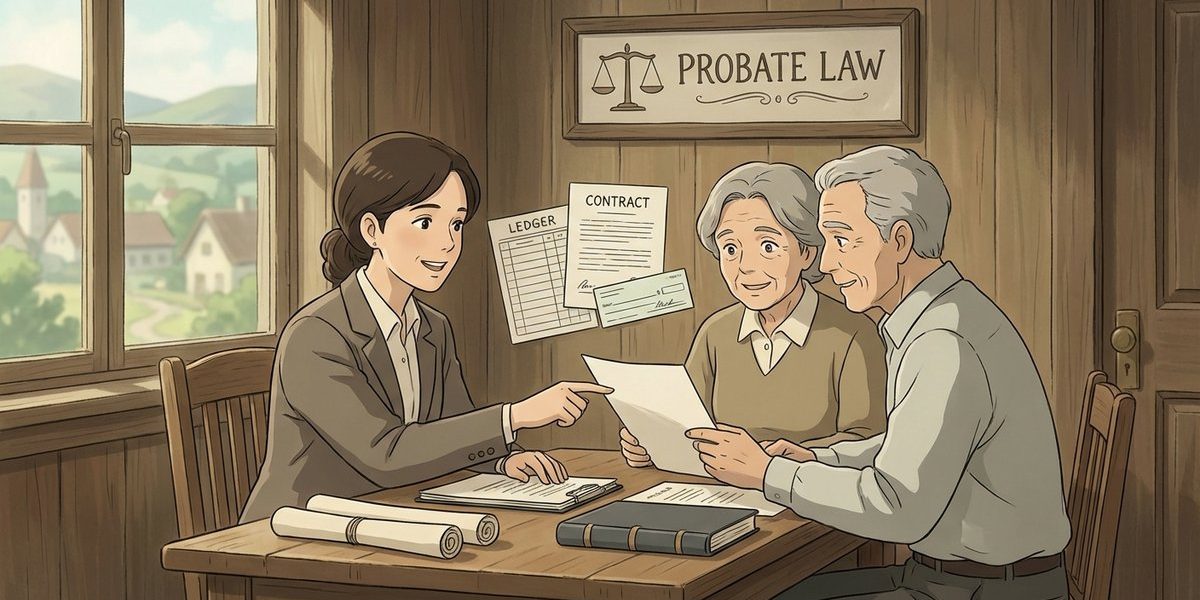
What paperwork should a funeral home provide to show an insurance assignment and who the check was made payable to? – NC
Short Answer
In North Carolina, a funeral home should usually be able to provide the itemized funeral contract or statement, the final receipt or account ledger, and the paperwork it used to claim payment from the life insurance policy or funeral funding source. Those records should help show whether the funeral home was paid by assignment, whether the insurance proceeds were directed under the policy terms, and whether any refund was issued to the estate or another person. If the records do not clearly identify the payee, the estate often needs the insurer’s claim confirmation or benefit letter to verify who the check was made payable to.
Understanding the Problem
In a North Carolina probate matter, the main question is what records a funeral home should provide when a funeral bill was paid through a life insurance assignment and the estate needs to confirm the payee and any refund. The focus is narrow: whether the funeral home’s paperwork is enough to show the assignment, the payment path, and the reason money was later returned. This issue often matters when the personal representative is reviewing funeral expenses and deciding whether the estate file clearly shows who received insurance-related funds.
Apply the Law
Under North Carolina law, funeral and burial charges often appear in estate administration, but life insurance proceeds do not automatically become estate assets just because they helped pay the funeral bill. The key is to identify the payment source, the policy claim paperwork, and the final disposition of any excess funds. In practice, the main records are the funeral home’s contract and ledger, the insurer claim materials, and any receipt or refund record showing where the money went. If the funding was part of a preneed arrangement, North Carolina law also requires documentation showing performance and distribution of funds, and any remaining balance may have to be paid to the estate or the person named in the preneed contract or policy to receive that balance.
Key Requirements
- Proof of the assignment or claim: The funeral home should provide the document it relied on to receive payment, such as an assignment form, authorization, claim form, or preneed performance paperwork.
- Proof of who received the money: The records should show whether payment went to the funeral home, to a named beneficiary, or to the estate, and whether the funeral home only received part of the proceeds.
- Proof of the final account balance: The file should include an itemized bill, payment ledger, and any refund record explaining why money was returned and to whom.
What the Statutes Say
- N.C. Gen. Stat. § 90-210.64 (Death of preneed funeral contract beneficiary; disposition of funds) – requires a preneed licensee to complete a certificate of performance or similar claim form and directs how remaining balances are paid after funeral charges are satisfied.
- N.C. Gen. Stat. § 31A-11 (Insurance benefits) – addresses insurance proceeds in slayer situations; more generally, life insurance proceeds are paid according to the policy terms, beneficiary designation, or any valid assignment rather than automatically through the estate.
Analysis
Apply the Rule to the Facts: Here, the funeral bill already suggests that payment came from a life insurance policy through an assignment to the funeral home, and the receipt shows a small refund to a relative. That means the estate should ask for the full funeral ledger, the assignment or claim document, and the refund record so the file shows three things clearly: what amount was billed, what amount the funeral home received from the insurer, and why the extra amount was returned. If the funeral home’s records do not identify the named beneficiary or the exact payee on the insurance check, the estate will likely need the insurer’s claim response or payment confirmation to close that gap.
North Carolina practice also matters here because insurance claims are usually supported by a death certificate, a claimant’s statement, and sometimes the original policy or other insurer forms. When the estate is the beneficiary, letters testamentary or letters of administration are commonly required; when the estate is not the beneficiary, the policy still must be reviewed carefully because the correct recipient depends on the policy terms. That is why a funeral home receipt alone may show that money was applied, but not always prove who held beneficiary rights under the policy.
If this was a preneed funeral arrangement rather than a simple post-death assignment, the funeral home should also have claim or certificate-of-performance paperwork showing that it completed the contracted services and how the funds were distributed. In that setting, a refund may be proper if the available proceeds exceeded the funeral charges, but the proper recipient of the balance depends on the preneed contract and policy terms. That distinction is important because a refund to a relative does not by itself prove that the relative was the policy beneficiary.
Process & Timing
- Who files: the personal representative or the estate’s attorney usually makes the request. Where: first to the funeral home, and if needed to the life insurance company; probate administration remains with the Clerk of Superior Court in the county handling the estate. What: request the itemized funeral contract, final invoice, account ledger, receipt, assignment or authorization form, insurer claim form, and any refund check image or refund ledger entry. When: as soon as the payment issue is identified, especially before the estate files accountings or seeks reimbursement of funeral expenses.
- Next, compare the funeral home’s ledger against the insurer’s payment confirmation, benefit letter, or explanation of payment. If the records conflict, ask for a written clarification identifying the original payee, the amount applied to the bill, and the reason for any excess payment or refund. County probate practice can vary on how much backup documentation the clerk expects in the estate file.
- Final step and expected outcome/document: place the clarified invoice, proof of payment, and any refund explanation in the estate file so the personal representative can document the funeral expense and explain whether any insurance proceeds passed outside the estate.
Exceptions & Pitfalls
- A funeral home may have proof that it received funds by assignment, but not proof of the policy’s full beneficiary designation; that often requires insurer records.
- A receipt that shows a refund to a relative can reflect an overpayment or contract balance, not necessarily ownership of the policy proceeds. The estate should ask for a written reason for the refund.
- Service and notice problems can arise if the estate relies on informal verbal explanations instead of obtaining the actual ledger, claim paperwork, and written payment confirmation. Missing backup records can create problems in probate review later. For more on supporting funeral charges in an estate file, see itemized funeral bill or receipt and proof of payment for the estate file.
Conclusion
In North Carolina, a funeral home should generally provide the itemized bill, final receipt, account ledger, and the assignment or claim paperwork it used to obtain insurance-related payment. Those records should show the amount charged, the amount paid, and the reason for any refund, but they may not always prove the policy beneficiary without insurer confirmation. The next step is to request the full ledger and assignment records from the funeral home now and compare them with the insurer’s payment confirmation before the estate files its accounting.
Talk to a Probate Attorney
If a North Carolina estate is trying to confirm funeral payment records, insurance assignments, or a refund shown on a funeral receipt, our firm has experienced attorneys who can help explain the paperwork, the probate file, and the next steps. Call us today at 919-341-7055.
Disclaimer: This article provides general information about North Carolina law based on the single question stated above. It is not legal advice for your specific situation and does not create an attorney-client relationship. Laws, procedures, and local practice can change and may vary by county. If you have a deadline, act promptly and speak with a licensed North Carolina attorney.

