
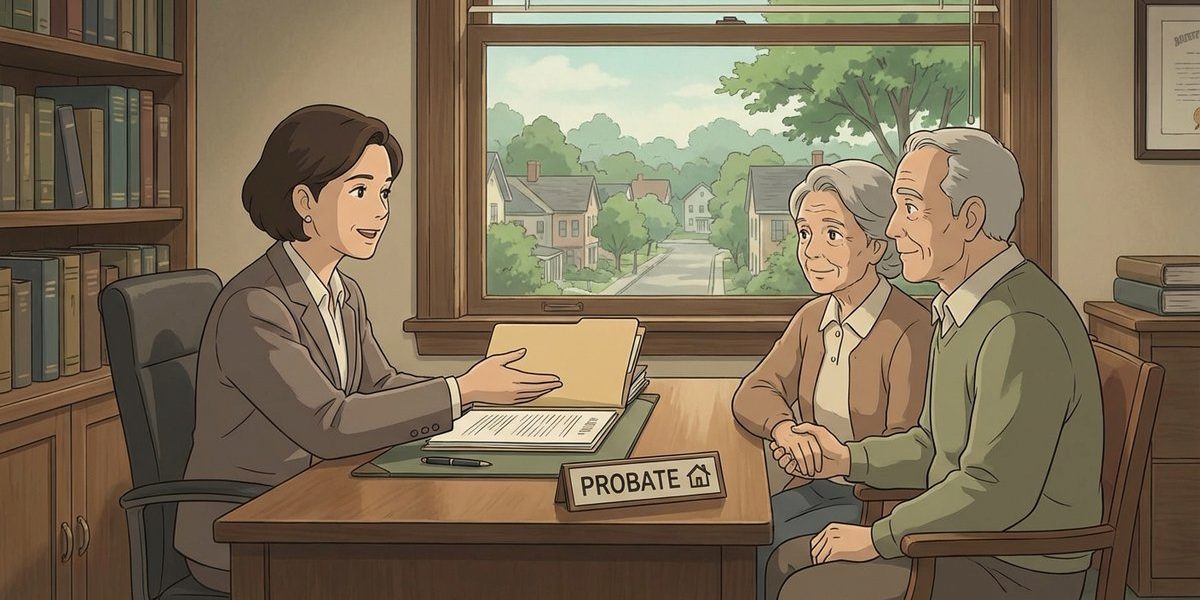
What kind of attorney do I need to defend my right to stay in the home under the will? – NC
Short Answer
In North Carolina, the right attorney is usually a probate and estate litigation attorney. When a surviving spouse claims a lifetime right to live in a home under a will, the dispute often turns on will interpretation, estate administration, and property rights such as a life estate or right of occupancy. If the title holder is threatening removal based on remarriage, the case may also require court action to clarify the will and stop interference with possession.
Understanding the Problem
In North Carolina probate matters, the main question is what kind of lawyer handles a surviving spouse’s claim to remain in a home when a will gives ongoing occupancy rights and another person holding title says those rights end on remarriage. The issue is not simply who holds record title. The issue is whether the will created an enforceable right to stay in the home, who has authority to interpret and enforce that right, and what court process is needed to prevent removal.
Apply the Law
Under North Carolina law, disputes over a surviving spouse’s right to occupy a home after death usually belong with a probate and estate litigation attorney because the lawyer may need to interpret the will, address the estate file before the clerk of superior court, and, if needed, bring a civil action to declare the parties’ rights. A will may create a life estate, a limited right of occupancy, or another possessory interest. The exact wording matters because a life estate generally gives possession for life, while a narrower occupancy clause may carry conditions. If the spouse was omitted or the will language fails, North Carolina also gives some surviving spouses a separate statutory path to claim a life estate in certain real property, but that election has strict filing deadlines.
Key Requirements
- Will interpretation: The lawyer must read the exact language of the will to decide whether it creates a life estate, a right to occupy, or a condition that can end the right.
- Proper forum: The dispute may begin in the estate proceeding before the clerk of superior court, but some title and possession issues also require a civil action for declaratory relief or defense against ejectment.
- Deadline control: If the surviving spouse may need to rely on North Carolina’s statutory elective life estate instead of, or in addition to, the will, the filing deadline can be short and missing it can waive the claim.
What the Statutes Say
- N.C. Gen. Stat. § 29-30 (Election of surviving spouse to take life interest) – allows a surviving spouse in some cases to petition for a life estate in qualifying real property, including the dwelling, and sets filing and service rules.
- N.C. Gen. Stat. § 30-3.4 (Procedure for determining the elective share) – sets the procedure and six-month deadline for an elective share claim, which can matter when evaluating a spouse’s fallback rights.
- N.C. Gen. Stat. § 46A-79 (Partition sale of remainder or reversionary interest) – says a life tenant’s possession is not disturbed by partition of the future interest.
Analysis
Apply the Rule to the Facts: Here, the surviving spouse says the will grants lifetime rights to live in the home, while the deceased spouse’s child holds title and argues remarriage ends that right. That fact pattern calls for a probate and estate litigation attorney, not just a general real estate lawyer, because the first job is to determine whether the will created a true life estate or only a conditional right to occupy. If the will does not clearly tie occupancy to remarriage, the title holder may not be able to force a move-out without first obtaining a court ruling.
The title being in the child’s name does not automatically defeat the surviving spouse’s claim. North Carolina property law recognizes that one person can hold present possession while another holds a future or record interest, and a life tenant’s possession is generally protected during the life estate. That is why the dispute often requires both probate analysis and litigation over possession, title, or declaratory relief rather than a simple lockout or informal demand.
If the will language turns out to be unclear, the attorney may need to ask the court to construe the will and define whether remarriage is a valid condition that ends occupancy. If the will fails to protect the spouse clearly enough, the attorney must also quickly evaluate whether a statutory elective life estate or elective share claim remains available. That timing issue is important because North Carolina treats some missed probate deadlines as a waiver of the right.
Related issues often overlap with stay living in the home during probate questions and with rights does a surviving spouse have to a house disputes when the will and title point in different directions.
Process & Timing
- Who files: the surviving spouse, usually through a probate and estate litigation attorney. Where: the Clerk of Superior Court handling the estate in North Carolina, and sometimes Superior Court for related civil claims affecting title or possession. What: the estate file, the will, and if needed a petition or complaint seeking interpretation of the will, declaratory relief, or defense to removal. When: as soon as a removal threat is made; if a statutory elective share is being considered, the deadline is generally within six months after letters are issued, and an elective life estate under N.C. Gen. Stat. § 29-30 has its own separate deadlines.
- Next, the attorney reviews the exact will language, the deed, the estate filings, and any notice from the title holder. The clerk may handle estate-related issues, while a judge may need to decide a separate civil dispute over the meaning of the will or the right to possession. Timing can vary by county and by whether emergency relief is needed to prevent a forced move.
- Final step: the court enters an order clarifying the spouse’s rights, such as confirming a life estate or occupancy right, denying an attempted removal, or setting the limits of the interest if the will created conditions. If a statutory claim is used, the final document may also need to be recorded with the register of deeds.
Exceptions & Pitfalls
- A remarriage clause may matter if the will clearly makes remarriage the event that ends the right to live in the home.
- Record title alone can mislead parties; a deed in the child’s name does not necessarily erase a valid life estate or occupancy right created by will.
- Waiting too long can be costly because North Carolina probate elections and related notice requirements have strict deadlines, service rules, and county-specific practice points.
Conclusion
In North Carolina, the attorney usually needed to defend a surviving spouse’s right to stay in a home under a will is a probate and estate litigation attorney. The key issue is whether the will created a life estate or enforceable occupancy right, and whether remarriage actually ends that right under the will’s wording. The next step is to have counsel review the will, deed, and estate file and file the proper petition or civil claim before any probate deadline expires.
Talk to a Probate Attorney
If a surviving spouse is being threatened with removal from a home despite language in a will granting ongoing occupancy rights, our firm can help evaluate the will, the title documents, and the probate deadlines. Call us today at 919-341-7055.
Disclaimer: This article provides general information about North Carolina law based on the single question stated above. It is not legal advice for your specific situation and does not create an attorney-client relationship. Laws, procedures, and local practice can change and may vary by county. If you have a deadline, act promptly and speak with a licensed North Carolina attorney.

