
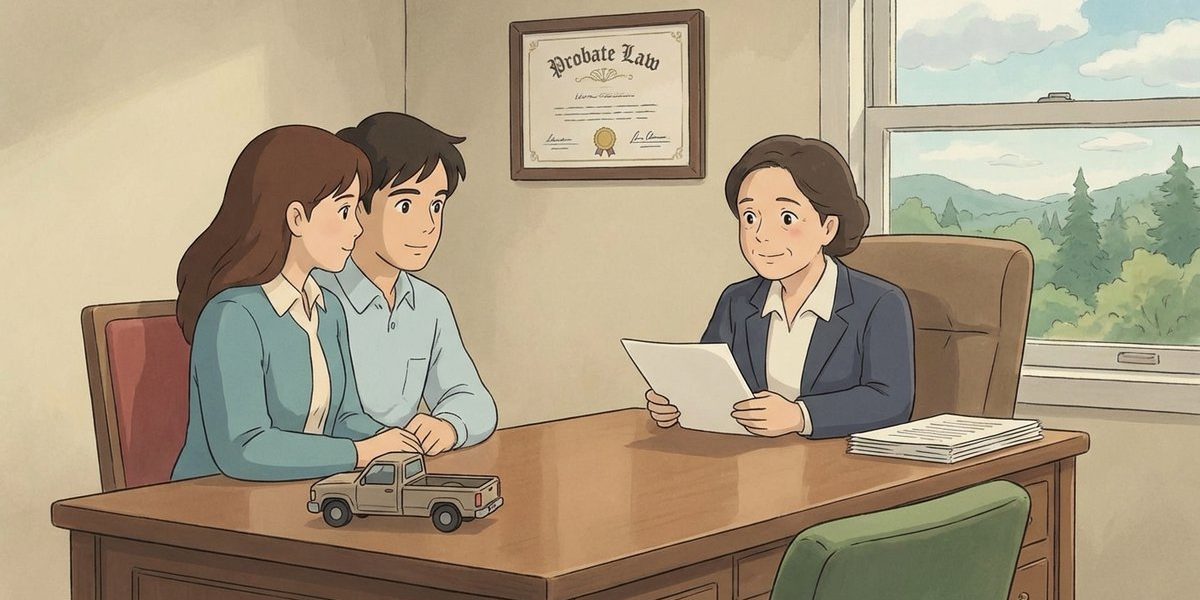
If someone wants to buy the truck, can it be sold before probate is finished, and who has the authority to sell it? – NC
Short Answer
Yes. In North Carolina, a truck owned only by the person who died can often be sold before the probate case is finished, but the sale must be handled by the person with legal authority over the estate. In a full estate, that is usually the court-appointed personal representative after the clerk issues Letters of Administration; in some limited vehicle-only or very small estate situations, all heirs may be able to transfer title through a DMV affidavit instead of full administration. A lien must still be paid off or properly assumed before clear title can pass.
Understanding the Problem
In North Carolina probate, the main question is whether a deceased owner’s truck can be sold before the estate is closed, and which person has the legal power to sign the title and complete the sale. The answer turns on who has been given authority to act for the estate, whether any simplified vehicle-transfer procedure applies, and whether the truck’s loan lien must be dealt with before title can move to a buyer.
Apply the Law
Under North Carolina law, property titled only in the decedent’s name becomes part of the estate and is handled through the estate process unless a narrow transfer shortcut applies. When there is no will, the clerk of superior court can appoint an administrator, and that personal representative generally has authority to sell estate personal property, including a vehicle, without waiting for the entire probate case to close. For motor vehicles, the main forum is the estate file before the Clerk of Superior Court in the county where the estate is opened, and the title work is then completed through the North Carolina Division of Motor Vehicles. If no personal representative has qualified and none is expected to qualify, North Carolina also allows a limited affidavit-based transfer for certain vehicles if all heirs sign and the other statutory conditions are met.
Key Requirements
- Proper authority: Only a court-appointed personal representative, or in a qualifying simplified transfer, all heirs using the required DMV affidavit, can lawfully transfer the truck.
- Title and lien status: The title must be properly assigned, and any lien must be released or assumed in a way DMV will accept.
- Estate purpose: The sale should fit estate administration, such as preserving value, paying valid debts, or distributing the net value to the proper heirs under intestacy rules.
What the Statutes Say
- N.C. Gen. Stat. § 28A-16-1 (Sale of personal property by personal representative) – a personal representative may sell estate personal property, publicly or privately, without a court order.
- N.C. Gen. Stat. § 28A-16-2 (Court-ordered sale of personal property) – a collector must get a court order to sell, and a personal representative may also ask for one if needed.
- N.C. Gen. Stat. § 20-77(b) (Transfer of title after death) – DMV may transfer a decedent’s vehicle title based on letters, a clerk’s assignment, or in some small or no-administration situations an affidavit executed by all heirs.
Analysis
Apply the Rule to the Facts: Here, the decedent died without a will, the long-term partner was not a legal spouse, and the truck appears to have been titled in the decedent’s name with a loan lien. That usually means the truck is an estate asset, and the partner does not gain authority to retitle or sell it just from the relationship alone. If an administrator is appointed by the clerk, that administrator can usually sell the truck before probate is finished, handle the lien payoff from the sale proceeds if needed, and account for the transaction in the estate file. If no full estate is opened and the case fits the DMV affidavit route, all heirs would generally need to participate, which means one relative cannot simply take the truck by self-help.
North Carolina practice also matters at DMV. For a vehicle sale by a personal representative, DMV commonly expects the signed certificate of title, a certified death certificate, and certified Letters showing the representative’s authority. If the original title is missing, DMV may require Form MVR-4, and if the lien still appears on DMV records, a lien release or assumption must be resolved before a buyer can get clear title. For related issues about simplified transfers, see simplified small-estate option just to retitle a vehicle and court order or an affidavit to handle motor vehicles.
Process & Timing
- Who files: an heir or other qualified person seeking appointment as administrator, or in a qualifying no-administration vehicle transfer, all heirs. Where: the Clerk of Superior Court in the county where the estate is opened, then the North Carolina Division of Motor Vehicles. What: estate administration filings to obtain Letters of Administration, or DMV Form MVR-317 affidavit if the vehicle qualifies for the affidavit route; title documents may also require Form MVR-4 if no title is available. When: as soon as practical after death if the truck needs to be protected, insured, stored, or sold to address the lien or other estate obligations.
- After Letters issue, the administrator can arrange a private or public sale without waiting for the estate to close. DMV title transfer steps and lien payoff timing can vary depending on the lender and whether the local plate agency accepts the paperwork immediately or asks for review.
- At the end of the transaction, the buyer receives title documents accepted by DMV, the lien is released or assumed as allowed, and the estate records the sale proceeds and related payments in the next estate accounting.
Exceptions & Pitfalls
- A qualifying affidavit transfer may work if no personal representative has qualified or is expected to qualify and all heirs sign, but that shortcut does not fit every estate.
- A long-term partner who was not a legal spouse does not automatically inherit or control the truck under intestacy law, so possession and legal authority are different issues.
- Common mistakes include trying to sign the decedent’s name without authority, ignoring the lien, failing to gather certified Letters or a death certificate, and assuming one family member can sell the truck without the consent or authority required by law.
Conclusion
In North Carolina, a truck from an intestate estate can often be sold before probate is finished, but only by the person with legal authority to act for the estate. In most cases, that means a court-appointed administrator with Letters of Administration; in a narrow no-administration vehicle transfer, all heirs may use the DMV affidavit process instead. The key next step is to file for estate authority with the Clerk of Superior Court, or confirm that the DMV affidavit procedure applies, before any title transfer or sale occurs.
Talk to a Probate Attorney
If you’re dealing with a deceased person’s truck, a lien, and a dispute over who can retitle or sell it, our firm has experienced attorneys who can help you understand your options and timelines. Call us today at 919-341-7055.
Disclaimer: This article provides general information about North Carolina law based on the single question stated above. It is not legal advice for your specific situation and does not create an attorney-client relationship. Laws, procedures, and local practice can change and may vary by county. If you have a deadline, act promptly and speak with a licensed North Carolina attorney.

