
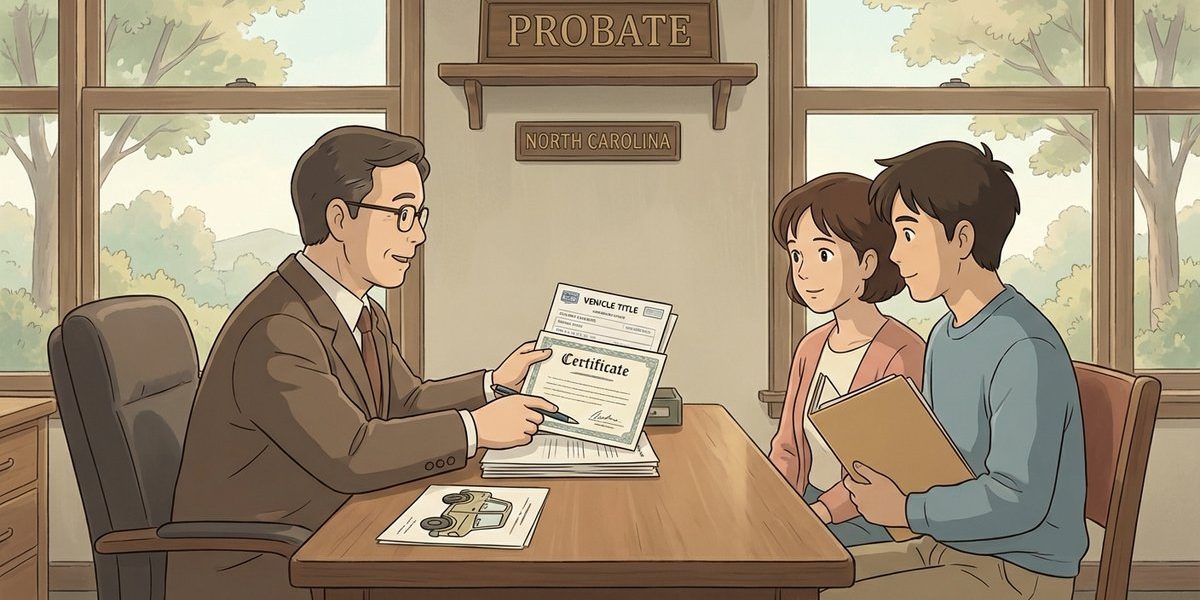
How is a utility vehicle title transferred when the titled owner has died and the vehicle is part of the estate? – NC
Short Answer
In North Carolina, a utility vehicle titled only in the decedent’s name is usually transferred by the estate’s personal representative, not by an heir acting alone. The North Carolina Division of Motor Vehicles generally requires the original title, a properly completed title application, and proof of the personal representative’s authority, such as certified Letters Testamentary or Letters of Administration. If no estate is being opened, a narrower affidavit procedure may be available in limited inheritance or small-estate situations.
Understanding the Problem
In North Carolina probate, the main question is whether the utility vehicle can be retitled through the estate by the personal representative, or whether a limited no-administration transfer procedure applies instead. The answer usually turns on who has authority over the decedent’s personal property, whether an estate has been opened, and whether the vehicle is being distributed to a beneficiary or sold as an estate asset.
Apply the Law
Under North Carolina law, a titled vehicle owned by a decedent becomes part of the probate estate unless it passed outside probate by survivorship or another nonprobate method. When the vehicle is part of the estate, the personal representative gathers and controls that asset, signs the title documents, and transfers title through the North Carolina Division of Motor Vehicles. If the transfer happens by inheritance or devise without a full administration, DMV may accept alternate proof, but that route is limited and usually requires all heirs to act together and confirm that no administration is pending or expected.
Key Requirements
- Estate authority: A duly appointed personal representative usually must handle a vehicle titled only in the decedent’s name because the vehicle is estate property.
- Title paperwork: DMV typically requires the existing certificate of title, a new title application if needed, and supporting estate documents showing who may sign for the decedent.
- Correct transfer path: The process differs depending on whether the vehicle is being sold by the estate, distributed to a beneficiary, or transferred under a limited affidavit procedure when no administration is pending.
What the Statutes Say
- N.C. Gen. Stat. § 20-77 (Transfer by operation of law) – lets DMV issue a new title when ownership passes by law, including inheritance, devise, and certain no-administration transfers.
- N.C. Gen. Stat. § 20-52 (Application for registration and certificate of title) – governs the application for a certificate of title and the ownership, vehicle, and lien information the application must contain.
Analysis
Apply the Rule to the Facts: Here, the utility vehicle title and other funds tied to the decedent appear to be estate assets, so the safest course is to deliver them to the estate counsel or personal representative handling the North Carolina estate. Because the vehicle is described as part of the estate, an heir should not simply sign over the title unless DMV’s limited affidavit procedure clearly applies and no administration is pending or expected. If a personal representative has already qualified, that representative normally signs the transfer documents and decides whether the vehicle will be deposited, held, distributed, or sold as part of administration.
If the title is available, the estate can usually transfer the vehicle more directly through DMV with the personal representative’s authority documents. If the original title cannot be found, DMV practice materials indicate that a duplicate-title process may be used, and DMV may require additional lien information or a lien release before any transfer can be completed. For a practical overview of that issue, see can’t find the title or registration for a vehicle.
Process & Timing
- Who files: usually the personal representative, or in limited cases all heirs using DMV’s affidavit route. Where: the North Carolina Division of Motor Vehicles, either through a local license plate agency or DMV processing. What: the signed certificate of title, a title application such as DMV Form MVR-1 if needed, certified Letters Testamentary or Letters of Administration, and often a certified death certificate; if no administration is pending, DMV may require the affidavit procedure recognized under North Carolina law. When: after the personal representative qualifies and before the vehicle is distributed or sold; if the estate will use a no-administration route, that should be confirmed before anyone signs the title.
- DMV reviews the ownership documents, checks for liens, and may require a lien release if its records still show an unreleased lien. Local office practices can vary, so estate counsel often confirms current DMV requirements before submission.
- Once approved, DMV issues a new title in the beneficiary’s or purchaser’s name, or records the transfer needed for estate administration. If the vehicle is sold, the buyer then completes the new-title step with the estate documents.
Exceptions & Pitfalls
- A different rule may apply if the vehicle was jointly titled with survivorship rights or was assigned to a surviving spouse through the year’s allowance process.
- A common mistake is letting an heir or outside holder sign or deliver the title without confirming whether a personal representative has already qualified. That can create chain-of-title problems.
- Another common problem is an old lien still appearing in DMV records, or a missing original title. Those issues often require extra DMV forms or a lien release before transfer can go through. In some smaller estates, a limited affidavit path may avoid full administration; see simplified small-estate option just to retitle a vehicle.
Conclusion
In North Carolina, a utility vehicle titled only in a decedent’s name is usually transferred by the estate’s personal representative through DMV, using the title, a new title application if needed, and certified Letters showing authority to act. If no estate is pending, a limited inheritance affidavit process may apply, but only in narrower situations. The key next step is to send the title and related asset information to the acting personal representative or estate counsel so the DMV transfer can be filed correctly and promptly.
Talk to a Probate Attorney
If you’re dealing with a deceased owner’s vehicle title and other estate assets that need to be gathered and transferred correctly, our firm has experienced attorneys who can help you understand your options and timelines. Call us today at 919-341-7055.
Disclaimer: This article provides general information about North Carolina law based on the single question stated above. It is not legal advice for your specific situation and does not create an attorney-client relationship. Laws, procedures, and local practice can change and may vary by county. If you have a deadline, act promptly and speak with a licensed North Carolina attorney.

