
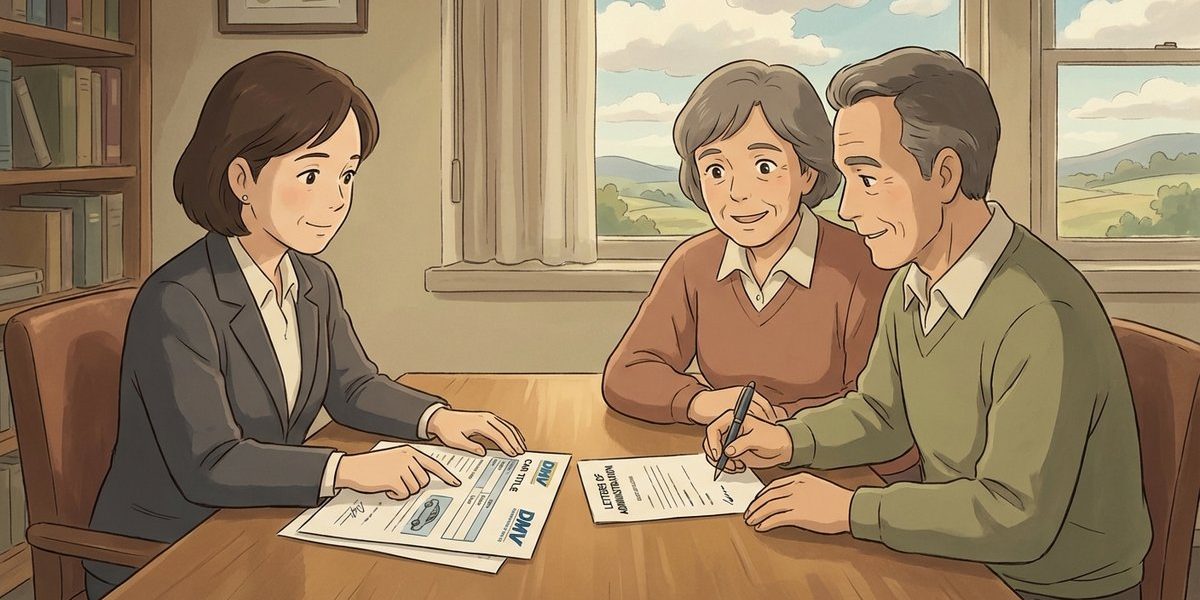
How do I get a complete vehicle title history for a deceased person during probate? – NC
Short Answer
In North Carolina, the personal representative of an estate can usually request DMV title records for a deceased person’s vehicle if the request identifies the vehicle and includes proof of authority, such as letters of administration. A complete title history request is typically handled through the N.C. Division of Motor Vehicles using the VIN, the required form, and the fee. If no response arrives after a normal processing period, the next step is usually to confirm receipt with DMV and, if needed, resend the request with the estate authority papers and proof of payment.
Understanding the Problem
In North Carolina probate, the issue is whether the estate’s personal representative can obtain a complete vehicle title history from the DMV for a deceased owner’s vehicle, and what happens when the request appears to be delayed. The focus is narrow: getting the record tied to a specific VIN so the estate can identify ownership history, title status, or transfer issues during administration. The main trigger is the representative’s appointment and the need to gather and verify estate property through the proper state office.
Apply the Law
North Carolina law treats DMV records as records of the Division, and title-related records may be obtained through the agency’s record request process, subject to the disclosure limits in N.C. Gen. Stat. § 20-43.1. In probate, the personal representative has authority to act for the estate, so requesting a vehicle title history tied to a VIN fits that role when the deceased person may have owned the vehicle or when the estate needs to confirm title status before transfer or sale. The main forum is the North Carolina Division of Motor Vehicles, and the practical trigger is a written records request supported by letters of administration or letters testamentary and the required fee.
Key Requirements
- Proper estate authority: The request should show that the person asking for the record is the duly appointed personal representative or is acting for the estate with that authority.
- Vehicle-specific information: The DMV usually needs the VIN, and accuracy matters because title history requests are tied to the exact vehicle record.
- Complete submission: The request should include the DMV form, supporting probate papers, and the processing fee so the agency can review it without sending it back for missing items.
What the Statutes Say
- N.C. Gen. Stat. § 20-43 (Records of Division) – DMV records are generally open to inspection, but disclosure of personal information is governed by N.C. Gen. Stat. § 20-43.1 and the federal Driver’s Privacy Protection Act.
- N.C. Gen. Stat. § 8-37 (Certificate of Commissioner of Motor Vehicles as to ownership of automobile) – certified DMV ownership and title records can serve as prima facie evidence of vehicle ownership in a civil or criminal action.
Analysis
Apply the Rule to the Facts: Here, a law office handling a North Carolina estate mailed a DMV request for a complete title history for a specific VIN, included letters of administration, and sent the processing fee. Those facts line up with the core requirements because the request identifies the vehicle, shows estate authority, and appears to include the standard supporting items. The remaining issue is not whether the estate may ask for the record, but whether the DMV received the submission and is processing it or whether the request needs to be resent or supplemented.
North Carolina probate practice also matters here because a personal representative must gather and verify estate assets before transfer or distribution. A title history can help confirm whether the vehicle was titled in the decedent’s name, whether there were prior transfers, and whether a later title step is needed before the estate can act. That is especially important when the paper title is missing or the estate needs a record trail before handling a sale or retitling, as discussed in can’t find the title or registration for a vehicle.
Process & Timing
- Who files: the personal representative of the estate, or someone acting through that office. Where: the North Carolina Division of Motor Vehicles. What: the DMV record request form for title information, the VIN, letters of administration or letters testamentary, and the required fee. When: as soon as the estate needs to confirm ownership or title status; if no response arrives after the usual processing window, follow up promptly rather than waiting indefinitely.
- Next, confirm whether DMV received the mailing by checking delivery records, payment processing, or any agency contact channel listed on the form. If the fee has not been processed and no record of receipt appears, resend the packet with copies of the estate papers and keep proof of mailing.
- Finally, DMV should issue the requested record, a certified ownership record, or a response identifying any problem with the request. The estate can then use that information to decide whether to transfer, sell, or further document the vehicle through the probate process, including the steps discussed in what documents the estate process typically needs to transfer or sell a vehicle.
Exceptions & Pitfalls
- Some requests stall because the VIN is incomplete, the form is outdated, the fee is incorrect, or the probate papers do not clearly show current authority.
- A title history request is not the same as a title transfer request. The estate may still need separate DMV forms and probate documents to retitle or sell the vehicle after the record arrives.
- Mailing problems, missing delivery confirmation, and stale letters can create delays. Keeping copies, tracking, and proof of payment helps show what was sent and when.
Conclusion
In North Carolina, a deceased person’s complete vehicle title history is usually obtained by the estate’s personal representative through a DMV records request that includes the VIN, proof of appointment, and the required fee. If the request has already been mailed and the normal processing period has passed, the key next step is to confirm DMV receipt and, if needed, resubmit the request packet to the Division promptly so the estate can keep moving.
Talk to a Probate Attorney
If an estate is trying to confirm a deceased person’s vehicle ownership or title history and the DMV request has stalled, our firm has experienced attorneys who can help explain the probate and DMV steps, required documents, and timing. Call us today at 919-341-7055.
Disclaimer: This article provides general information about North Carolina law based on the single question stated above. It is not legal advice for your specific situation and does not create an attorney-client relationship. Laws, procedures, and local practice can change and may vary by county. If you have a deadline, act promptly and speak with a licensed North Carolina attorney.

