
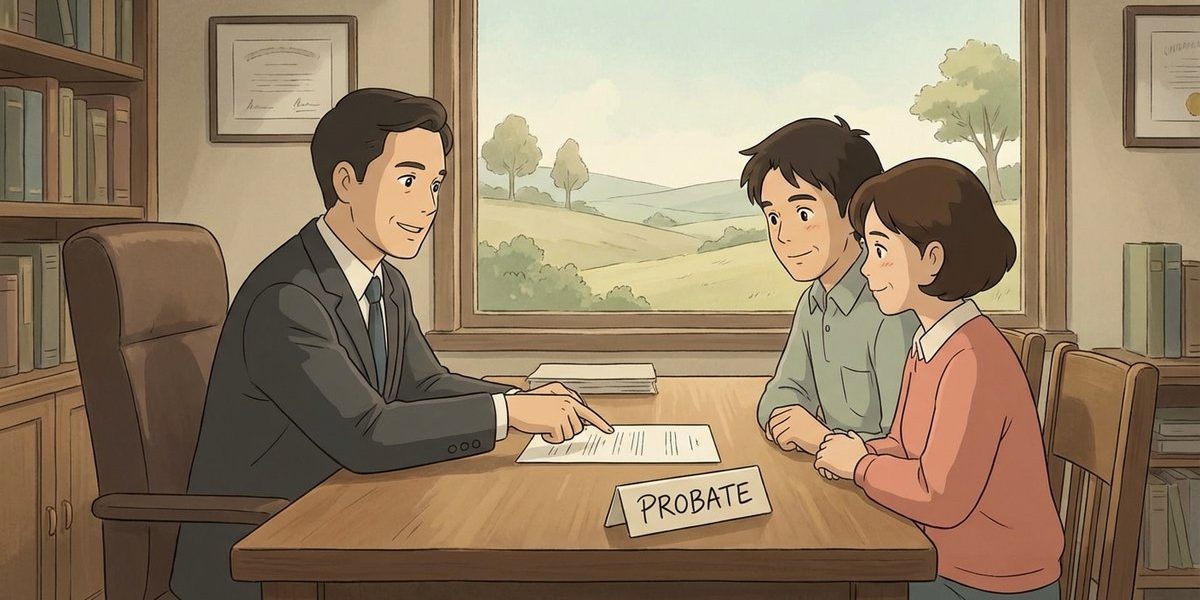
What happens if a vehicle document is not signed in front of a witness? – NC
Short Answer
In North Carolina, the result depends on what kind of vehicle document is involved. If the form specifically requires a witness, a signature made without that witness present may be rejected until the document is signed again correctly or otherwise re-executed in the form the agency or court requires. In probate-related vehicle paperwork, the safest approach is to sign again in front of a qualified adult witness and send back a clear copy if that is what the office handling the transfer requested.
Understanding the Problem
In North Carolina probate matters, the single issue is whether a person handling estate-related vehicle paperwork can rely on a signature that was not made in front of the required witness. The answer usually turns on the exact form, who must sign it, and whether the office processing the vehicle transfer requires the witness to observe the signing or only to verify that the signer acknowledged the signature. This question matters because a missing witness step can delay approval of the vehicle paperwork.
Apply the Law
Under North Carolina law, signature formalities matter when a document calls for a witness, acknowledgment, or notarization. A witness requirement is usually there to confirm that the correct person signed the document or acknowledged the signature, and a notary certificate may also be used in some settings to verify a subscribing witness or, in limited situations, a proof of signature by a subscribing witness. In probate-related vehicle matters, the main forum is usually the clerk of superior court for estate administration and the North Carolina Division of Motor Vehicles for title work, and the document should be completed before submission so the transfer is not delayed.
Key Requirements
- Correct formality: The document must be signed the way the form requires, which may mean in front of a witness, in front of a notary, or both.
- Qualified witness: If a witness is allowed to be any adult, that adult should be physically present when the signer signs or acknowledges the signature, and the witness should sign where the form directs.
- Usable copy: The returned copy must be clear and complete so the clerk, DMV, or other office can confirm every signature, date, and certificate.
What the Statutes Say
- N.C. Gen. Stat. § 10B-42 (Proof of signature by subscribing witness) – provides for proof of the principal’s signature through a subscribing witness who personally appears before the notary and states that the witness saw the principal sign or heard the principal acknowledge the signature.
- N.C. Gen. Stat. § 10B-42.1 – is not a general verification-by-nonsubscribing-witness statute for routine vehicle paperwork and should not be relied on here without the specific form or agency instruction requiring it.
Analysis
Apply the Rule to the Facts: Here, the paperwork concerns a vehicle in a probate setting, and the signer was told to sign a consent document in front of a witness. If that witness requirement is part of the form or the office’s processing rules, a signature made without the witness present may not satisfy the required formality, even if the signature itself is genuine. Because the witness can be any adult and a clear copy will be sent back, the practical fix is usually to sign the document again in front of the adult witness and return a legible copy with all signature lines completed.
This approach fits two common North Carolina practice points. First, offices handling estate and title paperwork often focus on whether the form was executed exactly as directed, not on whether the signer intended to comply. Second, when a document depends on witness verification, the witness generally needs to observe the signing or the signer must properly acknowledge the signature in the witness’s presence, rather than having the witness sign later from memory or assumption.
Process & Timing
- Who files: the person handling the estate vehicle paperwork or the person the form authorizes to sign. Where: usually with the North Carolina Division of Motor Vehicles for title work and, if estate authority is involved, through the clerk of superior court handling the estate. What: the signed consent or transfer-related document, completed exactly as instructed. When: before the vehicle transfer is finalized and as soon as the missing witness issue is discovered.
- Next, the signer re-signs the document in front of the required adult witness, the witness signs in the proper place, and a clear copy is sent back. If the office questions the earlier version, it may ask for a newly executed form rather than an explanation.
- Final step: the receiving office reviews the corrected paperwork and, if everything else is in order, continues processing the vehicle transfer or related estate request. It is also wise to keep copies, especially when handling paperwork to prove the vehicle was legally retitled out of the decedent’s name.
Exceptions & Pitfalls
- Some forms require a notary rather than, or in addition to, a witness. An adult witness alone may not cure a missing notarization.
- A witness who signs after the fact without seeing the signature or acknowledgment can create a defect that leads to rejection and a request for a new form.
- Blurry scans, missing dates, and incomplete signature blocks often cause the same delay as a missing witness. Related estate title issues can also overlap with questions about who is allowed to sign an estate vehicle title.
Conclusion
In North Carolina, if a vehicle document must be signed in front of a witness, a signature made without that witness present may be rejected and usually needs to be done again correctly. The key threshold is whether the form actually requires witness observation or acknowledgment. The next step is simple: re-sign the document in front of the required adult witness and submit the clear completed copy to the office handling the vehicle matter before the transfer moves forward.
Talk to a Probate Attorney
If a probate vehicle transfer is being delayed because a consent or title-related document may not have been signed correctly, our firm has experienced attorneys who can help explain the required steps and timing. Call us today at 919-341-7055.
Disclaimer: This article provides general information about North Carolina law based on the single question stated above. It is not legal advice for your specific situation and does not create an attorney-client relationship. Laws, procedures, and local practice can change and may vary by county. If you have a deadline, act promptly and speak with a licensed North Carolina attorney.

