
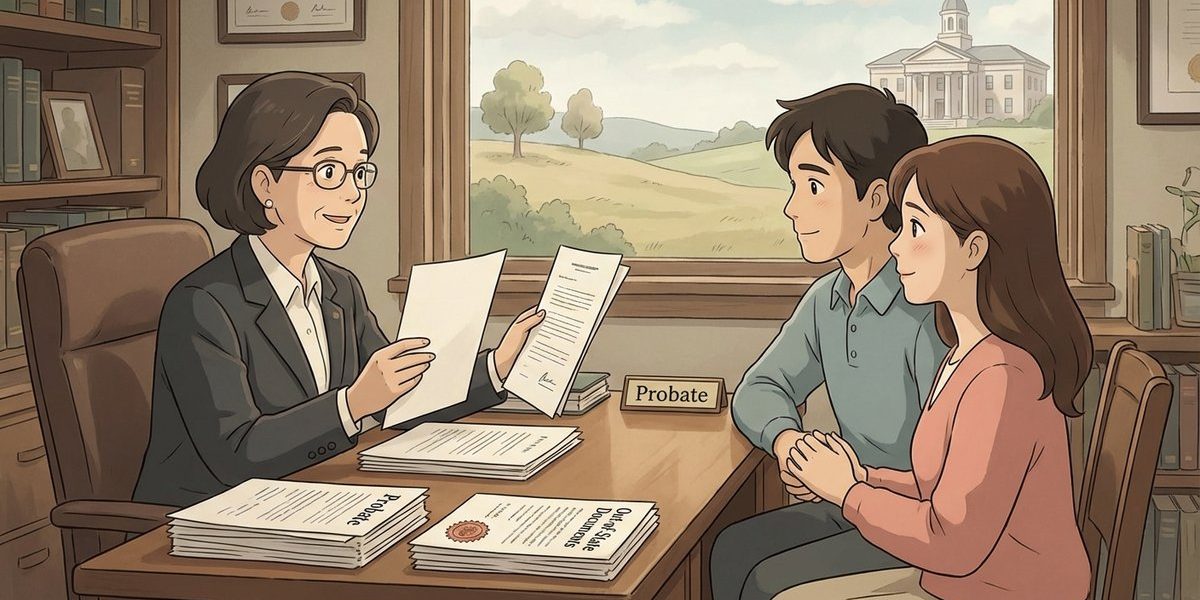
Do I need exemplified copies or certified copies when I’m bringing probate documents in from another state? – North Carolina
Short Answer
Usually, North Carolina will accept properly certified copies of the foreign probate record, and in some counties the clerk may ask for exemplified copies instead. For an ancillary estate in North Carolina, the key documents are typically the foreign letters, the will if there is one, and the probate proceeding record that shows the appointment and probate. A death certificate may help prove the death, but a certified or authenticated copy is generally enough; an exemplified death certificate is not usually the issue.
Understanding the Problem
In North Carolina probate, the main question is what level of authentication the clerk will require when a personal representative brings estate papers from another state to open an ancillary estate or record a foreign probate. The decision point is narrow: whether the out-of-state court papers must be certified copies or exemplified copies, and which documents must be obtained before filing with the Clerk of Superior Court in the county where the North Carolina estate matter will proceed.
Apply the Law
North Carolina treats foreign probate records as admissible when they are properly certified under the law of the state that issued them or under federal authentication rules. In practice, for ancillary administration involving North Carolina property, the clerk usually wants the foreign letters of appointment, the will and probate order if the decedent died testate, and enough of the foreign file to show that a valid estate is already open and who has authority to act. The main forum is the Clerk of Superior Court in the North Carolina county where the decedent owned property or where the ancillary estate should be opened. If the goal is only to collect North Carolina personal property without opening an ancillary estate, North Carolina law also allows payment to a foreign domiciliary personal representative after 90 days from death if the statutory conditions are met.
Key Requirements
- Proof of foreign appointment: Obtain a certified copy of the foreign letters testamentary or letters of administration, and be prepared to get an exemplified copy if the local clerk requests a higher level of authentication.
- Proof of the will and probate: If there is a will, obtain a certified copy of the will and the foreign probate order or other record showing the will was admitted to probate.
- Proof of death: A certified or authenticated death certificate is commonly used to establish death, but North Carolina does not always require a death certificate to start probate if other sufficient proof is available.
What the Statutes Say
- N.C. Gen. Stat. § 8-36 (Authenticated copy of record of administration) – allows a properly certified copy of foreign letters or administration records, and related inventory or return, to be used as evidence in North Carolina.
- N.C. Gen. Stat. § 8-32 (Certified copies of deeds and wills from other states) – allows a properly certified copy of an out-of-state will to be read as evidence when the original cannot be obtained.
- N.C. Gen. Stat. § 28A-26-2 (Payment or delivery to foreign domiciliary personal representative without local administration) – permits transfer of North Carolina personal property to a foreign domiciliary personal representative after 90 days from death on presentation of authenticated copies of letters and a required affidavit.
Analysis
Apply the Rule to the Facts: Here, the firm is preparing an application for ancillary letters in North Carolina based on an estate already opened in another state. That means the safest file set is the foreign letters of appointment, the will if one exists, and the probate papers showing the will was admitted or the representative was appointed. Because North Carolina statutes accept properly certified foreign probate records as evidence, certified copies will often work, but some clerks prefer exemplified copies for ancillary filings involving foreign probate records, especially when the filing is meant to support title to North Carolina real property.
If the out-of-state estate is testate, the clerk will usually need enough of the foreign probate record to determine that the will was validly admitted and that the named representative has authority. If the foreign papers do not clearly show proper execution or probate of the will, the clerk may require more supporting material. The death certificate is a separate issue: a certified or authenticated copy is commonly sufficient evidence of death, and it is not usually the document that needs exemplification.
North Carolina practice also draws a practical distinction between opening a full ancillary estate and using the simplified collection procedure for personal property. If the matter involves only North Carolina personal property and no local administration is pending, a foreign domiciliary personal representative may sometimes proceed after 90 days from death by presenting authenticated copies of letters plus the required affidavit instead of opening an ancillary estate. If the matter involves North Carolina real property or a need for ancillary letters, filing with the clerk is the more likely path.
Process & Timing
- Who files: the foreign personal representative or counsel acting for the estate. Where: the Clerk of Superior Court in the North Carolina county where the decedent owned property or where the ancillary estate should be opened. What: typically an application for probate and letters or administration marked as ancillary, together with the foreign letters, the foreign probate record, the will if any, and proof of death. When: as soon as ancillary authority is needed; if using the no-ancillary transfer procedure for personal property only, wait at least 90 days after death.
- The clerk reviews whether the foreign documents adequately show the appointment, the probate status of the will, and the basis for North Carolina authority. County practice can vary on whether certified copies are enough or whether exemplified copies are preferred, so counsel should confirm the local clerk’s requirement before ordering documents from the foreign court.
- If the filing is accepted, the clerk opens the North Carolina estate matter and issues ancillary letters or records the foreign probate materials as appropriate. After that, the North Carolina administration proceeds on local assets only, with local notice and reporting requirements.
Exceptions & Pitfalls
- Some clerks accept certified copies of the foreign will and probate record, while others may insist on exemplified copies for ancillary filings tied to foreign probate. Ordering only certified copies can cause delay if the county wants exemplification.
- A will alone is not enough. The file should also show the foreign probate action and the representative’s current authority through letters or equivalent appointment papers.
- Death certificates often matter for proof of death and asset collection, but North Carolina law allows other certified or authenticated records as evidence of death. The more common problem is incomplete authentication of the probate file, not the absence of an exemplified death certificate.
Conclusion
For a North Carolina ancillary probate filing, certified copies of the foreign letters, will, and probate record will often satisfy the statute, but some counties may require exemplified copies as a practical filing requirement. The safest next step is to confirm the local Clerk of Superior Court’s preference, then obtain the foreign letters, will, and probate papers in that form and file the ancillary application with the clerk as soon as North Carolina authority is needed.
Talk to a Probate Attorney
If an estate is dealing with out-of-state probate papers and needs to know whether North Carolina requires certified or exemplified copies for ancillary filing, our firm has experienced attorneys who can help sort out the required documents, local clerk practice, and timing. Call us today at 919-341-7055. For related guidance on what documents from the primary probate are needed to open the ancillary case, see our additional article.
Disclaimer: This article provides general information about North Carolina law based on the single question stated above. It is not legal advice for your specific situation and does not create an attorney-client relationship. Laws, procedures, and local practice can change and may vary by county. If you have a deadline, act promptly and speak with a licensed North Carolina attorney.

