
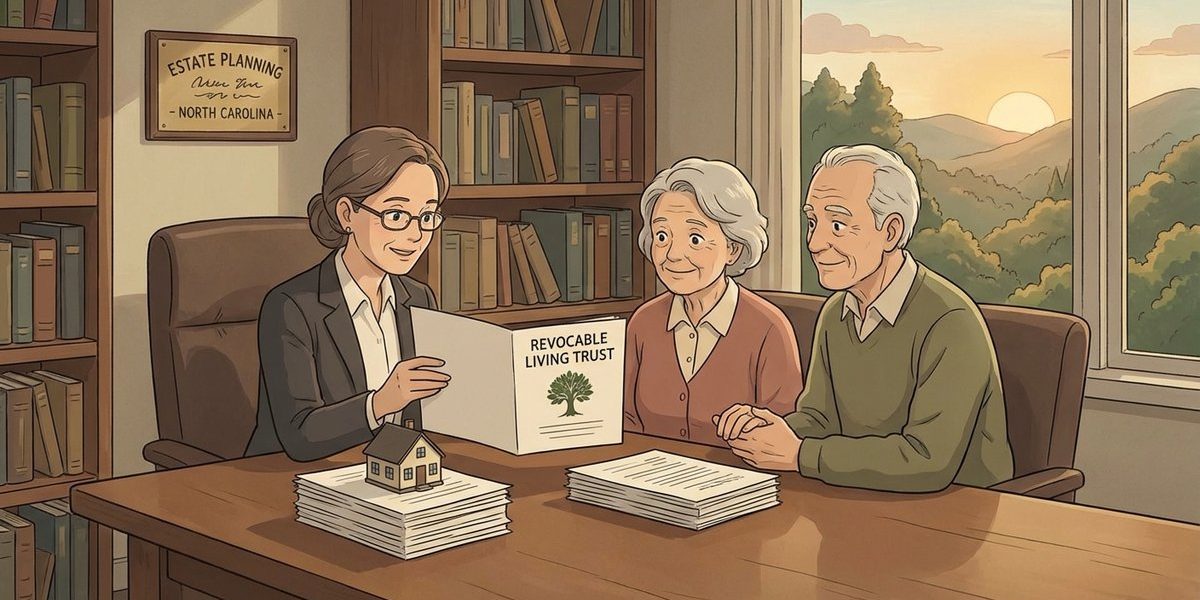
Can a living trust for our home help the surviving spouse avoid probate and make things easier later? – NC
Short Answer
Yes. In North Carolina, a properly signed and funded revocable living trust can help a surviving spouse avoid probate for a home that is actually titled in the trust, which can make later administration simpler. But the trust only works as planned if the deed moved the home into the trust correctly, the trust terms still fit the family’s goals, and the rest of the estate plan coordinates with the trust.
Understanding the Problem
In North Carolina estate planning, the main question is whether a married couple can use a living trust for the home so the surviving spouse can take over more smoothly after the first death without a separate probate step for that property. The focus is narrow: whether the trust arrangement for the house is valid, funded, and practical for the surviving spouse when one spouse has a serious illness and planning needs immediate review.
Apply the Law
North Carolina law generally allows a revocable living trust to hold title to real estate, and property that is owned by the trustee of that trust at death usually passes under the trust terms instead of through the decedent’s probate estate. That can reduce court involvement for the home itself. The key point is funding: signing a trust document alone does not avoid probate unless the home was also transferred into the trust by a valid deed. In North Carolina, the usual forum for probate issues is the Clerk of Superior Court in the county where the estate is administered, but a funded trust is designed to let the successor trustee manage the trust property outside that probate track. Even so, a surviving spouse may still need probate for assets left outside the trust, and spouse-protection rules can still matter.
Key Requirements
- Valid trust document: The trust should clearly name the settlors, trustee, successor trustee, and beneficiaries, and it should state what happens after the first spouse dies and after the survivor dies.
- Proper funding of the home: The home must be retitled into the trust by deed. If title stayed in one or both spouses’ individual names, the trust may not avoid probate for that property.
- Coordinated estate plan: The trust should work with the deed, any will, powers of attorney, health care documents, and beneficiary designations so the surviving spouse is not left with gaps or conflicting instructions.
What the Statutes Say
- N.C. Gen. Stat. § 39-6.7 (Construction of conveyances to or by trusts) – North Carolina treats a deed to a trust as a transfer to the trustee or trustees of that trust, which helps confirm how title to trust-owned real estate is held and conveyed.
- N.C. Gen. Stat. § 31C-4 (Perfection of title of surviving spouse) – In some cases involving spousal rights, this statute recognizes that property may have been held by a trustee of a revocable inter vivos trust created by the decedent.
- N.C. Gen. Stat. § 41-3 (Survivorship among trustees) – When more than one trustee is serving in a naked trust not coupled with a beneficial interest, North Carolina law addresses how a surviving trustee may continue to act.
- N.C. Gen. Stat. § 41-65 (Entireties property conveyed to trusts) – North Carolina specifically addresses how real property held by spouses as tenants by the entirety may be conveyed to a joint trust or, in equal shares, to two separate trusts, and when certain entireties protections continue to apply while the property is held in trust.
Analysis
Apply the Rule to the Facts: Here, the couple already used an online service to create a living trust for the home, so the first issue is not whether a trust can help, but whether the trust was completed correctly under North Carolina law. If the trust exists on paper but no deed transferred the house into the trust, the surviving spouse may still face probate for the home. If the deed was signed and recorded correctly and the trust names a workable successor trustee, the trust is much more likely to make administration easier after the first death.
North Carolina practice also matters because many married couples already own a home with survivorship features, especially tenancy by the entirety. In that setting, the first spouse’s death may already pass the home automatically to the survivor outside probate, so the trust may add value mainly for what happens after the surviving spouse later dies, during incapacity, or if the trust terms are meant to guide later management. North Carolina also specifically addresses conveyances of entireties property to certain trusts. That is why a review should compare the current deed, the trust language, and the couple’s present goals rather than assuming the online documents solved the problem.
A second practical issue is whether the trust plan coordinates with the rest of the estate plan. A trust for the house may help with title transfer, but it does not replace a will for assets left outside the trust, and it does not replace financial and health care powers needed during illness or incapacity. When one spouse has a serious terminal illness, those supporting documents often matter just as much as the trust because they let the right person act before death as well as after it.
Process & Timing
- Who files: Usually the current owner or owners sign the needed estate planning documents, and if the home is being funded into the trust, the owners sign a new deed to the trustee or trustees. Where: The deed is typically recorded with the Register of Deeds in the North Carolina county where the home is located. What: The trust, deed, will, durable power of attorney, and health care documents should be reviewed together. When: As soon as possible, especially before incapacity or death, because a trust cannot avoid probate for a home that was never transferred into it during life.
- Next, the deed and trust terms should be checked for consistency, including trustee names, legal description, signature format, and whether the trust still matches the couple’s wishes for the surviving spouse and later beneficiaries. County recording practices can vary slightly.
- After the first death, the successor or surviving trustee usually uses the trust terms and death certificate to continue managing or distributing trust property. If other assets were left outside the trust, a separate estate may still need to be opened before the Clerk of Superior Court.
Exceptions & Pitfalls
- A home already owned with survivorship rights between spouses may already avoid probate at the first death, so the trust may not change that first transfer as much as expected.
- The most common mistake is creating a trust but never recording a deed into the trust, or using a deed that does not match North Carolina title rules and trustee names.
- Other common problems include failing to update successor trustee provisions, leaving major assets outside the trust, and overlooking spouse-related rights or lender, insurance, and homestead issues that should be reviewed before and after transfer.
Conclusion
Yes, a living trust for a home can help a surviving spouse avoid probate in North Carolina, but only if the trust is valid and the home was actually transferred into the trust by deed. The most important threshold is funding the trust correctly. The next step is to review the trust, deed, will, and incapacity documents together and record any needed corrective deed promptly, before incapacity or death creates avoidable problems.
Talk to a Estate Planning Attorney
If a family is trying to make things easier for a surviving spouse and is unsure whether a living trust for the home was done correctly, our firm has experienced attorneys who can help review the documents, explain the options, and identify important timing issues. Call us today at 919-341-7055. For more on related planning, see avoid probate for our home, retirement accounts, and other assets and need a trust or will(s) if we want everything to go to a spouse first and then to children.
Disclaimer: This article provides general information about North Carolina law based on the single question stated above. It is not legal advice for your specific situation and does not create an attorney-client relationship. Laws, procedures, and local practice can change and may vary by county. If you have a deadline, act promptly and speak with a licensed North Carolina attorney.

