
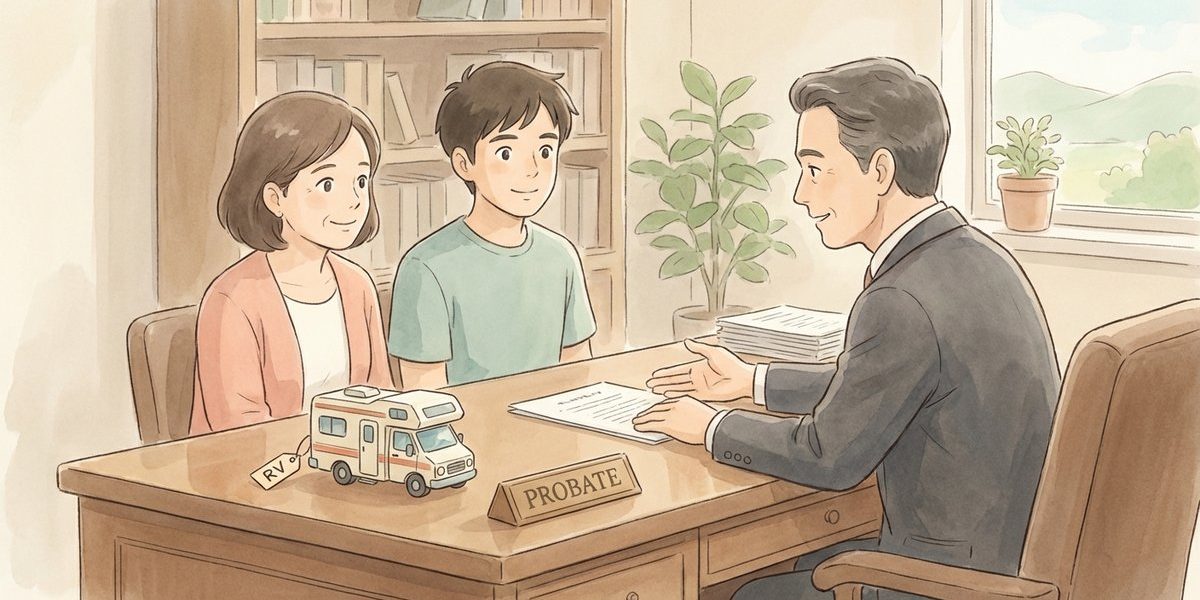
Can heirs be personally responsible for a deceased parent’s RV loan if they did not sign for it? – NC
Short Answer
Usually no. In North Carolina, an heir who did not sign the RV loan is generally not personally liable for that debt just because of the family relationship or because the heir may receive estate property. The lender can usually enforce its lien against the RV and may file a claim against the estate for any remaining balance, but payment normally comes from estate assets in the probate process, not from an heir’s own money unless that heir separately agreed to the debt or received property that remains reachable under North Carolina law.
Understanding the Problem
In North Carolina probate, the main question is whether heirs must pay a deceased parent’s RV loan from their own funds when they never signed the note. The decision point is narrow: a lender is trying to recover an RV titled through the estate, and the issue is whether the debt stays with the estate or becomes a personal obligation of heirs. The answer turns on who is legally liable on the contract, whether the lender has collateral, and what estate assets are available during administration.
Apply the Law
Under North Carolina law, a decedent’s debts are generally paid through the estate administration process by the personal representative, not by heirs in their individual capacity. A secured creditor, such as an RV lender, may look first to the collateral and may also present a claim in the estate for any unpaid balance that remains after the collateral is applied. The main forum is the estate file before the Clerk of Superior Court, with any separate repossession or possession lawsuit handled in the appropriate trial court. A key timing point is the creditor-claims period after notice to creditors is published, and the personal representative must also avoid paying lower-priority claims too early.
Key Requirements
- Personal liability depends on the contract: An heir is usually personally responsible only if that heir signed as a borrower, co-borrower, or guarantor, or later agreed to assume the debt.
- The lien follows the RV: If the loan is secured, the lender can seek possession of the RV or apply sale proceeds to the balance before looking for payment from other estate assets.
- Estate assets pay estate debts in order: If a balance remains, the claim is handled through the estate and paid, if at all, according to North Carolina’s priority rules and only from assets legally available to the estate.
What the Statutes Say
- N.C. Gen. Stat. § 28A-19-6 (Order of payment of claims) – sets the priority for paying estate claims.
- N.C. Gen. Stat. § 28A-19-7 (Satisfaction other than by payment) – allows a debt to be handled by assumption if the personal representative, creditor, and assuming party all agree.
- N.C. Gen. Stat. § 41-2.1 (Right of survivorship in bank deposits) – addresses creation of survivorship rights in bank deposits.
- N.C. Gen. Stat. § 54B-129 (Joint accounts) – addresses joint accounts at savings institutions.
Analysis
Apply the Rule to the Facts: Here, the lender has filed a civil action to take possession of the RV, which strongly suggests a secured claim against that vehicle rather than a direct personal claim against heirs who never signed the loan. If the RV is sold and the proceeds do not cover the full balance, the unpaid amount is usually a claim against the estate, not a personal debt of the heirs. If the estate has limited liquid assets, the personal representative may need to determine what probate assets are available and pay valid claims in statutory order rather than trying to shield one asset class over another.
The concern about other estate assets is real, but it is different from personal liability. If the RV debt remains unpaid after the collateral is applied, other probate assets may need to be used if the claim is timely and has the proper priority. That does not mean an heir must write a personal check. It means the estate may have to use assets under administration before distributions are made to beneficiaries, much like the issues discussed in how debts and bills are handled during probate.
Transferred vehicles and joint accounts require separate analysis. A vehicle transferred before death is not automatically an estate asset, but the facts and timing of the transfer matter, especially if title was not properly changed or if the transfer can be challenged. A joint bank account with survivorship usually passes outside probate, but whether those funds are reachable for estate creditors depends on the specific statutory basis and facts, so that issue requires separate analysis. The same general issue can arise with other nonprobate property, although whether a house is reachable depends heavily on how title was held at death and whether it passed outside the estate.
North Carolina practice materials also stress two points that matter here. First, encumbered property is not always paid off by the estate just because a debt exists; the estate’s responsibility depends on who was liable and the nature of the asset. Second, with titled vehicles, the personal representative usually must either satisfy the lien or arrange for a transferee to assume it before a clean transfer can occur, which is why a lender’s lien on an RV often drives the process from the start. For related issues involving vehicle-heavy estates, see selling or transferring vehicles to pay estate debts.
Process & Timing
- Who files: the personal representative handles the estate response, while the lender may file a creditor claim and a separate possession action. Where: the estate is administered before the Clerk of Superior Court in the county where the estate is open, and any civil possession case is filed in the proper North Carolina court. What: the personal representative gathers title records, loan documents, Letters, and the estate inventory, and reviews whether the creditor properly presented its claim after notice to creditors. When: the creditor-claims deadline is tied to the published notice period, and the personal representative should not distribute estate assets before that period runs and valid claims are evaluated.
- The next step is to determine the RV’s value, the payoff amount, and whether surrender, sale, or an agreed assumption makes sense. If the lender repossesses or obtains possession, the estate should track the sale result and any claimed deficiency, then compare that claim against available probate assets and claim priority. County practice can vary on scheduling and estate review.
- The final step is payment, compromise, or rejection of the claim through the estate process, followed by an accounting that shows how assets were applied. If the estate is insolvent, lower-priority claims may go unpaid in whole or in part, and heirs generally receive distributions only after valid claims and administration expenses are handled.
Exceptions & Pitfalls
- An heir can become personally liable by signing a refinance, assumption agreement, settlement, or new promise to pay, even if that heir was not liable at the parent’s death.
- A common mistake is treating nonprobate property as automatically untouchable. Whether survivorship account funds or other transferred interests are reachable depends on the governing statute and the facts.
- Another mistake is paying heirs or transferring vehicles before liens, title status, and creditor deadlines are sorted out. Early distributions can create problems for the personal representative, who may face personal exposure for improper payment of claims out of order.
Conclusion
In North Carolina, heirs who did not sign a deceased parent’s RV loan are usually not personally responsible for that debt. The lender can pursue the RV and may assert any remaining balance against the estate, which must pay valid claims from available estate assets in the proper order. The key next step is to have the personal representative file and review the claim in the estate proceeding and avoid any distribution of estate assets until the creditor period and lien issues are resolved.
Talk to a Probate Attorney
If a lender is trying to recover an RV from an estate and there are concerns about a deficiency balance, joint accounts, transferred vehicles, or other assets, our firm has experienced attorneys who can help explain the estate’s options and timelines under North Carolina law. Call us today at 919-341-7055.
Disclaimer: This article provides general information about North Carolina law based on the single question stated above. It is not legal advice for your specific situation and does not create an attorney-client relationship. Laws, procedures, and local practice can change and may vary by county. If you have a deadline, act promptly and speak with a licensed North Carolina attorney.

