
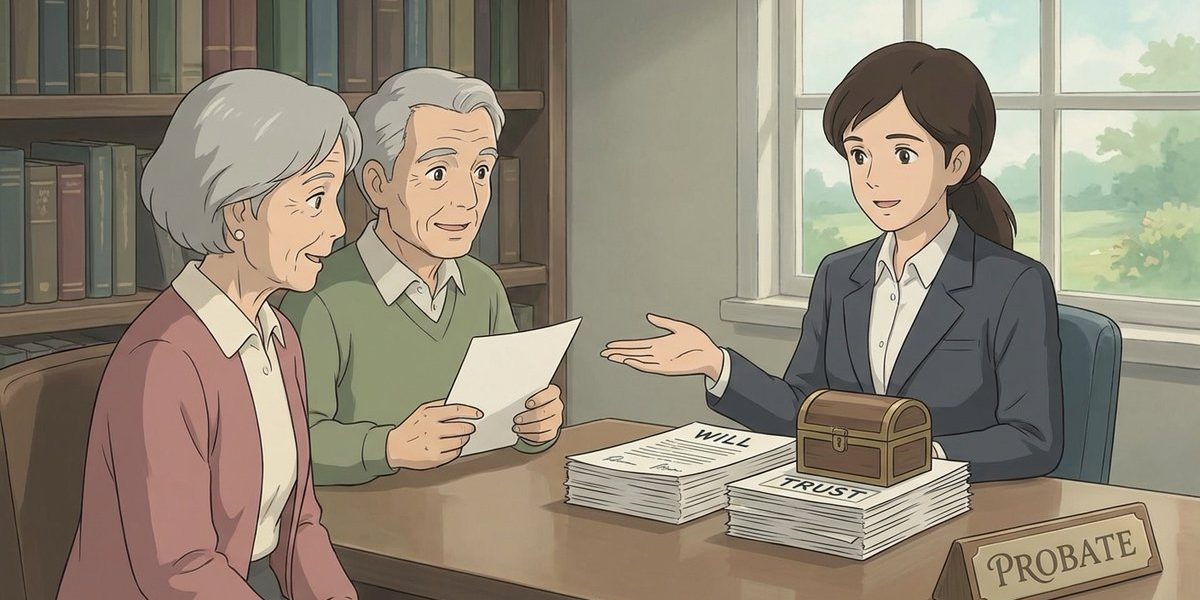
What does it mean if there is a trust involved along with a will, and how does that change what our family needs to do? – NC
Short Answer
In North Carolina, a will and a trust often work together, but they do not control the same property in the same way. The will is handled through the Clerk of Superior Court as part of the estate, while trust property is usually managed by the trustee outside the normal probate process. That means the family often has to identify which assets belong to the probate estate, which belong to the trust, and whether both the personal representative and the trustee need to act.
Understanding the Problem
When a North Carolina estate includes both a will and a trust, the main question is what the family must do differently after death. The key issue is whether the property passes through the estate under the will, through the trust under the trustee’s authority, or through both systems in sequence. That decision affects who has authority to act, which court filings are required, and whether the pending estate matter in the clerk’s office also needs trust-related review.
Apply the Law
Under North Carolina law, probate of a will and administration of a decedent’s estate fall within the superior court division and are usually handled by the Clerk of Superior Court. A trust works differently. The personal representative handles probate assets under the will, but the trustee manages assets titled in the trust under the trust terms. In many estates, the first practical step is to sort assets by title and beneficiary designation, because only property owned by the decedent alone at death usually enters the probate estate. If the will leaves probate assets to a trust, sometimes called a pour-over plan, the estate may still need to be opened so those assets can be collected, claims addressed, and any remaining property transferred to the trustee.
Key Requirements
- Identify the asset owner: The family must determine whether each asset was owned individually, held in the trust, or passed by beneficiary designation or joint ownership.
- Match the fiduciary to the asset: The personal representative handles estate property, while the trustee handles trust property. One person may serve in both roles, but the duties remain separate.
- Use the correct forum and timeline: The will is offered for probate with the Clerk of Superior Court, and trust disputes or administration issues may follow different procedures even when related to the same death.
What the Statutes Say
- N.C. Gen. Stat. § 7A-241 (Probate jurisdiction) – gives the superior court division, through the clerk, original jurisdiction over probate and estate administration.
- N.C. Gen. Stat. § 31-39 (Probate necessary to pass title) – explains that a duly probated will is needed to pass title and sets an important outside limit tied to probate of the will.
- N.C. Gen. Stat. § 1-301.3 (Appeal of trust and estate matters determined by clerk) – sets the procedure for appealing certain trust and estate rulings by the clerk, including a 10-day appeal period after service of the order.
Analysis
Apply the Rule to the Facts: Here, the parent died with a will naming grandchildren as beneficiaries, and there is also a trust question tied to a pending North Carolina court matter. That usually means the family cannot assume every asset passes under the will alone. If some assets were already titled in a trust, the trustee may need to administer those assets separately, while the personal representative handles the probate estate and any transfer required by the will.
If the same adult child is communicating with counsel, that person may be gathering information but does not automatically have authority unless formally appointed as personal representative, trustee, or both. A common issue in this setting is that the will names beneficiaries, but the trust controls when and how trust assets are managed or distributed. Another common issue is that the estate file lists beneficiaries and approximate values for probate purposes, while trust assets may not be part of the clerk-supervised accounting unless the trust instrument or a court order requires it.
North Carolina practice also treats trust administration differently from estate administration in an important way: trustees of express trusts generally do not file routine accountings with the Clerk of Superior Court unless the trust document requires that step. So the family may still need probate for the will even if much of the property is in trust, but the trust side may involve document review, trustee action, and beneficiary communication rather than the same ongoing clerk-supervised filings used in an estate. For a related discussion of asset sorting, see which assets belong to the probate estate versus the revocable trust.
Process & Timing
- Who files: the named executor or another qualified applicant for the estate, and the acting trustee for trust administration issues. Where: the Clerk of Superior Court in the North Carolina county with probate jurisdiction, and if a trust or estate ruling has already been entered, in that same pending matter unless another procedure applies. What: the original will, an application for probate and letters, and any trust instrument or amendments needed to confirm title and authority. When: the will should be offered for probate promptly, and a clerk’s order in a trust or estate matter generally must be appealed within 10 days after service under North Carolina law.
- Next, the family or counsel usually creates an asset list that separates probate assets, trust assets, and nonprobate transfers such as payable-on-death accounts or jointly owned property. The clerk process for the estate then moves forward, while the trustee reviews the trust terms for management and distribution steps. Timing can vary by county and by whether the pending court case involves a dispute.
- Final, the personal representative completes the estate administration for probate property, and the trustee carries out the trust terms for trust property. Depending on the plan, the estate may transfer remaining probate assets into the trust before final distribution, or the trust may already hold the main assets and continue administration after the estate closes. For a closely related issue, see what the role is as executor versus trustee.
Exceptions & Pitfalls
- A trust does not avoid probate for assets that were never transferred into the trust during life and do not pass by beneficiary designation or survivorship.
- Families often assume the person handling communications has legal authority, but authority usually comes only from letters issued in the estate, the trust document, or a court order.
- Pending lawsuits or claims involving the decedent can create separate deadlines, including substitution and claim-presentation issues, so the family should not delay if a court case was already underway at death.
Conclusion
If there is a trust involved along with a will in North Carolina, the family usually must handle two tracks: probate for estate assets and trust administration for assets owned by the trust. The key threshold is asset ownership at death, because that determines whether the personal representative, the trustee, or both must act. The next step is to file the will with the Clerk of Superior Court and sort each asset by title right away, especially if a clerk’s order has already been entered and the 10-day appeal period may apply.
Talk to a Probate Attorney
If a family is dealing with a will, a trust, and a pending estate matter at the same time, our firm can help sort out who has authority, what property goes through probate, and what deadlines may control the next step. Call us today at 919-341-7055.
Disclaimer: This article provides general information about North Carolina law based on the single question stated above. It is not legal advice for your specific situation and does not create an attorney-client relationship. Laws, procedures, and local practice can change and may vary by county. If you have a deadline, act promptly and speak with a licensed North Carolina attorney.

