
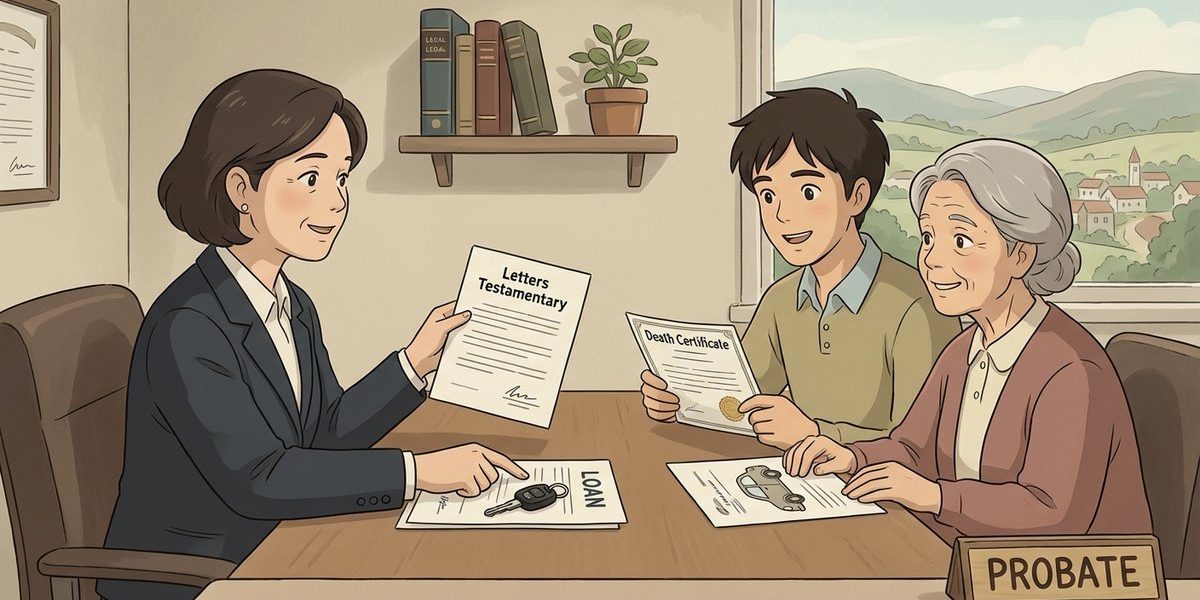
How do I get a payoff quote for a deceased parent’s car during estate administration? – NC
Short Answer
In North Carolina, the person who usually gets a payoff quote for a deceased parent’s car is the estate’s duly appointed personal representative, such as the executor named in the will or the administrator appointed by the clerk. Most lenders will not release payoff information to relatives until that person can show authority with Letters Testamentary or Letters of Administration and a death certificate. Once appointed, the personal representative can request the current payoff, decide whether the estate should keep, sell, or surrender the vehicle, and handle the title steps through the proper county estate file and the NCDMV.
Understanding the Problem
In North Carolina probate, the main question is whether the person handling a deceased parent’s estate has legal authority to ask the vehicle lender for the loan payoff amount during estate administration. The answer usually turns on role and timing: a relative may need the payoff figure quickly, but the lender commonly waits until the clerk of superior court has appointed a personal representative for the estate. That single issue matters because the payoff amount affects whether the estate can transfer, sell, refinance, or surrender the car.
Apply the Law
Under North Carolina law, a decedent’s personal property, including a vehicle, is handled through the estate, and the personal representative is the person who gathers information about estate assets and debts. In practice, the main forum is the estate file before the clerk of superior court in the county with probate venue. A lender usually asks for proof of death and proof of appointment before discussing the account in detail, and the estate administration process also includes a creditor-notice timeline that can affect when the vehicle is sold or paid off.
Key Requirements
- Proper authority: The lender usually wants Letters Testamentary or Letters of Administration showing who may act for the estate.
- Proof of death and account details: The request commonly includes a death certificate, the vehicle account number, and identifying information for the car.
- Estate purpose: The payoff quote is usually needed so the personal representative can decide whether the estate should keep the car, transfer it, sell it, or surrender it if the debt outweighs the value.
What the Statutes Say
- N.C. Gen. Stat. § 31-39 (Probate necessary to pass title) – a duly probated will is effective to pass title to real and personal property, which is why formal estate authority often matters before a vehicle can be fully handled.
- N.C. Gen. Stat. § 30-19 (Property awarded to surviving spouse and children) – the clerk of court determines certain statutory allowances, which can affect how personal property is handled before final distribution.
- N.C. Gen. Stat. § 30-20 (Procedure for assignment; order of clerk) – the clerk enters orders on allowances, and if a personal representative has been appointed, the clerk provides the order to that representative, underscoring the representative’s role in managing estate property.
Analysis
Apply the Rule to the Facts: The facts indicate that a relative is expected to serve as executor in a North Carolina estate. That usually means the relative can request the payoff quote once the will is probated and the clerk issues Letters Testamentary. If the relative has not yet been appointed, the lender may refuse to give a formal payoff letter beyond very limited information because the relative does not yet have authority to act for the estate.
A payoff quote matters because the estate cannot make a sound decision about the car without knowing the exact balance, per diem interest if any, and whether late charges or repossession risk exist. If the quote shows the loan balance is close to or above the vehicle’s value, surrender may be considered. If the quote is manageable, the estate may decide to pay it, sell the vehicle, or coordinate a transfer after satisfying the lien, similar to issues discussed in handling a financed car in probate.
Process & Timing
- Who files: the named executor or another qualified person. Where: the Estates Division before the clerk of superior court in the proper North Carolina county. What: the probate application and estate opening documents, followed by issuance of Letters Testamentary or Letters of Administration. When: as soon as practical after death, because the lender may not provide a full payoff quote until the appointment is complete.
- After appointment, the personal representative contacts the lender’s estate or deceased-customer department, sends the death certificate and letters, and requests a written payoff quote with a good-through date. The representative should also ask whether the lender requires certified documents, whether insurance must stay in place, and whether monthly payments must continue while the estate decides what to do.
- The final step is to use the quote to choose the next estate action: pay off the lien, sell the car and satisfy the lien from sale proceeds, transfer the vehicle after lien release, or surrender it if appropriate. If transfer is the goal, the estate will also need to complete the NCDMV title steps, which often overlap with issues covered in signing and transferring a deceased parent’s vehicle title.
Exceptions & Pitfalls
- A lender may speak only with the court-appointed personal representative, not with other family members, even if everyone agrees on the plan.
- A payoff quote is not the same as title authority. The estate may still need separate probate and NCDMV steps before a sale or transfer can be completed.
- Common mistakes include stopping insurance too early, ignoring monthly statements while waiting for probate, or assuming a relative can simply take over the loan without lender approval.
Conclusion
In North Carolina, the usual way to get a payoff quote for a deceased parent’s car is for the estate’s appointed personal representative to request it from the lender after receiving Letters Testamentary or Letters of Administration. The key threshold is legal authority to act for the estate. The most important next step is to open the estate with the clerk of superior court and obtain the letters promptly so the lender can issue a current payoff and the vehicle can be handled correctly.
Talk to a Probate Attorney
If a family is dealing with a deceased parent’s financed vehicle during North Carolina estate administration, our firm has experienced attorneys who can help explain the probate steps, lender requests, and timing issues. Call us today at [919-341-7055].
Disclaimer: This article provides general information about North Carolina law based on the single question stated above. It is not legal advice for your specific situation and does not create an attorney-client relationship. Laws, procedures, and local practice can change and may vary by county. If you have a deadline, act promptly and speak with a licensed North Carolina attorney.

