
How do I locate an older deed for estate property if it does not appear in the online records search? – NC
Short Answer
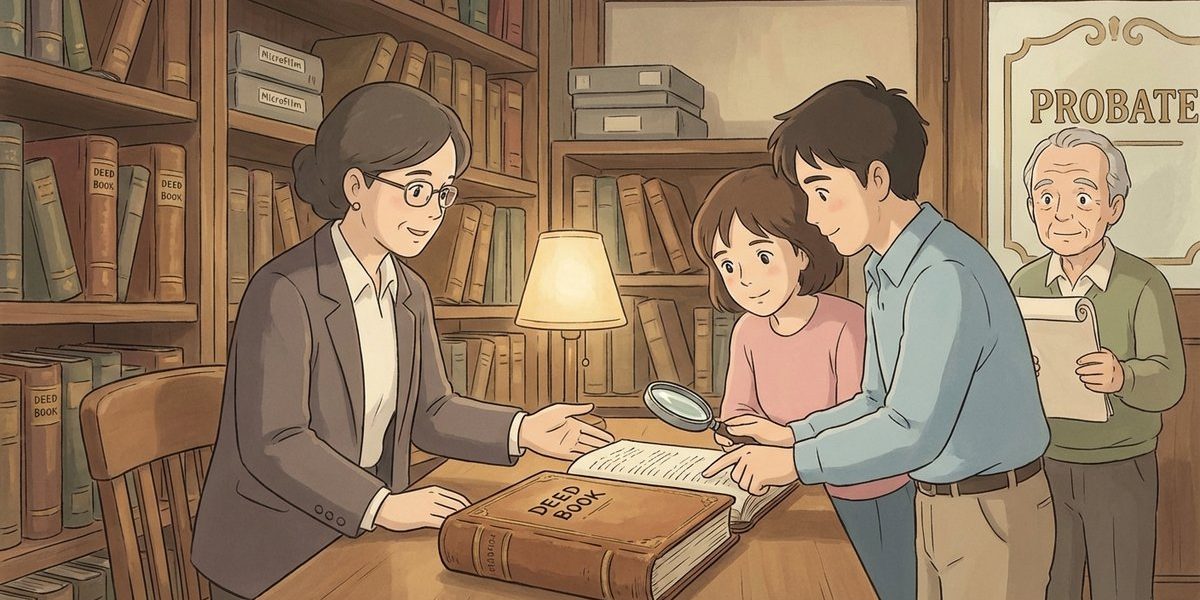
In North Carolina, an older deed may still be valid and searchable even if it does not appear in the county’s standard online database. Many older land records remain in archived deed books, microfilm, or scanned grantor-grantee indexes maintained by the county Register of Deeds. If the records office has already provided a book-and-page reference, the next step is usually to request that archived deed directly from the Register of Deeds and confirm how the property is titled for estate administration.
Understanding the Problem
In North Carolina probate matters, the key question is whether a law firm representative handling an estate can locate an older deed for estate property when the deed does not appear in the usual online Register of Deeds search. The issue is not whether the property exists, but how to retrieve the recorded instrument that shows title when the county’s current online system does not display older entries. The answer usually turns on the county Register of Deeds records, the archived book-and-page reference, and whether the deed must be pulled from older index books or preserved record volumes.
Apply the Law
North Carolina land records are kept at the county Register of Deeds office, and recorded deeds affecting real property are indexed and preserved as public records. Even when a deed is missing from a modern online portal, the county still maintains official indexes and older deed books, including transcribed or preserved records when older books have been recopied because of age or condition. For estate work, the practical goal is to identify the last recorded deed into the decedent or another owner of record, then use that deed to confirm ownership, survivorship issues, and whether probate authority is needed before any transfer.
Key Requirements
- Correct county: The search must start in the North Carolina county where the real property is located, because deeds are recorded locally.
- Book-and-page reference: If the records office has provided a deed book and page number, that reference usually points to the official archived record even if the online database does not show an image.
- Chain of title review: Estate administration often requires checking not just one deed, but the surrounding grantor-grantee index entries to confirm how title passed and whether later instruments changed ownership.
What the Statutes Say
- N.C. Gen. Stat. § 161-21 (General index kept) – requires the county to maintain a consolidated index of deeds and other documents affecting real property in the Register of Deeds office.
- N.C. Gen. Stat. § 161-18 (Transcribe and index books) – allows older deed books to be transcribed and indexed, with the transcribed books serving as public records like the originals.
- N.C. Gen. Stat. § 161-22.3 (Minimum standards for land records management) – requires land records management standards for the Register of Deeds.
Analysis
Apply the Rule to the Facts: Here, the estate file involves real property tied to a decedent, and the deed appears to be an older record that does not show in the standard online search. Because the records office has already supplied an archival book-and-page reference, the most important title element is likely satisfied: there is a specific pointer to the recorded instrument in the county’s official land records. In practical terms, that means the next step is usually not a broader internet search, but a direct request for the archived deed image, copy, or in-person pull from the Register of Deeds using that exact reference.
That archived deed matters because estate administration depends on how title stood at death. A deed may show sole ownership, joint ownership with survivorship language, a life estate, or another arrangement that changes whether the personal representative must act. In that sense, locating the older deed is often the first step in confirming whether the property passes through probate or outside it. For related ownership questions, it may also help to review whose name is on the deed and whether the house has to go through probate.
Process & Timing
- Who files: No court filing is usually needed just to locate the deed. Where: The Register of Deeds office in the North Carolina county where the property is located. What: A request for a copy of the deed using the archival deed book and page reference, and if needed, a request to search the grantor-grantee index around that entry. When: As soon as the estate identifies the parcel, because title review should happen before any proposed transfer, sale, or probate real estate decision.
- Next, compare the archived deed with the decedent’s name, legal description, and any later recorded instruments. If the deed is hard to read or predates the online system by many decades, the office may direct staff to older bound volumes, microfilm, or scanned historical indexes, and retrieval time can vary by county.
- Finally, place the deed copy in the estate file and use it to determine the ownership path, whether additional title documents must be pulled, and whether the personal representative needs to join in any later conveyance. If the chain is unclear, a broader title search may be needed before the estate acts.
Exceptions & Pitfalls
- Older deeds may be indexed under a prior owner, a name variation, initials, or an older marital name, so a narrow name search can miss the record even when the deed was properly recorded.
- A book-and-page citation may lead to a deed that is only part of the chain. Other instruments such as estates by the entirety deeds, survivorship deeds, corrective deeds, or court-related conveyances can change the probate analysis.
- Do not assume that a missing online image means no deed exists. In many counties, older records were never fully digitized, and some must be retrieved from archived books or preserved copies maintained by the Register of Deeds. For a broader property search, it may also help to review what real estate the deceased owned and where it is located.
Conclusion
In North Carolina, an older deed for estate property can often be located even when it does not appear in the online records search, because the official record may still exist in archived deed books or older indexes kept by the county Register of Deeds. The controlling step is to use the book-and-page reference to request the archived deed from the correct county office, then confirm how title stood at death before any transfer or estate real-property action moves forward.
Talk to a Probate Attorney
If an estate involves older real estate records, missing deed images, or uncertainty about who held title at death, our firm has experienced attorneys who can help explain the records search process, ownership issues, and probate timelines. Call us today at [919-341-7055].
Disclaimer: This article provides general information about North Carolina law based on the single question stated above. It is not legal advice for your specific situation and does not create an attorney-client relationship. Laws, procedures, and local practice can change and may vary by county. If you have a deadline, act promptly and speak with a licensed North Carolina attorney.

