
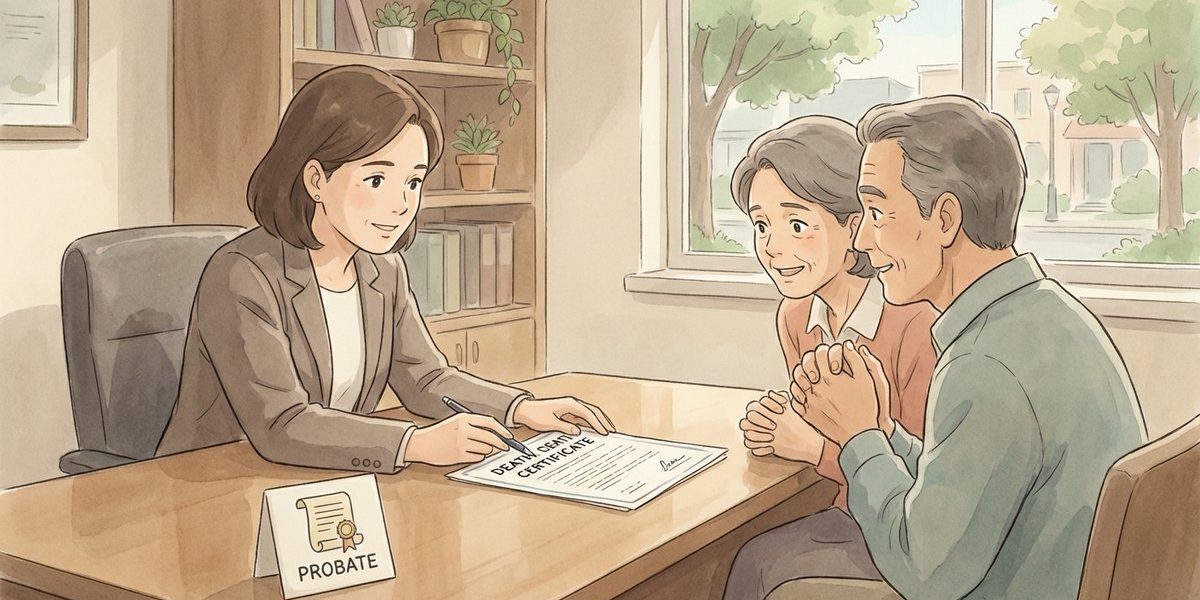
What kinds of errors on a death certificate can cause problems with handling an estate? – North Carolina
Short Answer
In North Carolina, death certificate errors can slow down estate administration because banks, insurers, and government agencies often rely on the certificate to match identity, confirm the date of death, and verify family status. The most common problem errors involve the decedent’s legal name, date of death, Social Security number, marital status, and place of death. Many issues can be fixed through an amendment request with Vital Records, but delays are common if the correction needs proof or a court order.
Understanding the Problem
In North Carolina probate, the key question is which death certificate mistakes can interfere with handling an estate, such as qualifying a personal representative with the Clerk of Superior Court, collecting assets, or transferring property. The problem usually shows up when an institution compares the death certificate to other records (a will, a deed, a bank account, a life insurance policy, or a government benefits file) and the information does not match. The practical issue is not whether a typo exists, but whether the mismatch prevents the estate from proving the decedent’s identity, the fact of death, or a relationship that affects who has authority to act.
Apply the Law
North Carolina treats the death certificate as an official vital record. After it is accepted for registration, it generally cannot be changed unless an amendment is requested and supported with the proof required by the State Registrar. In estate work, a certified copy is often needed for third-party transactions even when the Clerk of Superior Court can start probate based on sworn filings. When the certificate contains incorrect personal data, it can create “identity mismatch” problems that delay releases, retitling, and benefit claims.
Key Requirements
- Identity must match: The decedent’s name and identifying details on the death certificate must line up with the name on assets and beneficiary designations so institutions can confirm they have the right person.
- Timing must match: The date of death must be consistent because it affects when accounts freeze, when benefits stop, and which documents control (for example, a later marriage or divorce can change rights).
- Status and relationships must make sense: Marital status and similar “personal data” fields can affect who has priority to serve, who must receive notices, and who may have rights in property.
What the Statutes Say
- N.C. Gen. Stat. § 130A-118 (Amendment of birth and death certificates) – Allows changes to a death certificate after registration only through an amendment request under rules set by the State Registrar, with required proof and a fee.
- N.C. Gen. Stat. § 130A-93 (Access to vital records; copies) – Sets who can obtain certified copies and states that a certified copy has the same evidentiary value as the original.
- N.C. Gen. Stat. § 130A-115 (Death registration) – Requires filing of the death certificate and describes who supplies personal data and who completes the medical certification.
- N.C. Gen. Stat. § 130A-116 (Contents of death certificate) – Requires the death certificate to contain the items prescribed on the standard form, with possible additional information required by the State Registrar.
Analysis
Apply the Rule to the Facts: Here, the estate has a copy of the decedent’s death certificate, but it appears to contain incorrect information. If the incorrect item is one that institutions use to match identity (like the legal name or Social Security number), the error can delay collecting assets even if the probate case can be started. If the incorrect item affects family status (like marital status), it can also create confusion about who should be involved in the estate process and may require a formal correction through Vital Records before certain transfers are approved.
Process & Timing
- Who requests the correction: Typically a qualified family member or a legal representative. Where: Through North Carolina Vital Records (often with support from the funeral home that filed the certificate) and, for certified copies, through the Register of Deeds in the county where the death occurred (some counties route requests through a local vital records office). What: An amendment request with supporting documentation required by the State Registrar. When: As soon as the mismatch is discovered, because third parties may refuse to act until the corrected certificate is issued.
- While the correction is pending: The estate can often still prepare probate filings and gather information, but institutions may pause payouts or retitling until they receive a certified copy that matches their records.
- After the correction is issued: The corrected certified copies are provided to banks, insurers, and other holders of property, and the estate proceeds with the next transaction (closing accounts, transferring title, or submitting benefit claims).
Exceptions & Pitfalls
- Using a non-certified copy: Many institutions will not accept a photocopy; they require a certified copy, and a mismatch on a certified copy can stop the transaction.
- “Small” typos that are not small in practice: A missing middle name, suffix (Jr./Sr.), or a misspelled last name can be enough to trigger an identity mismatch and delay releases.
- Confusing “personal data” vs. “medical certification”: Some corrections are straightforward (spelling, address, date/place details), while others may require more documentation because the information came from different sources.
- Marital status errors: If the certificate lists the wrong marital status, it can create confusion about who should receive notices, who may have rights in certain property, or who may need to sign paperwork.
- Date of death errors: Even a one-day error can create problems with benefit cutoffs, account activity, and matching the timeline in probate filings.
- Social Security number errors: This is a common “hard stop” for financial institutions because it is a primary identifier used to match the decedent to an account.
- Place of death or residence errors: These can create administrative confusion about which county office has the record and can complicate record requests and coordination.
Conclusion
In North Carolina, death certificate errors cause estate problems when they prevent a clear match between the decedent and the decedent’s assets, benefits, and legal records. The most disruptive mistakes usually involve the decedent’s legal name, Social Security number, date of death, and marital status. North Carolina generally requires an amendment request to change a registered death certificate, with proof set by the State Registrar. The most important next step is to file the amendment request with Vital Records promptly so corrected certified copies can be used for estate transactions.
Talk to a Probate Attorney
If handling an estate is being delayed because a death certificate does not match bank, insurance, deed, or benefits records, our firm has experienced attorneys who can help explain the correction process and keep the estate moving. Call us today at [CONTACT NUMBER].
Disclaimer: This article provides general information about North Carolina law based on the single question stated above. It is not legal advice for your specific situation and does not create an attorney-client relationship. Laws, procedures, and local practice can change and may vary by county. If you have a deadline, act promptly and speak with a licensed North Carolina attorney.

