
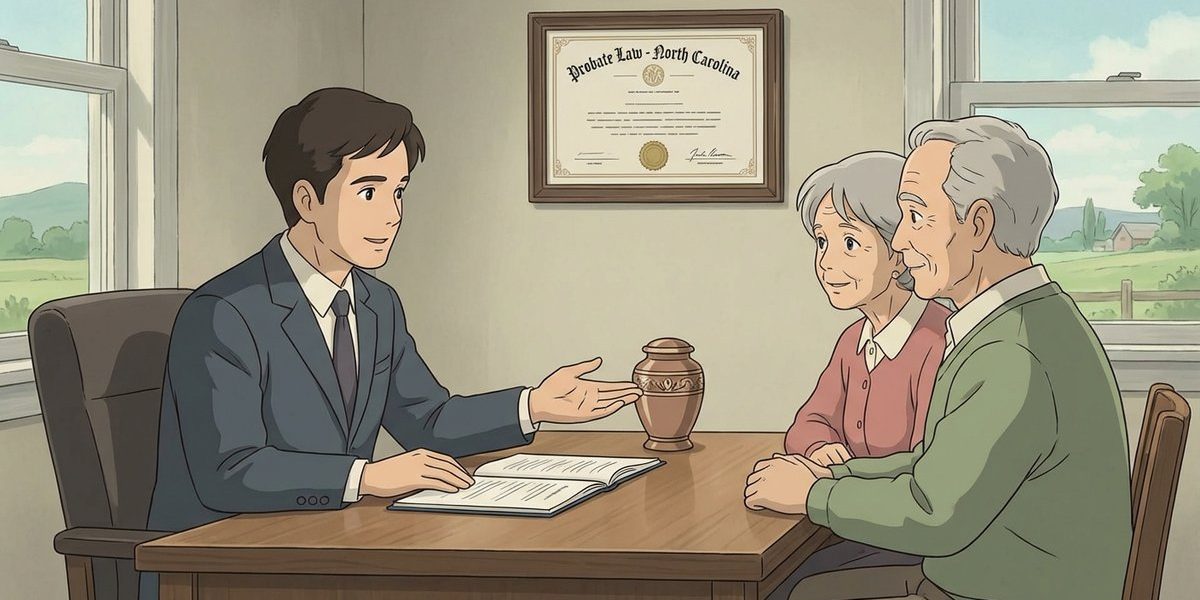
Can the decedent’s parent request the cremated remains if the will leaves everything to the decedent’s partner and doesn’t specifically mention remains? – North Carolina
Short Answer
Sometimes, but not just because the parent disagrees with the will. In North Carolina, control over cremation and the handling of cremated remains usually follows a separate “priority list” in the disposition and cremation statutes, and that list can give a parent rights only if no higher-priority person had authority (or that person waived it by missing a short deadline). If the partner was properly authorized as the decision-maker for disposition or cremation, a parent typically cannot demand the cremated remains based on the will’s silence alone.
Understanding the Problem
In North Carolina probate, a common question is whether a decedent’s parent can demand the cremated remains when the decedent’s will leaves property to a partner but does not say who gets the remains. The decision point is who had the legal authority to make cremation and disposition decisions at the time of death, and whether that authority included control over release and final disposition of the cremated remains.
Apply the Law
North Carolina treats the right to control disposition of a body (and the right to authorize cremation and direct what happens to the cremated remains) as a separate legal issue from who inherits under a will. If the decedent left valid written instructions (including in a will) about disposition, those instructions can control. If there were no written instructions, North Carolina law uses a priority list (spouse first, then adult children, then parents, and so on). The person with priority acts as the “authorizing agent” for cremation and is generally responsible for the disposition of the cremated remains.
Key Requirements
- Written directions or delegation (if any): If the decedent authorized disposition/cremation in writing (including in a will or other permitted document), that direction can control who makes decisions and what happens next.
- Statutory priority (if no written directions): If there were no valid written directions, the right to decide usually goes in order (spouse, adult children, parents, and so on). A partner is not automatically ahead of a parent unless the partner qualifies under the statute and no higher-priority person is available or timely acts.
- Timing/waiver rules: A person with priority who does not act within a short statutory window after notice (or after death) can be treated as having waived the right to control disposition or to contest it.
What the Statutes Say
- N.C. Gen. Stat. § 130A-420 (Authority to dispose of body or body parts) – Sets the order of authority for disposition when the decedent left no written authorization, and includes waiver rules tied to notice and time from death.
- N.C. Gen. Stat. § 90-210.124 (Authorizing agent) – Defines who can authorize cremation and disposition, using a priority list and a waiver rule if the person with priority does not act quickly.
- N.C. Gen. Stat. § 90-210.130 (Final disposition of cremated remains) – Places responsibility for disposition of cremated remains on the authorizing agent and addresses release/disposition rules if remains are not claimed or instructions are not provided.
Analysis
Apply the Rule to the Facts: Here, the will leaves everything to the decedent’s partner but does not specifically address remains, and the family says they were not notified of the death, cremation, or probate filing. Under North Carolina law, the will’s gift of “everything” to the partner does not automatically decide who had the right to authorize cremation or control the cremated remains. The key questions become (1) whether the decedent left any written disposition/cremation directions or delegated that authority to the partner, and (2) if not, whether the partner had statutory priority and whether any higher-priority person (such as a surviving parent) received notice and timely asserted rights.
Process & Timing
- Who raises the issue: Typically the parent (or other next of kin) who believes the wrong person authorized cremation or is withholding the cremated remains. Where: Often starts with the funeral home/crematory handling the remains and, if needed, proceeds to the Clerk of Superior Court (estate) or a court with authority to enter an order resolving a dispute. What: A written demand for information and documentation (for example, the cremation authorization and identification of the “authorizing agent”), and if necessary a request for a court order. When: Act quickly because North Carolina’s disposition/cremation statutes include short waiver timelines tied to notice and the date of death.
- Confirm the authority chain: Determine whether there was a preneed cremation authorization, a health care power of attorney with relevant authority, a will provision about disposition, or a statutory-priority basis for the partner to act. This step often determines whether a parent has a viable claim to request release of the cremated remains.
- Seek a practical resolution or court direction: If the remains are being held by a crematory or funeral establishment, the statutes provide rules for release and disposition and can limit liability for the facility when it follows the authorizing agent’s directions. If the dispute cannot be resolved informally, a court order may be needed to direct release, prohibit changes, or resolve competing claims.
Exceptions & Pitfalls
- Will vs. “will silence”: A will can contain effective disposition instructions, but when the will is silent about remains, the statutes (and any other valid written authorization) usually control the decision-maker. A gift of property to a partner is not the same thing as naming that partner to control disposition.
- Partner status is not the same as spouse: If there is no surviving spouse, a partner may still have authority in some situations, but the analysis turns on the statutory categories and whether higher-priority relatives existed, could be located, and timely acted.
- Waiver and “notice” disputes: Families often focus on not being told about the death or cremation. The waiver rules can turn on when notification occurred (or whether reasonable efforts were made to locate and notify higher-priority people). Waiting too long can make a later challenge harder.
- Changing disposition after burial: Once burial is completed, North Carolina law limits changes to the method/location of disposition unless authorized by law or a court order for good cause.
- Probate notice is a separate issue: Lack of notice about an estate filing may matter for probate rights, but it does not automatically undo cremation authorization that was valid under the disposition/cremation statutes. For more on probate notice issues, see never notified about a will being filed or an estate being opened.
Conclusion
In North Carolina, a parent can request cremated remains only if the parent had legal priority to control disposition/cremation (or a court orders release), not simply because the will leaves property to the partner and does not mention remains. The controlling question is who qualified as the “authorizing agent” under the disposition and cremation statutes (or under the decedent’s written directions). The most important next step is to promptly obtain the cremation authorization documentation and assert any priority rights within five days of notification or 10 days from death, whichever is earlier.
Talk to a Probate Attorney
If a family is dealing with a dispute over who had authority to authorize cremation or who should receive the cremated remains, our firm has experienced attorneys who can help explain the priority rules, gather the right documents, and address court and clerk procedures and timelines. Call us today at 919-341-7055.
Disclaimer: This article provides general information about North Carolina law based on the single question stated above. It is not legal advice for your specific situation and does not create an attorney-client relationship. Laws, procedures, and local practice can change and may vary by county. If you have a deadline, act promptly and speak with a licensed North Carolina attorney.

