
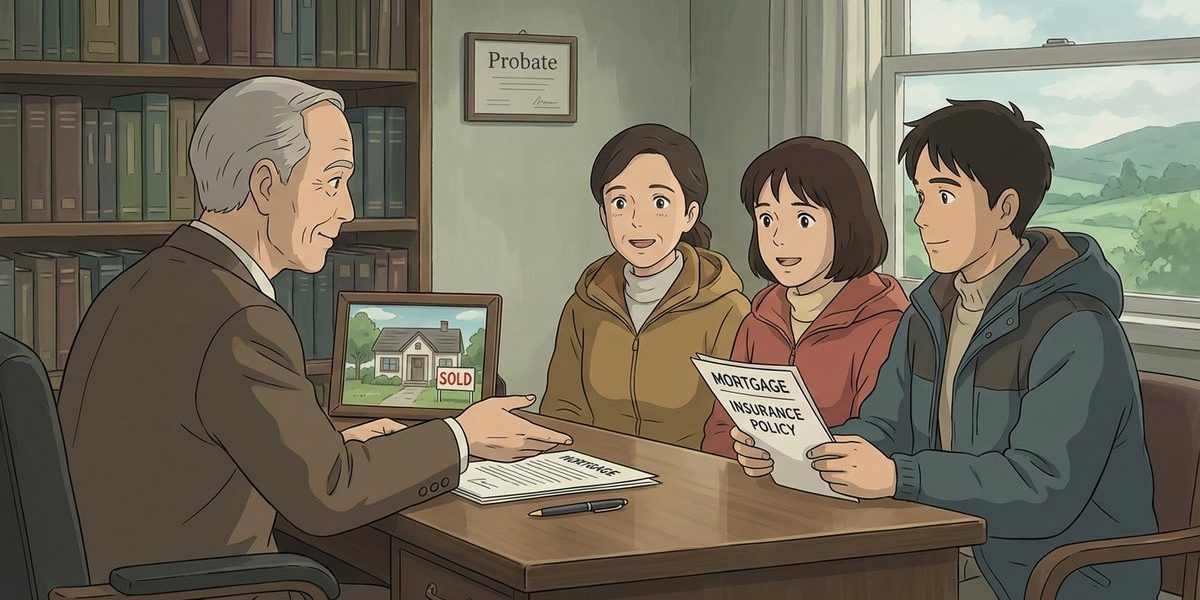
What happens to the house and mortgage after a parent dies, especially if there might be mortgage insurance? – North Carolina
Short Answer
In North Carolina, a parent’s death does not erase the mortgage. The home can pass to heirs under a will or under intestacy, but it generally passes subject to existing liens—meaning the lender can still foreclose if payments stop. If there is mortgage-related insurance (such as credit life insurance or a mortgage protection policy), it may pay some or all of the loan, but it is not automatic and must be confirmed through the loan file and insurance documents.
Understanding the Problem
In North Carolina probate, the key question is: after a parent dies owning a house in the parent’s sole name, what happens to the title to the house and the mortgage debt, and can the family keep the home if the mortgage still exists (including situations where a mortgage payoff policy might exist). The main decision point is whether the mortgage will be kept current (or paid off) during estate administration so the lender does not start foreclosure while the estate is being settled through the Clerk of Superior Court.
Apply the Law
Under North Carolina law, a will (once properly probated) is effective to pass title to the decedent’s property, but real estate and estate administration still operate in a system where creditors’ rights matter and liens remain attached to the property. In practical terms, heirs may ultimately receive the home, but the mortgage lien typically stays in place until it is paid, refinanced, or otherwise resolved. When there is no will, North Carolina’s intestate succession rules control who inherits, and the inheritance is generally subject to valid debts and claims.
Key Requirements
- Identify who has authority: A personal representative (executor under a will or administrator if there is no will) is the person with legal authority to deal with estate assets and communicate with creditors and lenders on behalf of the estate.
- Confirm how the house is titled and what liens exist: If the home is titled solely in the parent’s name, it is usually part of the probate estate; any recorded deed of trust (mortgage) generally remains a lien on the property.
- Keep the mortgage from going into default during probate: If monthly payments are not made, the lender can pursue foreclosure even while probate is pending, because the lien is tied to the property.
What the Statutes Say
- N.C. Gen. Stat. § 31-39 (Probate necessary to pass title; effect of probated will) – Explains that a duly probated will is effective to pass title, and sets timing rules that can matter for real property and creditor/purchaser issues.
- N.C. Gen. Stat. § 29-13 (Intestate succession subject to claims) – States that intestate property passes subject to costs of administration and other lawful claims against the estate.
Analysis
Apply the Rule to the Facts: Here, the home appears titled solely in the parent’s name, so it likely becomes part of the probate estate and will pass under a will (if one exists and is probated) or under intestacy. Because there are mortgage and vehicle loan concerns, the estate administration needs a clear plan to keep secured debts from going into default while the personal representative gathers information and determines what the estate can afford. If mortgage-related insurance exists, confirming the type of policy and the claim process can be a key step because it may reduce or eliminate the payoff balance, which can change whether keeping the home is realistic.
Process & Timing
- Who files: The person seeking to serve as executor (if there is a will) or an eligible heir (if there is no will). Where: The Clerk of Superior Court in the county where the parent lived at death. What: An application to open the estate and be appointed as personal representative (the Clerk issues Letters once appointed). When: As soon as practical, especially if bills like the mortgage must be handled quickly.
- Stabilize the house and loan: The personal representative typically gathers the mortgage statements, the recorded deed of trust, and any escrow information (taxes/insurance). If the goal is to keep the home, the estate (or family members, if appropriate) usually needs to keep payments current while the estate is administered, and the personal representative should communicate with the loan servicer about where statements should be sent and what documentation is required to discuss the account.
- Confirm insurance and decide the long-term plan: “Mortgage insurance” can mean different things (for example, a policy that pays the lender if the borrower dies, or private mortgage insurance that protects the lender if the loan defaults). The personal representative typically requests the loan file and reviews the parent’s mail and records to identify any death-related payoff coverage, then submits a claim if applicable. After debts and claims are evaluated, the estate either (a) keeps the home and continues the loan payments, (b) sells the home and pays the mortgage from sale proceeds, or (c) allows foreclosure if the estate cannot support the debt.
Exceptions & Pitfalls
- “Mortgage insurance” may not mean what it sounds like: Some people use this phrase to describe a life insurance or credit life policy that pays off the mortgage at death, but many mortgages only have private mortgage insurance (PMI), which generally protects the lender—not the family—if the loan goes into default. The documents control.
- Title and authority problems slow everything down: If no one is appointed as personal representative, it can be harder to get information from lenders and insurers and harder to make decisions about the property. Opening the estate with the Clerk of Superior Court often unlocks the ability to act.
- Selling or transferring too early can create avoidable issues: Real property transfers during administration can require careful coordination with the personal representative and creditor-notice timing. When the estate has debts or possible Medicaid estate recovery concerns, moving too fast can create disputes or title problems later.
- Medicaid estate recovery can affect the plan: If the parent received certain Medicaid benefits, the State may file a claim in the estate. That can change whether the estate must sell property to pay valid claims, depending on the estate’s overall finances and what assets are available.
For more on related probate issues involving a mortgaged home, see owned a property in only their name and there is still a mortgage and become the estate administrator.
Conclusion
In North Carolina, when a parent dies owning a home, the house can pass to heirs through a probated will or through intestacy, but the mortgage lien usually remains and must be kept current or paid off to avoid foreclosure. “Mortgage insurance” may or may not pay the loan at death, depending on the exact policy and beneficiary terms. The most practical next step is to open the estate with the Clerk of Superior Court so a personal representative can gather the loan and insurance documents and promptly notify the servicer while payments stay current.
Talk to a Probate Attorney
If a parent died owning a house with a mortgage and the goal is to keep the home while sorting out probate and possible insurance coverage, our firm has experienced attorneys who can help explain options and timelines. Call us today at [919-341-7055].
Disclaimer: This article provides general information about North Carolina law based on the single question stated above. It is not legal advice for your specific situation and does not create an attorney-client relationship. Laws, procedures, and local practice can change and may vary by county. If you have a deadline, act promptly and speak with a licensed North Carolina attorney.

