
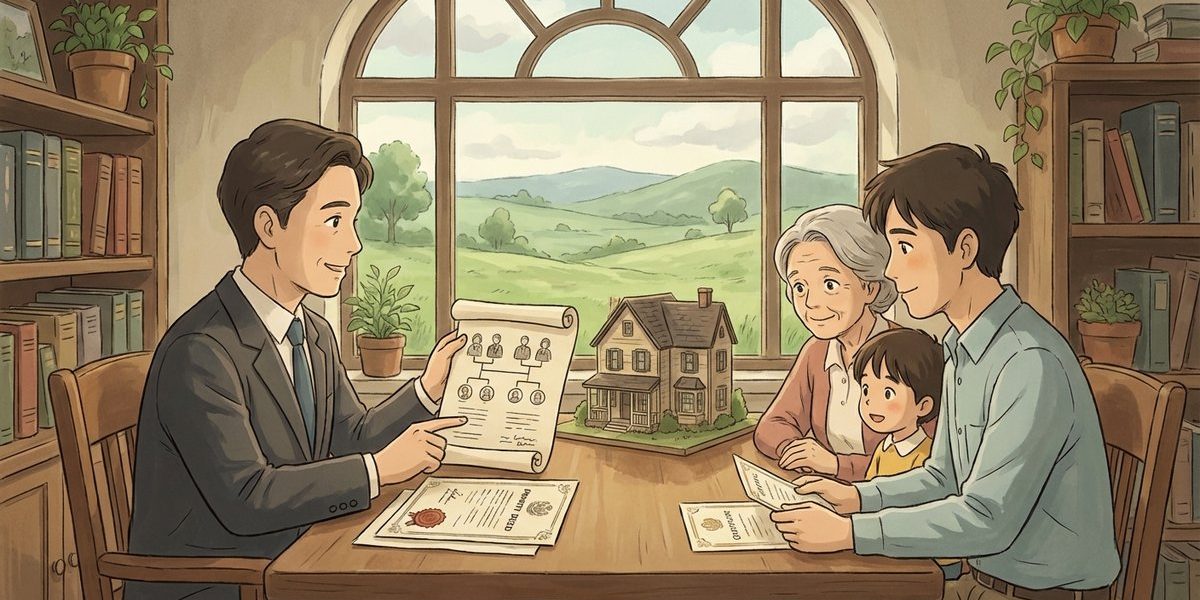
What proof do I need to show the court who the heirs are and what each person’s share should be? – North Carolina
Short Answer
In North Carolina, the court usually needs reliable proof of (1) how title to the property is currently held and (2) the family facts that determine who inherited and in what percentages. Common proof includes recorded deeds, death certificates, a will (if any), and sworn testimony or affidavits that lay out the family tree and confirm whether any heirs died (and who their descendants are). If heirship or shares are disputed or some heirs are unknown, a partition case can often still move forward, but the disputed or unknown interests may be grouped and sorted out later.
Understanding the Problem
In a North Carolina partition action involving inherited real estate, the key decision point is what evidence is needed to identify all current co-owners (often heirs) and to state each person’s ownership share so the Superior Court can divide the property or order a sale and divide the proceeds. The issue often comes up when a parent dies owning a home, no probate estate is opened, some family members occupy or control the property for years, and another family branch later claims an inheritance interest. The question also includes how to handle changes over time, such as an occupying heir dying and that heir’s descendants claiming an interest.
Apply the Law
North Carolina partition cases are filed in Superior Court and are governed by Chapter 46A. The court’s job is to partition property among cotenants (co-owners), which commonly includes heirs who inherited an undivided interest. To do that, the case needs enough proof to (1) show the chain of ownership and (2) identify the cotenants and their shares. If some cotenants are unknown or if shares are disputed, North Carolina law allows the court to proceed with partition while reserving the ownership dispute for later decision in the same case or a separate proceeding.
Key Requirements
- Proof of the property’s title history: Documents that show who owned the home before death and what happened to title afterward (for example, recorded deeds and other recorded instruments).
- Proof of the death event(s) that triggered inheritance: Evidence that the owner died and the date of death (commonly a certified death certificate), plus any later deaths of heirs that may have shifted shares to descendants.
- Proof of the family relationships that determine heirship and shares: Evidence showing the decedent’s spouse (if any), children, and other relatives who may inherit, and whether any heir died leaving descendants (often shown through sworn statements, vital records, and sometimes a separate estate proceeding to determine heirs).
What the Statutes Say
- N.C. Gen. Stat. § 46A-21 (Necessary parties; who must be joined) – Requires the petitioner to join all tenants in common and joint tenants in the partition case.
- N.C. Gen. Stat. § 46A-52 (Unknown cotenants; disputed title) – Allows partition to proceed even if some cotenants are unknown or if ownership shares are disputed, with disputed/unknown shares handled together and controversies decided later.
- N.C. Gen. Stat. § 29-13 (Intestate succession; general rule) – States that a person’s estate passes under North Carolina’s intestate succession rules when there is no will, subject to estate administration issues.
- N.C. Gen. Stat. § 29-16 (How shares are divided within a class) – Explains how shares are calculated among children and descendants (and other family classes) when someone dies without a will.
- N.C. Gen. Stat. § 29-12.1 (Controversies under intestate succession) – Provides that controversies under the intestate succession chapter are determined as an estate proceeding under Chapter 28A.
Analysis
Apply the Rule to the Facts: The facts describe a situation where a spouse claims to be an heir to a deceased parent’s home, but probate was never opened and other heirs have controlled the property for years. In that setting, the court typically needs (1) the recorded deed showing the parent’s ownership, (2) proof the parent died (and whether there was a will), and (3) proof of the parent’s family tree to identify all heirs and calculate each share under North Carolina intestate succession rules. If an occupying heir later dies, the proof must extend one generation further to show that heir’s death and the identity of that heir’s descendants who may now hold that heir’s share.
In practice, the “proof” often comes in layers: recorded land records for title, vital records for deaths and relationships, and sworn statements (plus supporting documents) to connect the dots. When a family alleges pressure to sign away inheritance rights, the court generally still focuses first on who owns what; any alleged transfers or disclaimers typically must be proven with the actual signed documents and recording history, not just family stories.
For readers dealing with inherited property disputes, a related issue is whether the case can move forward without an estate being opened. For more on that topic, see move forward with partition even if we never probate the estate.
Process & Timing
- Who files: A cotenant claiming an ownership interest (often an heir). Where: Superior Court in the county where the real property is located in North Carolina. What: A partition petition/complaint that identifies the property and names all known cotenants, along with the best available statement of each person’s claimed share and the basis for that claim (deed, inheritance, or other). When: North Carolina law does not set one universal “partition filing deadline,” but delay can create practical problems (missing records, deceased witnesses, more heirs through later deaths), so filing sooner often makes proof easier.
- Service and identification of parties: All known cotenants must be joined and served. If some cotenants are unknown or hard to locate, the case may require additional steps to identify and serve them, and the court may treat unknown/disputed interests as allowed by statute while the case proceeds.
- Proof stage and court orders: The court may require evidence of title and heirship to confirm who must be included and how proceeds should be distributed. If shares are disputed, the court can still order partition or a sale and then resolve the ownership controversy afterward, including deciding who ultimately receives what portion of the proceeds.
Exceptions & Pitfalls
- Title may not match the family story: A deed, survivorship language, or a later recorded transfer can change who owns the property regardless of what relatives believe happened. A careful review of the Register of Deeds records is often the starting point.
- Probate vs. heirship disputes: If the dispute is really “who are the heirs” or “what are the intestate shares,” North Carolina law may require that controversy to be handled as an estate proceeding under Chapter 28A rather than decided informally inside the partition case.
- Unknown heirs and later generations: If an occupying heir dies, that person’s share generally does not disappear; it may pass to that heir’s descendants. Failing to identify and join those descendants can delay a sale or create problems distributing proceeds.
- Relying on informal waivers: Family requests to “sign away rights” do not change ownership unless the correct legal document was signed, properly executed, and (in many situations) recorded. Missing or defective paperwork can mean the share never actually transferred.
- Service and notice problems: Partition requires joining and serving cotenants. Skipping a cotenant (including an heir who lives out of state) can lead to challenges that slow down the case or require do-overs.
Conclusion
In North Carolina, proving who the heirs are and what each person’s share should be usually requires evidence of title (recorded deeds), proof of the owner’s death (and any later deaths that affect shares), and proof of family relationships that determine intestate shares under Chapter 29. In a partition case, all cotenants must be joined, and the court can often proceed even if some interests are disputed or unknown. The next step is to file a partition petition in the Superior Court where the property is located and gather the deed and vital records needed to support the claimed heirship and shares.
Talk to a Partition Action Attorney
If a family is disputing who inherited a home or what each heir’s share should be, a partition action can force a clear court process for identifying owners and dividing or selling the property. Our firm has experienced attorneys who can help explain options, required proof, and realistic timelines. Call us today at [CONTACT NUMBER].
Disclaimer: This article provides general information about North Carolina law based on the single question stated above. It is not legal advice for your specific situation and does not create an attorney-client relationship. Laws, procedures, and local practice can change and may vary by county. If you have a deadline, act promptly and speak with a licensed North Carolina attorney.

