
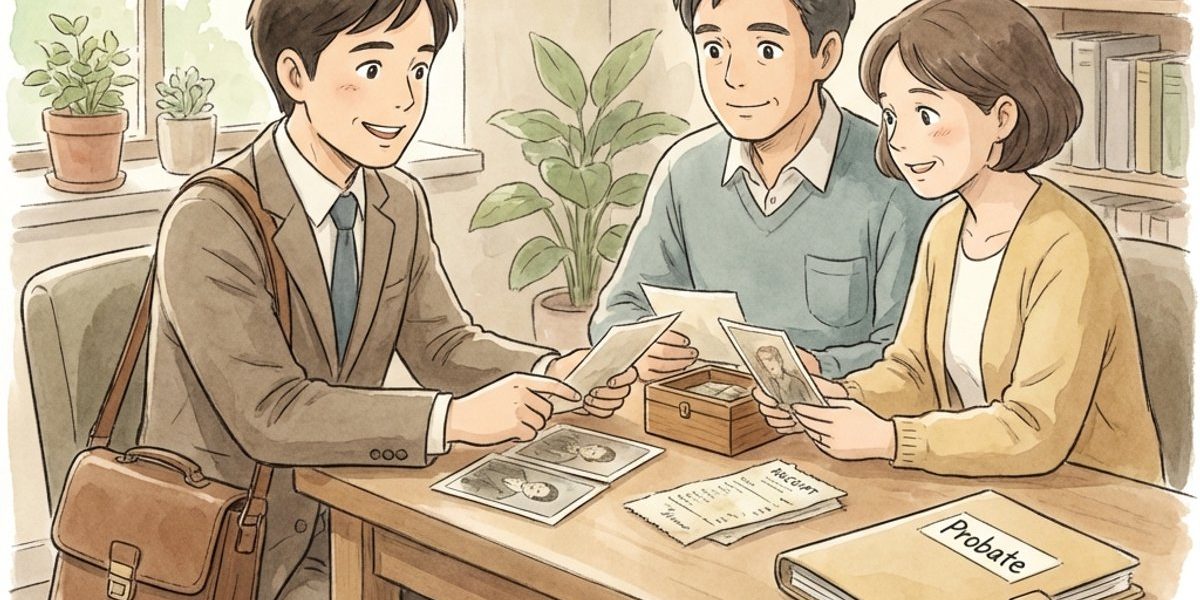
How do I prove certain items are mine or were family belongings and not part of the estate? – North Carolina
Short Answer
In North Carolina, the key is showing the items were owned by someone other than the decedent at the time of death (for example, they were gifted earlier, inherited by a different family member, or bought and paid for by someone else). Proof usually comes from documents (receipts, titles, appraisals, insurance schedules), consistent records (photos, texts, emails), and witness statements. If the executor treats the items as estate property anyway, the dispute is typically handled through the Clerk of Superior Court’s estate proceeding process, and sometimes through a civil action in Superior Court depending on the remedy needed.
Understanding the Problem
In a North Carolina probate administration, a common question is whether a specific item (such as jewelry, tools, furniture, or family keepsakes) must be treated as part of the decedent’s estate or instead belongs to someone else. The decision point is ownership: can it be shown that the item was owned by the claimant (or another family member) before the death, rather than owned by the decedent at death. This issue often comes up when a later spouse dies and the spouse’s will leaves property to a relative who is also serving as executor, and family members disagree about what was truly the spouse’s property versus separate family belongings.
Apply the Law
Under North Carolina law, probate generally covers property the decedent owned at death. If an item was not owned by the decedent at death, it should not be administered as an estate asset, even if it is physically located in the decedent’s home. When there is a dispute, the Clerk of Superior Court (Estates Division) can handle contested estate proceedings, and North Carolina law also provides procedures for recovering property that belongs to an estate. In some situations, the personal representative can use a verified petition process to require examination of a person believed to possess property and to demand recovery of property that belongs to the estate.
Key Requirements
- Identify the ownership theory: The claim should be framed clearly (gift before death, inheritance by someone else, purchase by the claimant, loan/bailment, or item owned by the first parent and never became the later spouse’s property).
- Show objective proof of ownership: Strong proof usually includes paperwork (receipts, appraisals, insurance riders, serial numbers, titles/registrations where applicable) plus consistent supporting records (photos over time, messages, storage records, bank/credit card statements).
- Use the correct probate forum and procedure: If the executor will not agree, the dispute is typically raised with the Clerk of Superior Court through an estate proceeding, and the matter may be treated as “contested” with formal service and a hearing.
What the Statutes Say
- N.C. Gen. Stat. Chapter 28A (Administration of Decedents’ Estates) – North Carolina’s main probate administration statutes, including estate proceedings before the Clerk of Superior Court.
- N.C. Gen. Stat. § 31C-5 (Perfection of title; duty of personal representative) – Addresses procedures and limits on a personal representative’s duty to investigate certain property held by a surviving spouse unless a written demand is made.
Analysis
Apply the Rule to the Facts: Here, the dispute is likely about personal property located with the later spouse’s belongings after both deaths, where the executor-beneficiary may treat everything in the home as part of the spouse’s estate. To show certain items are not part of that estate, the most persuasive approach is to tie each disputed item to a non-estate ownership story supported by objective records (for example, proof the item belonged to the first parent’s side of the family and was already given to the claimant, or proof the claimant bought and maintained the item). If the evidence is mixed, the outcome often turns on credibility, consistency, and whether the item can be traced through documents and witnesses rather than family memory alone.
Process & Timing
- Who files: Typically an heir, beneficiary, or other “interested person,” or the personal representative depending on posture. Where: The Estates Division of the Clerk of Superior Court in the county where the estate is being administered. What: A verified petition in an estate proceeding (often used to raise contested issues and request a hearing), with notice and service as required for the particular proceeding. When: As soon as the ownership dispute becomes clear (for example, when the inventory is filed, when distribution is proposed, or when access to property is denied).
- Build the proof item-by-item: Create a list of disputed items with identifying details (photos, serial numbers, inscriptions), the ownership theory for each item, and the supporting documents/witnesses. Provide a written demand to the executor for return of non-estate property and for preservation of disputed items (so items are not sold, given away, or discarded while the issue is pending).
- Hearing and order: If the executor disputes ownership, the Clerk can schedule a hearing in the estate proceeding. Depending on the relief requested and the nature of the dispute, the matter may remain before the Clerk or be handled in Superior Court through a civil action designed to resolve property ownership and recovery issues.
Exceptions & Pitfalls
- “It was in the house” is not proof of ownership: Location and possession matter, but they are not the same as legal ownership. Clear documents and consistent records usually carry more weight than assumptions.
- Family stories without corroboration: Oral history can help, but it is often challenged. A short, specific witness statement (who, what, when, where, how the witness knows) is usually more persuasive than general recollections.
- Commingling and “replacement” issues: If an original family item was sold and replaced, or if parts were swapped (for example, jewelry stones reset), it can be harder to trace. Photographs, appraisals, and repair records can help connect the dots.
- Delay can look like agreement: Waiting until late in administration can make it easier for the executor to argue the claim is an afterthought. Raising the issue promptly and in writing helps preserve the dispute and prevent distribution.
- Procedure matters in contested cases: Once the dispute becomes contested, formal service and proper filings are often required. Skipping those steps can delay a hearing or limit available remedies.
For more context on probate conflicts, see multiple family members disagree about how the estate should be handled and issues involving valuable personal property left off the estate inventory.
Conclusion
In North Carolina, proving an item is not part of an estate usually comes down to proving ownership as of the date of death with objective evidence—documents, consistent records, and credible witnesses—rather than where the item was stored. When an executor claims disputed items belong to the estate, the next step is typically to raise the issue promptly in writing and, if needed, file a verified petition in the estate proceeding with the Clerk of Superior Court to request a hearing before the items are distributed.
Talk to a Probate Attorney
If a family member or executor is treating personal belongings as estate property and there is a dispute about ownership, our firm has experienced attorneys who can help explain the proof that matters, the estate proceeding process, and the timelines to act before property is distributed. Call us today at [919-341-7055].
Disclaimer: This article provides general information about North Carolina law based on the single question stated above. It is not legal advice for your specific situation and does not create an attorney-client relationship. Laws, procedures, and local practice can change and may vary by county. If you have a deadline, act promptly and speak with a licensed North Carolina attorney.

