
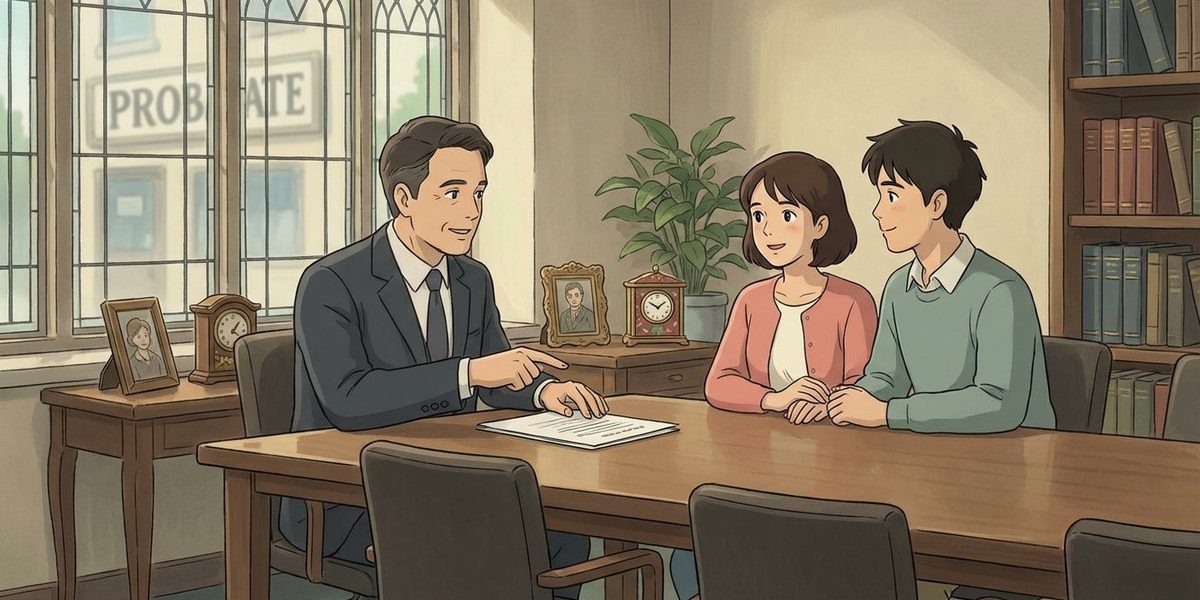
How can I get my personal belongings back from a deceased relative’s property when the executor is trying to auction everything off? – North Carolina
Short Answer
In North Carolina, the executor generally has authority to take control of estate personal property and may be able to sell it, including by auction, to administer the estate. If certain items are truly personal belongings that belong to someone else (or were specifically left to someone in a will), the usual path is to promptly make a written demand for return, document ownership, and, if needed, ask the Clerk of Superior Court to step in before the sale happens. The right solution depends on whether the items are estate property, a specific gift under the will, or property that never belonged to the estate in the first place.
Understanding the Problem
In North Carolina probate, the key question is often: can a family member require the executor to pull certain personal belongings out of an estate sale because those items belong to that family member (or were meant to go to that family member), even though the executor is preparing to auction the home contents. This issue usually comes up when a parent dies, a surviving spouse later dies, and the surviving spouse’s will leaves the property and estate to a relative who is also serving as executor. The decision point is whether the belongings at the property are legally part of the spouse’s estate inventory that the executor can sell, or whether they must be returned or distributed instead.
Apply the Law
North Carolina executors (personal representatives) have broad responsibility to gather, safeguard, and administer estate assets, pay valid debts and expenses, and then distribute what remains to the people entitled to receive it. As part of administration, an executor may have power to sell estate personal property without getting a separate court order, but that power does not turn non-estate property into estate property. When there is a real dispute about who owns specific items, the Clerk of Superior Court can address it through estate proceedings, and in some situations the dispute may need to be handled through a civil action in Superior Court.
Key Requirements
- Identify whether the items are estate property: If the items belonged to the surviving spouse at death, they are usually part of the spouse’s estate. If the items belonged to someone else (for example, they were already owned by the parent’s child, or were loaned/stored there), they are not supposed to be sold as estate assets.
- Show a legal basis for return (not just sentimental value): The strongest bases are proof of ownership (receipts, photos, serial numbers, insurance schedules, written messages acknowledging ownership) or a clear direction in a will that makes a specific gift of those items.
- Act fast and use the probate forum when appropriate: If an auction is imminent, timing matters. Probate disputes and requests for relief are typically handled through the Clerk of Superior Court in the county where the estate is administered, and delay can make recovery harder once items are sold to third parties.
What the Statutes Say
- N.C. Gen. Stat. § 28A-16-1 (Sale or lease of personal property; no court order required) – Allows a personal representative to sell or lease estate personal property without a court order in many situations, with reporting in the next accounting.
- N.C. Gen. Stat. § 28A-16-3 (Limit on sale of certain household furnishings) – Restricts sale of certain household furnishings in the usual dwelling occupied by a surviving spouse for a period tied to the spouse’s election rights.
- N.C. Gen. Stat. § 28A-15-12 (Actions to recover property of decedent) – Provides procedures related to recovering property belonging to an estate and examination of persons believed to possess estate property (often relevant when ownership/possession is disputed).
- N.C. Gen. Stat. § 30-20 (Year’s allowance procedure; clerk order) – Describes the clerk’s process for awarding a spouse’s or child’s allowance from personal property of the estate (which can affect what personal property is set aside before other distributions).
Analysis
Apply the Rule to the Facts: Here, a parent died and the parent’s spouse later died, and the spouse’s will leaves the property and estate to a relative who is also the executor. If the belongings at the property were owned by the spouse at the spouse’s death, the executor will usually treat them as estate assets and may try to auction them under North Carolina’s rules for selling personal property. If some items are actually the child’s property (kept at the home) or were specifically gifted by will (or by a valid written personal property memorandum tied to the will), those items are better framed as “not estate sale property,” and the immediate goal becomes stopping the sale long enough for the Clerk of Superior Court to decide what must be returned or distributed.
Process & Timing
- Who acts: The person claiming the belongings (often an heir or other interested person). Where: The Clerk of Superior Court in the county where the spouse’s estate is being administered. What: A written demand to the executor plus a request for relief through an estate proceeding if the executor refuses. When: Before the auction—ideally as soon as the sale is announced.
- Build a clean ownership list: Create a short inventory of the disputed items (photos, descriptions, approximate dates acquired, and why they are not estate property). Provide supporting proof (receipts, family photos showing long-term possession, written acknowledgments, insurance records, or other documentation). Keep the request narrow and item-specific.
- Ask the clerk for a prompt hearing if needed: If the executor will not pause the sale, the next step is typically asking the clerk to address the dispute through the estate file (and, depending on the issue, directing the matter into the correct type of proceeding). The practical goal is an order that prevents disposal of the disputed items until ownership/distribution is decided.
Exceptions & Pitfalls
- “It was at the house” is not proof of ownership: Executors often assume everything in the home belongs to the estate. Without documents or credible proof, the clerk may treat the items as estate property.
- Specific gifts vs. “everything to one person”: If the spouse’s will leaves the entire estate to the executor/relative and does not carve out specific items, the legal argument for return usually must be based on non-estate ownership (the items were never the spouse’s) rather than “fairness.”
- Allowance and priority set-asides: In some estates, a spouse’s or child’s allowance can require the clerk to set aside certain personal property before other distributions. That can affect what property is available to sell and when. See, e.g., N.C. Gen. Stat. § 30-20.
- Accounting and transparency issues: Even when a sale is allowed, the executor generally must report sale proceeds in estate accountings. If there are concerns about missing items or improper sales, it often helps to obtain the inventory/accountings and compare them to what was actually sold. (Related reading: full copy of the probate inventory and accounting and force the estate to provide an accounting.)
- Wrong forum risk: Some ownership disputes can move from the clerk’s estate administration track into Superior Court civil litigation, depending on what is being requested and who is being accused of holding property. Filing in the wrong place can waste time when an auction date is close.
Conclusion
In North Carolina, an executor may be able to auction estate personal property, but that authority does not include selling items that are not actually part of the estate or that must be set aside or distributed under probate rules. The practical path is to promptly identify the specific items, gather proof of ownership or a clear basis for distribution, and seek relief through the Clerk of Superior Court in the county where the estate is administered. The most important next step is to file for action before the auction so the disputed belongings can be preserved.
Talk to a Probate Attorney
If a deceased relative’s executor is preparing to auction household contents and there is a dispute about personal belongings, our firm has experienced attorneys who can help explain options, prepare a focused demand, and pursue relief through the Clerk of Superior Court on an urgent timeline. Call us today at 919-341-7055.
Disclaimer: This article provides general information about North Carolina law based on the single question stated above. It is not legal advice for your specific situation and does not create an attorney-client relationship. Laws, procedures, and local practice can change and may vary by county. If you have a deadline, act promptly and speak with a licensed North Carolina attorney.

