
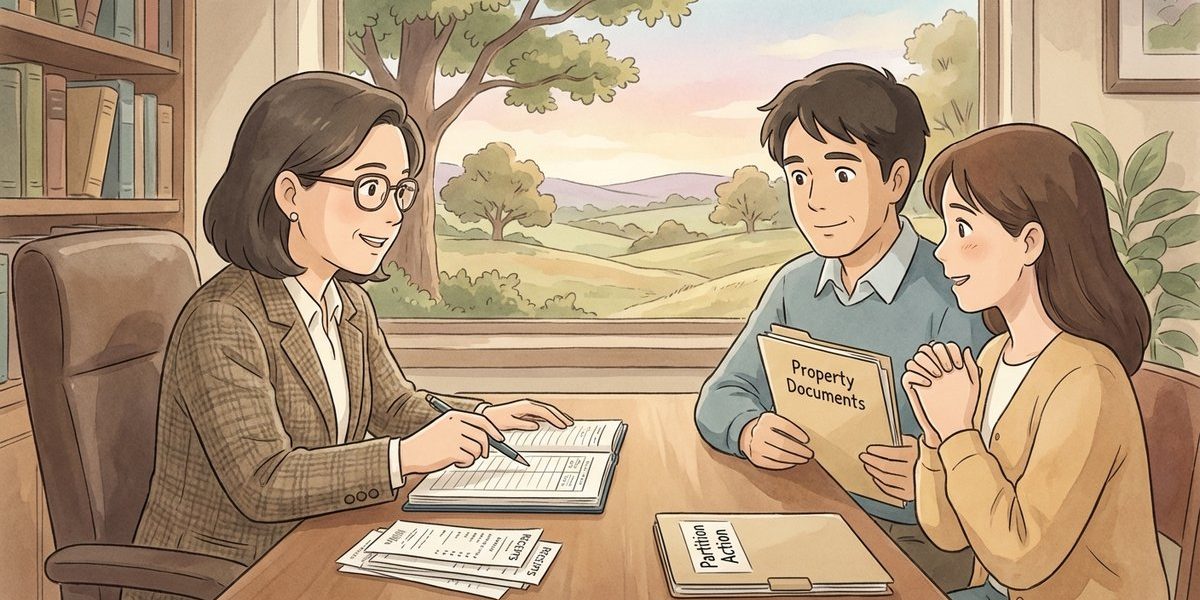
Can the other co-owners make me pay for property maintenance and upkeep if they don’t have receipts or proof of payment? – North Carolina
Short Answer
In North Carolina, co-owners generally cannot force another co-owner to reimburse “maintenance and upkeep” in a partition case without showing what was actually paid and that the expense qualifies for contribution. A co-owner seeking reimbursement typically must prove the amount, the purpose (for example, necessary repairs or carrying costs), and that the claim is allowed under the partition statutes. If the co-owner cannot provide reliable proof of payment, the court can deny or reduce the requested credit.
Understanding the Problem
In a North Carolina co-ownership dispute, the key question is whether one co-owner can require another co-owner to pay back alleged property “maintenance and upkeep” when the person demanding payment cannot show receipts or other proof that the money was actually spent. This issue most often comes up when a co-owner asks a court (usually through a partition case) to adjust the final split of the property or sale proceeds based on claimed expenses. The decision point is whether the claimed expenses are the type the law allows and whether the claiming co-owner can prove the payments.
Apply the Law
North Carolina partition law allows certain reimbursements (often called “contribution” or “credits”) between co-owners, but it is not automatic. The co-owner asking for reimbursement generally has to (1) identify a category the law recognizes (like necessary repairs, property taxes, insurance, or certain loan payments tied to acquiring the property), (2) show the amount actually paid, and (3) show the payment was made under circumstances that allow contribution (for example, rules can change if the paying co-owner had exclusive possession during the relevant time). These issues are typically handled in the partition proceeding in the county where the property is located, often through motions/applications for contribution and an accounting as the case moves toward division or sale.
Key Requirements
- Qualifying expense category: The claimed “upkeep” must fit a recognized category such as necessary repairs or “carrying costs” (like taxes and insurance), not just general spending that a co-owner chose to do.
- Proof of payment and amount: The co-owner seeking reimbursement must be able to show what was paid and when (receipts, invoices marked paid, bank/credit card statements, canceled checks, or credible third-party records).
- Eligibility limits (including possession and lookback rules): Some claims can be limited or barred depending on factors like exclusive possession or statutory limits (for example, property tax contribution in a partition case has a 10-year lookback).
What the Statutes Say
- N.C. Gen. Stat. § 41-86 (Reimbursement of a cotenant) – Addresses contribution for necessary repairs, limits tied to exclusive possession, reimbursement for taxes and certain interest, and how improvements are treated in partition.
- N.C. Gen. Stat. § 46A-27 (Carrying costs; improvements; right to contribution) – Allows contribution in a partition proceeding for carrying costs (including taxes, insurance, repairs, and certain acquisition-loan payments) and sets procedure and a 10-year limit for property taxes.
- N.C. Gen. Stat. § 105-363 (Remedies of cotenants paying taxes) – Provides that a co-owner who pays more than their share of property taxes may seek contribution and may assert a lien in some circumstances.
Analysis
Apply the Rule to the Facts: Here, the dispute involves a co-owned house and disagreements tied to money obligations (including a loan arrangement connected to ownership). If other co-owners claim reimbursement for “maintenance and upkeep,” they generally need to show those payments were actually made and that they fall into recognized categories like necessary repairs or carrying costs under the partition statutes. If they cannot produce receipts or other reliable proof (such as bank records or paid invoices), the court may treat the claim as unproven and decline to charge it against another co-owner’s share.
Process & Timing
- Who files: A co-owner (cotenant) asserting a reimbursement claim. Where: The Clerk of Superior Court in the North Carolina county where the property is located (partition is typically handled there). What: An application/motion in the partition case requesting contribution/credits and an accounting, supported by documentation. When: In a partition sale, the statute allows asserting contribution during the partition proceeding; in an actual partition, the request must be raised before the commissioners file their report.
- Evidence step: The claiming co-owner typically must provide itemized records showing the date, vendor, purpose, and amount paid. If receipts are missing, other third-party proof (bank statements, canceled checks, contractor statements, insurance declarations showing paid premiums) often becomes critical. The other co-owners can object and ask the court to require better proof or to deny unsupported items.
- Decision and adjustment: If the court allows some or all of the claim, it can be handled as a credit/contribution adjustment in the partition outcome (including adjustments to shares or amounts due between co-owners as part of the final distribution).
Exceptions & Pitfalls
- “Upkeep” is too vague: Courts tend to focus on statutory categories (necessary repairs and carrying costs). A lump-sum demand without itemization is easier to challenge.
- Exclusive possession can change the math: North Carolina law can limit reimbursement for certain items (including necessary repairs and interest on an existing encumbrance) for periods when the paying co-owner had exclusive possession.
- Improvements are treated differently than repairs: A co-owner may not get straight reimbursement for improvements the same way as necessary repairs; in partition, the statute focuses on the lesser of added value at filing or actual cost, and the claim still needs proof.
- Proof problems: Missing receipts do not automatically defeat a claim, but the co-owner still needs credible evidence of payment and purpose. Cash payments without documentation are a common reason courts reduce or deny credits.
- Mixing personal and property expenses: Utilities, personal labor, travel, and “time spent” are often disputed. Keeping property expenses separate and documented helps avoid denial.
For more context on how credits and reimbursements can work in these cases, see credit or reimbursement for repairs and upkeep and mortgage, taxes, or repairs during a partition case.
Conclusion
Under North Carolina law, a co-owner usually cannot make another co-owner pay for claimed maintenance and upkeep in a partition case unless the expense qualifies (such as necessary repairs or carrying costs) and the paying co-owner can prove what was actually paid. Unsupported, lump-sum demands are commonly challenged and may be denied or reduced. The practical next step is to require an itemized accounting with proof and raise any objections in the partition proceeding with the Clerk of Superior Court, keeping in mind that property tax contribution is limited to the 10 years before the partition petition is filed.
Talk to a Partition Action Attorney
If you’re dealing with a co-owner who is demanding reimbursement for upkeep without clear documentation, our firm has experienced attorneys who can help explain how contribution claims work in a North Carolina partition case and what records the court typically expects. Call us today at [919-341-7055].
Disclaimer: This article provides general information about North Carolina law based on the single question stated above. It is not legal advice for your specific situation and does not create an attorney-client relationship. Laws, procedures, and local practice can change and may vary by county. If you have a deadline, act promptly and speak with a licensed North Carolina attorney.

