
Recent Legal Update
Updated: March 2026
North Carolina’s elective share procedure statute, N.C. Gen. Stat. § 30-3.4, was amended effective for elective share claims filed on or after January 1, 2026. Before this update, practice materials noted a requirement to mail or deliver a copy of the petition to the personal representative within the six-month filing period, and there was uncertainty in practice about summons and service steps.
Under the updated procedure, the surviving spouse still generally must file the elective share petition within six months after letters are issued, but the proceeding is now more clearly treated as an estate proceeding with Rule 5 service on the personal representative and responsible persons, without issuance of summons. The prior mail-or-deliver requirement to the personal representative within that six-month period was eliminated.
This change does not alter the article’s main answer that spouses should usually use separate wills rather than one joint will. It does, however, materially affect the procedure and timing discussion for any surviving spouse considering an elective share claim after death.
Can one will cover both spouses, or do we each need our own will? – North Carolina
Short Answer
In North Carolina, each spouse should usually sign a separate will. A single document can be drafted as a “joint will,” but joint wills often create avoidable problems after the first spouse dies, including confusion about whether the survivor can change the plan. For most married couples, two coordinated wills (and sometimes a trust) are a cleaner way to pass a home, land, and bank accounts and reduce the risk of conflict.
Understanding the Problem
In North Carolina estate planning, the decision is whether one document can serve as both spouses’ will, or whether each spouse must sign a separate will. The key issue is how a married couple can set a clear plan for a home, land, and bank accounts while keeping the plan workable after the first spouse dies. The question also matters when timing is urgent due to a serious medical condition and the documents need to be completed soon.
Apply the Law
North Carolina law allows a person to leave property by a valid will, but a will is fundamentally an individual document: it speaks for one person at death and is proved in that person’s estate. A “joint will” (one paper signed by both spouses) can exist, but it can create practical and legal complications—especially if the couple intends the survivor to follow a fixed plan for the children. Even with a will, North Carolina gives a surviving spouse important rights that can override parts of the plan unless those rights are properly addressed.
Key Requirements
- Separate testamentary intent: Each spouse’s wishes must be clear and independently valid, because each spouse has a separate estate and a separate probate process at death.
- Valid execution and proof: The will should be signed and witnessed correctly and, in most cases, made “self-proved” so the clerk of superior court can accept it without tracking down witnesses later.
- Spousal rights planning: The plan should account for the surviving spouse’s statutory rights (including the elective share) and how title is held for the home/land and how beneficiaries are set for bank accounts.
What the Statutes Say
- N.C. Gen. Stat. § 31-3.2 (Kinds of wills) – Recognizes attested wills and holographic wills (and limited nuncupative wills for personal property).
- N.C. Gen. Stat. § 31-11.6 (Self-proved wills) – Allows a will to be made self-proved through a notarized acknowledgment and witness affidavits.
- N.C. Gen. Stat. § 30-3.1 (Right of elective share) – Gives a surviving spouse a right to claim an elective share based on the length of the marriage and the decedent’s “Total Net Assets.”
- N.C. Gen. Stat. § 30-3.4 (Elective share procedure; time limit) – Sets the process and a six-month deadline after letters issue to file an elective share claim with the clerk of superior court. For claims filed on or after January 1, 2026, the statute more clearly treats the matter as an estate proceeding and requires service under Rule 5 on the personal representative and responsible persons without issuance of summons. (Updated to reflect 2025 amendment effective 2026.)
- N.C. Gen. Stat. § 30-3.6 (Waiver of rights) – Allows waiver (in whole or part) of elective share rights by a signed written waiver, subject to enforceability rules.
Analysis
Apply the Rule to the Facts: Here, the goal is a clear plan for a home, land, and bank accounts to selected children, with less room for conflict from other children. Two coordinated wills usually accomplish that more cleanly than one joint will because each spouse can name an executor, choose guardianship-related provisions if needed, and set out specific gifts and “who gets what” in a way that fits that spouse’s assets and beneficiary designations. Given the serious medical condition and the need to act soon, the priority is a properly executed, self-proved will for each spouse so the plan is easier to probate and harder to attack on technical grounds.
Process & Timing
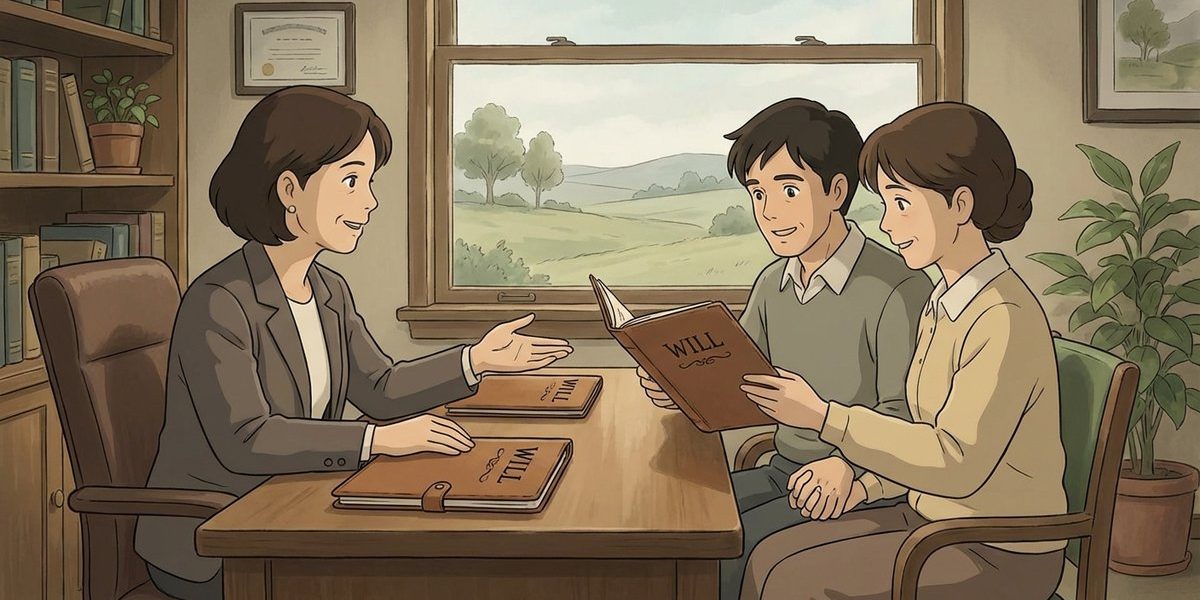
- Who signs: Each spouse signs a separate will. Where: The signing is typically done in an attorney’s office in North Carolina with a notary and witnesses present. What: A will for each spouse, usually with a self-proving affidavit. When: As soon as practical, especially when health is declining.
- Coordination step: Confirm how the home and land are titled and how bank accounts are set up (payable-on-death, joint ownership, or individual). Then align the wills (and any trust plan) with those titles and beneficiary designations so the documents do not conflict.
- After signing: Store the originals safely. North Carolina also allows a will to be filed for safekeeping with the clerk of superior court during life if desired.
Exceptions & Pitfalls
- Joint will confusion: A joint will can trigger disputes about whether the survivor is “locked in” to the plan or can change it later. That uncertainty can fuel the very conflict the plan is trying to avoid.
- Will contests (caveats): When family conflict is expected, sloppy execution, unclear language, or last-minute changes can invite challenges. Using a self-proving will and clear, consistent planning reduces technical attack points. For more on challenges, see signed under pressure or wasn’t properly witnessed or notarized and make sure a will is valid and less likely to be challenged.
- Beneficiary designations override wills: Many bank and retirement accounts pass by beneficiary form, not by the will. If the forms are not updated, the will may not control those assets.
- Spousal rights can override the plan: Even a well-drafted will may not fully disinherit a spouse because of the elective share rules unless those rights are addressed (often through careful planning and, in some cases, a valid waiver).
- Real estate title issues: The way the home and land are titled can control what happens at death and whether probate is needed. Deeds and estate documents should be consistent.
Conclusion
In North Carolina, one document can be drafted as a joint will, but most couples are better served by two separate, coordinated wills because each spouse has a separate estate and probate process, and joint wills can create disputes about whether the survivor can change the plan. A practical next step is to sign a self-proved will for each spouse and align the plan with how the home, land, and bank accounts are titled and designated.
Talk to a Estate Planning Attorney
If you’re dealing with planning for a married couple and deciding between a joint will, separate wills, or a trust to reduce family conflict, our firm has experienced attorneys who can help you understand your options and timelines. Call us today at [919-341-7055].
Disclaimer: This article provides general information about North Carolina law based on the single question stated above. It is not legal advice for your specific situation and does not create an attorney-client relationship. Laws, procedures, and local practice can change and may vary by county. If you have a deadline, act promptly and speak with a licensed North Carolina attorney.

