
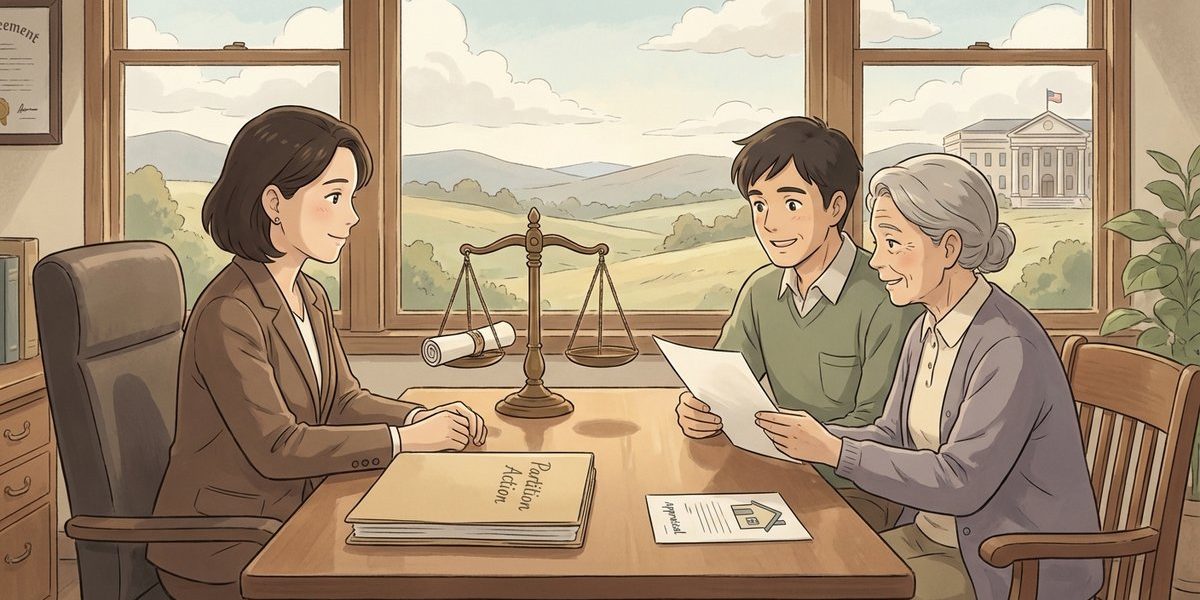
If we are already working on a buyout and have an appraisal, can the court petition be paused or dismissed? – North Carolina
Short Answer
Yes—often a North Carolina partition case can be paused (continued) or dismissed if the co-owners reach a real buyout agreement and the court has not already moved the case into the sale process. The court will usually want something concrete (a signed settlement, a buyout closing timeline, or a consent order) rather than a general statement that negotiations are happening. If the case has progressed toward a court-ordered sale, timing matters and a dismissal may require court approval and clear terms to protect all parties.
Understanding the Problem
In North Carolina, when family members co-own a home after a parent’s death, one co-owner can file a partition proceeding asking the court to divide the property or order a sale. The question here is narrow: if the co-owners are already working on a private buyout and have an appraisal, can the pending court petition be paused or dismissed so the buyout can move forward instead of a court-ordered sale.
Apply the Law
Partition in North Carolina is handled as a special proceeding, typically before the Clerk of Superior Court. The court’s job is to decide whether the petitioner is entitled to partition relief and, if so, what method applies (division in kind versus sale). A private buyout is not the same thing as “partition” under the statute, but it can resolve the dispute if the parties document the deal and ask the court to stop the case (by continuance or dismissal) before the court orders and completes a partition sale process.
Key Requirements
- A real agreement (not just negotiations): The court generally needs a clear, workable plan—such as a signed settlement, agreed buyout price, and a closing date—before it will pause the case for long.
- Correct posture of the case: It is easier to pause or dismiss earlier in the proceeding than after the court has ordered a sale and appointed a commissioner to sell the property.
- A proper request to the Clerk of Superior Court: The parties typically must file a written motion (or a consent motion/order) asking for a continuance, stay, or dismissal, and explain how the buyout will be completed and how costs will be handled.
What the Statutes Say
- N.C. Gen. Stat. § 46A-1 (Partition is a special proceeding) – Partition follows special proceeding rules, usually handled by the Clerk of Superior Court.
- N.C. Gen. Stat. § 46A-21 (Who may petition; necessary parties) – A cotenant may petition to partition, and all cotenants must be joined.
- N.C. Gen. Stat. § 46A-26 (Methods of partition) – The court must choose a statutory partition method.
- N.C. Gen. Stat. § 46A-75 (Sale in lieu of actual partition) – A sale in lieu of partition requires findings that actual partition cannot be made without substantial injury to any of the interested parties, and the party seeking sale has the burden of proof.
Analysis
Apply the Rule to the Facts: Here, multiple family members co-own a home after a parent’s death, and one co-owner filed (and amended) a petition seeking a court-ordered sale. The existence of an appraisal supports buyout negotiations because it helps the parties talk about a price, but an appraisal alone does not automatically stop the case. If the co-owners can convert the appraisal into a signed buyout agreement with a realistic closing timeline, that agreement can be used to request that the Clerk of Superior Court continue the hearing dates or dismiss the proceeding so the private transfer can close.
Process & Timing
- Who files: Typically the petitioner and respondent(s) jointly (or any party, if requesting a continuance). Where: Clerk of Superior Court in the county where the property is located in North Carolina. What: A written motion for continuance/stay or a consent motion/order reflecting the settlement terms and a buyout closing deadline. When: As early as possible—ideally before the clerk enters orders moving the case into the sale process.
- Show the court the “path to closing”: The request is stronger when it includes (i) the agreed buyout price or pricing method, (ii) who will buy, (iii) how title will be transferred (usually by deed), (iv) how liens, taxes, and closing costs will be handled, and (v) what happens if the buyout does not close by the deadline (for example, the case resumes).
- Wrap up the case: If the buyout closes, the parties typically file a dismissal (often by consent) so the special proceeding is removed from the docket, and the deed and related closing documents are recorded through the normal real estate closing process.
Exceptions & Pitfalls
- “We have an appraisal” is not the same as “we have a deal”: If the parties still disagree on price, repairs, credits, or who pays costs, the clerk may keep the case moving.
- Partial agreements can backfire: Pausing the case without a firm deadline can increase costs and delay resolution. A short continuance tied to a closing date is usually more persuasive than an open-ended pause.
- Title and estate issues: After a death, the ability to convey title may depend on the estate status and who actually holds record title. If the deed cannot be delivered cleanly, the buyout may stall and the partition case may restart.
- Costs and fees must be addressed: Partition proceedings can involve filing fees, service costs, commissioner fees (if appointed), and other expenses. A settlement should state how those will be paid or credited at closing.
- One cotenant can still object: Even if several family members want a buyout, a single holdout can keep the case alive unless the settlement resolves that person’s interest too.
For more background on how valuation disputes are handled in these cases, see how the property is divided or valued in a partition case if the co-owners can’t agree. For buyout-specific valuation issues, see how the buyout price is determined if co-owners disagree on value.
Conclusion
In North Carolina, a partition case can often be paused or dismissed if the co-owners reach a concrete buyout agreement, but an appraisal by itself does not stop the court process. Because partition is a special proceeding before the Clerk of Superior Court, the practical next step is to file a written consent request to continue or dismiss the proceeding that includes a clear buyout closing deadline and what happens if closing does not occur by that date.
Talk to a Partition Action Attorney
If you’re dealing with a co-owned family home and a pending partition petition while a buyout is being negotiated, our firm has experienced attorneys who can help explain options, paperwork, and timelines. Call us today at [919-341-7055].
Disclaimer: This article provides general information about North Carolina law based on the single question stated above. It is not legal advice for your specific situation and does not create an attorney-client relationship. Laws, procedures, and local practice can change and may vary by county. If you have a deadline, act promptly and speak with a licensed North Carolina attorney.

