
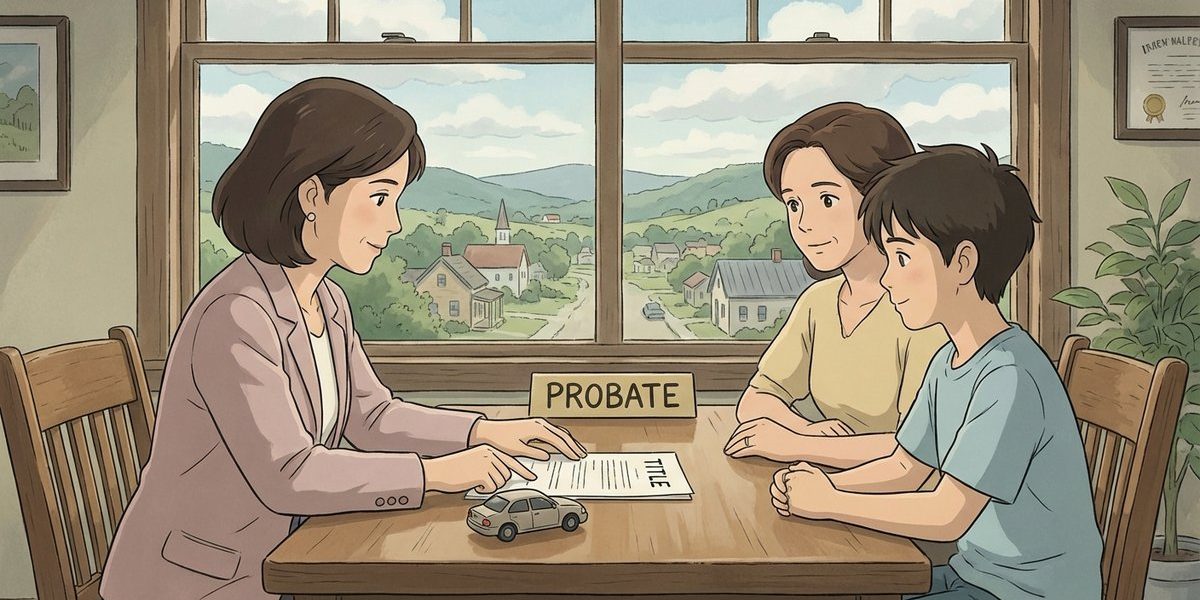
How do I handle a car that was titled in my partner’s name and a relative’s name, especially if the relative is demanding money or took the vehicle? – North Carolina
Short Answer
In North Carolina, the first step is to confirm how the vehicle was co-titled: some co-ownership is set up to pass automatically to the surviving co-owner, and some is not. If the title was set up with a right of survivorship, the surviving co-owner can usually transfer the title through the DMV with a death certificate and signed title paperwork. If there was no survivorship, the decedent’s share is typically handled through the estate, and the clerk of superior court (estate division) may need to appoint a personal representative before the car can be sold, transferred, or recovered.
Understanding the Problem
In North Carolina probate, the key question is whether a vehicle titled in two names becomes the surviving co-owner’s property at death, or whether the decedent’s share remains part of the estate for the minor child heir. The situation often comes to a head when the surviving co-owner (a relative) demands money to “sign off,” refuses to cooperate with DMV paperwork, or physically takes the vehicle. The practical goal is to determine who has legal authority to control the car and what paperwork is required to transfer title or demand return of the vehicle.
Apply the Law
North Carolina treats co-titled vehicles differently depending on whether the owners elected a joint tenancy with right of survivorship when the title was issued. The DMV title application includes an option for co-owners to choose a right of survivorship, and that election can control what happens at death. If the vehicle is not titled with survivorship, the decedent’s ownership interest is generally handled through the estate, and a court-appointed personal representative is typically the person with authority to collect, safeguard, and transfer estate property for the heir (including a minor child).
Key Requirements
- Confirm the type of co-ownership on the title: The paperwork may show (or reflect) whether the co-owners elected a right of survivorship or a form of co-ownership where the decedent’s share stays in the estate.
- Identify who has legal authority to act for the estate: If the decedent’s share is an estate asset, a personal representative (appointed through the clerk of superior court) is usually needed to sign title documents, deal with liens, and demand return of estate property.
- Address possession and lien/insurance issues quickly: Regardless of who ultimately owns the vehicle, the car should remain insured, safeguarded, and not sold or transferred without proper authority and documentation.
What the Statutes Say
- N.C. Gen. Stat. § 20-52 (Vehicle title application; survivorship option for co-owners) – Allows co-owners to elect joint tenancy with right of survivorship on the DMV title application, which can affect who owns the vehicle after a co-owner dies.
- N.C. Gen. Stat. § 29-15 (Intestate succession) – If there is no surviving spouse, a surviving child can inherit the net estate under North Carolina intestacy rules (subject to administration and lawful claims).
Analysis
Apply the Rule to the Facts: The vehicle is co-titled in the decedent’s name and a relative’s name, so the outcome turns on whether the title was set up with a right of survivorship. If survivorship was elected, the relative may become the sole owner at death, and the dispute becomes less about probate and more about whether any separate agreement exists about payments or use of the car. If survivorship was not elected, the decedent’s share is typically an estate asset for the minor child heir, and the estate’s personal representative is usually the person who can demand return of the vehicle, address any car loan, and complete a proper transfer or sale through the DMV.
Process & Timing
- Who acts: First, the person handling the decedent’s affairs gathers documents; if the decedent’s share is an estate asset, the personal representative is the decision-maker. Where: North Carolina Clerk of Superior Court (Estates) in the county where the estate is opened, plus the N.C. Division of Motor Vehicles for title transfer. What: Obtain a copy of the title (front and back), confirm how the owners are listed, and collect a certified death certificate; if an estate administration is needed, apply for appointment and obtain certified Letters.
- Stabilize the situation: Confirm the vehicle is insured and located safely. If the relative has possession and refuses to cooperate, document the vehicle’s location, condition, and any communications about demands for money, and avoid informal “pay-to-release” arrangements that could complicate ownership and reimbursement issues later.
- Transfer or recover through the proper channel: If survivorship applies, the surviving co-owner typically completes DMV transfer steps with the title and death certificate. If survivorship does not apply, the personal representative typically signs the title as the transferring party and the recipient completes the DMV application for a new title; if the vehicle was taken, the personal representative may need to pursue return of the property through a court process based on the estate’s ownership interest.
Exceptions & Pitfalls
- Survivorship vs. no survivorship: Two names on a title do not always mean the same thing. The survivorship election (or lack of it) can change whether probate has any control over the vehicle.
- Minor child heir complications: Even when a minor is the only heir, a minor generally cannot directly receive and manage property without a proper legal structure, which can affect how a vehicle is sold, insured, or held.
- Liens and taxes: A car loan lienholder and unpaid property taxes can block a clean transfer. Title transfer often requires dealing with lien releases and confirming tax/registration requirements.
- Possession disputes: If a relative took the vehicle, self-help responses can backfire. The safer path is to establish who has authority (survivor vs. personal representative) and then use written demands and, if needed, a court process to recover estate property.
For a deeper overview of when a vehicle requires probate steps in North Carolina, see a simplified small-estate option just to retitle a vehicle and what property actually has to go through probate.
Conclusion
In North Carolina, handling a co-titled vehicle after a partner’s death usually turns on whether the title was set up with a right of survivorship. If survivorship applies, the surviving co-owner can often transfer the title through the DMV with the title and a certified death certificate. If survivorship does not apply, the decedent’s share is typically an estate asset for the minor child heir, and the next step is to open the estate and have the clerk appoint a personal representative to recover and transfer the vehicle properly.
Talk to a Probate Attorney
If there is a dispute over a co-titled vehicle after a death—especially when a relative is demanding money or has taken the car—our firm has experienced attorneys who can help clarify ownership, identify the right court process, and protect the minor heir’s interests. Call us today at [919-341-7055].
Disclaimer: This article provides general information about North Carolina law based on the single question stated above. It is not legal advice for your specific situation and does not create an attorney-client relationship. Laws, procedures, and local practice can change and may vary by county. If you have a deadline, act promptly and speak with a licensed North Carolina attorney.

