
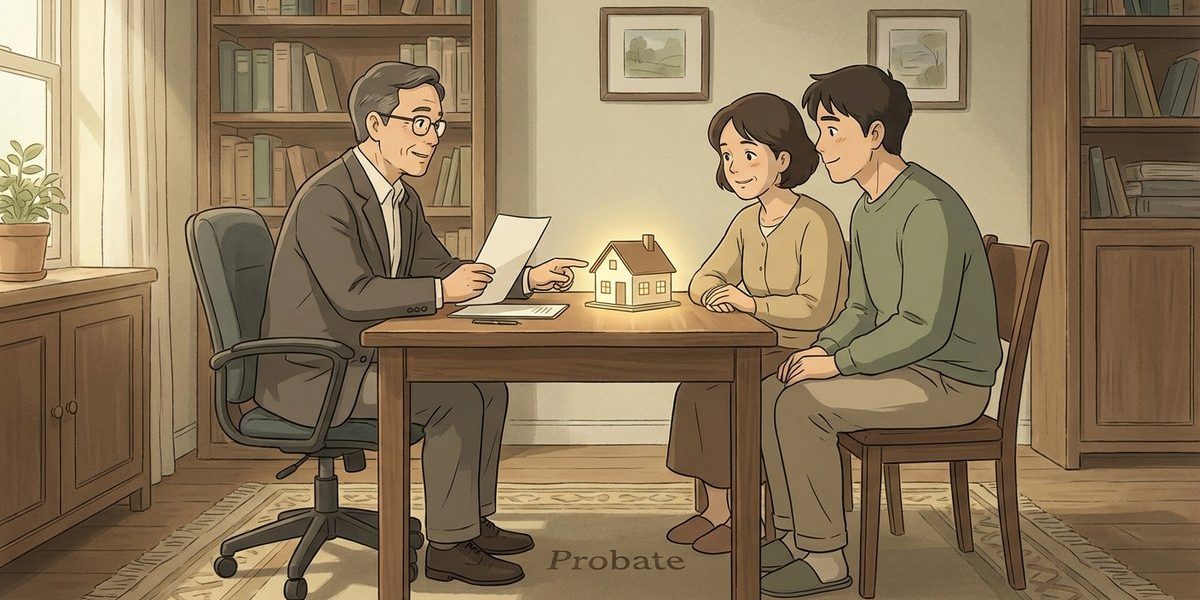
If my partner died without a will, what happens to the house that’s only in their name if I’ve been paying the mortgage and want to keep it? – North Carolina
Short Answer
In North Carolina, a house titled only in a deceased person’s name generally becomes part of the probate estate when there is no will, and it passes to the legal heirs under the intestate succession rules. Paying the mortgage does not automatically create ownership rights in the house, but it can matter when the estate is settled and when the heirs decide whether to sell, refinance, or transfer the property. Life insurance proceeds can often be used to keep the home, but the practical path usually requires opening an estate and then reaching an agreement (or court approval) to transfer the house to the person who will keep paying the loan.
Understanding the Problem
When a North Carolina resident dies without a will, a common question is: can a surviving partner keep a house that is titled only in the deceased partner’s name, especially when the surviving partner has been making the mortgage payments and wants to use life insurance proceeds to keep the home? The decision point is whether the surviving partner is a legal heir under North Carolina law (most commonly a surviving spouse) or is not an heir (such as an unmarried partner). That status controls who inherits the house and what steps are available to keep it.
Apply the Law
Under North Carolina law, real estate owned solely by the decedent typically becomes a probate asset. If there is no will, the Clerk of Superior Court oversees an estate administration, and the property passes to heirs based on intestate succession. If the surviving partner is a legal surviving spouse, North Carolina statutes give the spouse a defined share of the decedent’s real property, which may be a full share or a partial share depending on whether the decedent also had children or surviving parents. If the surviving partner is not a spouse, mortgage payments alone usually do not change the title; the house still passes to the decedent’s heirs, and keeping it typically requires buying out or receiving a transfer from those heirs through the estate process.
Key Requirements
- Heir status (spouse vs. non-spouse): Intestate succession rights to the house depend on whether the surviving partner is a surviving spouse under North Carolina law. Unmarried partners are not treated as heirs under the intestacy statutes.
- Probate administration and authority to transfer title: A personal representative (administrator) appointed by the Clerk of Superior Court generally must handle estate assets, including real estate, and follow the required process before a deed can be recorded to change ownership.
- Mortgage and estate debt handling: The mortgage does not disappear at death. Keeping the home usually means keeping the loan current and then arranging a transfer (and often a refinance or assumption) so the person keeping the home can legally own it and satisfy the lender’s requirements.
What the Statutes Say
- N.C. Gen. Stat. § 29-14 (Share of surviving spouse) – Sets the surviving spouse’s intestate share of real property (which changes depending on surviving children or parents).
- N.C. Gen. Stat. § 30-15 (Spouse’s allowance) – Allows a surviving spouse to petition the Clerk of Superior Court for a statutory allowance, with a key timing rule if an estate is opened.
- N.C. Gen. Stat. § 30-3.1 (Elective share) – Gives a surviving spouse a right to claim an elective share in certain situations, which can matter when assets pass outside probate or when the spouse’s intestate share is not enough.
- N.C. Gen. Stat. § 30-3.4 (Elective share procedure and deadline) – Requires an elective share claim to be filed within six months after letters of administration/testamentary are issued.
Analysis
Apply the Rule to the Facts: Here, the home is titled only in the decedent’s name, and there is no will. That usually means the house is part of the probate estate and will pass to the decedent’s heirs under North Carolina intestacy rules. The surviving partner’s mortgage payments help keep the loan current, but they do not automatically transfer ownership. Life insurance proceeds can be a practical tool to keep the home (for example, by paying down the mortgage or funding a buyout of other heirs), but the ability to “keep” the house still depends on who inherits it and what the estate administration allows.
Process & Timing
- Who files: Typically an heir (often the surviving spouse) or another qualified person seeks appointment as administrator. Where: Clerk of Superior Court (Estates) in the county where the decedent lived in North Carolina. What: An application for letters of administration and the required estate filings. When: As soon as practical, especially if there are mortgage payments, insurance issues, or deadlines for spousal claims.
- Identify who inherits the house and what the lender requires: The administrator and heirs confirm the intestate heirs and the spouse’s share (if there is a surviving spouse). Separately, the mortgage servicer is contacted to confirm how payments can be made during administration and what will be required for a long-term solution (often refinance, assumption if allowed, or payoff).
- Transfer or keep the home: If the surviving partner is the sole heir (or the heirs agree), the estate can typically move toward a deed transfer through the estate process. If there are multiple heirs, keeping the home often requires an agreement to transfer interests (sometimes with a buyout funded by life insurance proceeds) and then recording the appropriate deed(s) and updating the loan arrangement.
Exceptions & Pitfalls
- Unmarried partner vs. spouse: Intestate succession rights generally protect a surviving spouse, not an unmarried partner. If there was no marriage, keeping the home usually requires cooperation from the heirs (such as children or parents) or another legal claim that fits the facts.
- Mortgage payments do not equal title: Continuing to pay the mortgage can prevent foreclosure, but it usually does not change who inherits the property. Without a transfer through probate (or deeds from heirs), title stays in the estate/heirs.
- Life insurance may be outside probate: Life insurance proceeds often pass to the named beneficiary and may not automatically become estate money. That can be helpful for paying the mortgage or buying out heirs, but it does not, by itself, transfer ownership of the house.
- Spousal claims have deadlines: If the surviving partner is a spouse, certain spousal rights can have strict timing rules once an estate is opened. Missing a deadline can reduce options for keeping the home.
- Title transfer and lender requirements can mismatch: Even when heirs agree to transfer the house, the mortgage company may still require a refinance, assumption, or payoff. Planning for both the deed and the loan is critical.
Conclusion
In North Carolina, when a person dies without a will and the house is titled only in that person’s name, the house usually becomes a probate asset and passes to the legal heirs under intestate succession. Paying the mortgage helps keep the property from default, but it does not automatically create ownership. The practical next step is to open an estate with the Clerk of Superior Court so an administrator can confirm the heirs and complete the transfer process; if an elective share claim may apply, it generally must be filed within six months after letters are issued.
Talk to a Probate Attorney
If you’re dealing with a partner’s death without a will and a house titled only in the decedent’s name, our firm has experienced attorneys who can help explain who inherits the home, what probate filings are needed, and how to line up a transfer with the mortgage and life insurance proceeds. Call us today at [919-341-7055].
Disclaimer: This article provides general information about North Carolina law based on the single question stated above. It is not legal advice for your specific situation and does not create an attorney-client relationship. Laws, procedures, and local practice can change and may vary by county. If you have a deadline, act promptly and speak with a licensed North Carolina attorney.

