
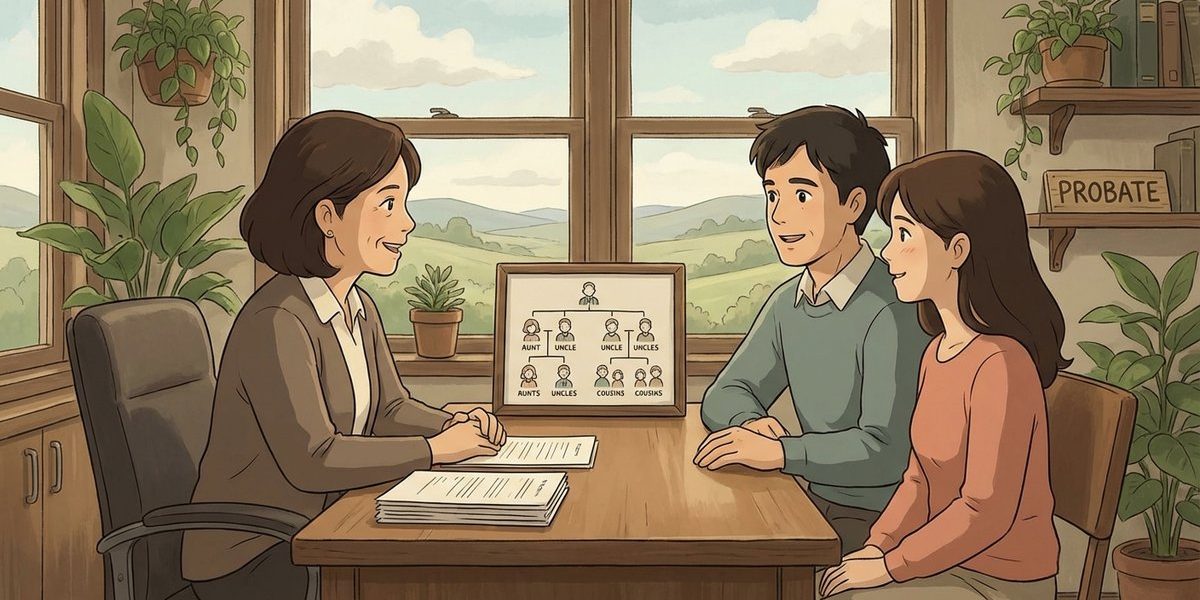
When someone dies without a will, do cousins inherit if an aunt or uncle died before or after the death? – North Carolina
Short Answer
In North Carolina, cousins can inherit in an intestate estate (no will), but usually only if closer relatives are not living (such as a spouse, children, parents, siblings, or grandparents). If an aunt or uncle died before the person who died, that aunt/uncle’s children (the decedent’s cousins) may inherit by representation in that aunt/uncle’s place. If an aunt or uncle died after the person who died, the aunt/uncle generally inherits first (because they were alive at the time of death), and then that inherited share becomes part of the aunt/uncle’s own estate.
Understanding the Problem
When a North Carolina resident dies without a will, can cousins inherit when the closest “extended family” relatives are aunts and uncles, and does the answer change depending on whether an aunt or uncle died before the decedent or survived the decedent? The decision point is timing: whether the aunt or uncle was legally alive at the decedent’s death (including survivorship rules), because that determines whether cousins step into that person’s place or whether the aunt/uncle’s share passes through the aunt/uncle’s own estate.
Apply the Law
North Carolina’s Intestate Succession Act distributes an estate in “classes.” Cousins are not in the first classes. They typically come into the picture only after the law rules out closer heirs (like descendants, parents, and siblings), and then the estate is split by family “sides” (paternal and maternal). If the distribution reaches the aunt/uncle level, North Carolina uses a representation-style approach: living aunts/uncles take shares, and if an aunt/uncle is already deceased, that person’s descendants (cousins, and sometimes cousins’ children) may take that share, subject to degree-of-kinship limits.
Key Requirements
- No closer heirs in a higher class: Cousins generally inherit only if there is no surviving spouse’s share left for others to take and there are no surviving children/other descendants, parents, or siblings (or descendants of siblings) entitled to inherit ahead of them.
- The aunt/uncle’s survival status at the decedent’s death: If an aunt/uncle was alive at the decedent’s death, that aunt/uncle is an heir; if the aunt/uncle died before the decedent, the aunt/uncle is treated as not an heir and the aunt/uncle’s descendants may take instead.
- Representation and kinship limits: If the law reaches aunts/uncles, their descendants (cousins) can inherit by stepping into the deceased aunt/uncle’s “branch,” but North Carolina limits collateral inheritance by degree of kinship in many situations.
What the Statutes Say
- N.C. Gen. Stat. § 29-15 (Shares of heirs other than a surviving spouse) – Sets the order of who inherits (children/descendants, parents, siblings/descendants of siblings, then grandparents and the aunts/uncles and their descendants by paternal and maternal halves).
- N.C. Gen. Stat. § 29-16 (Distribution among classes) – Explains how shares are divided within a class, including uncles/aunts and the descendants of deceased uncles/aunts (which is where cousins can inherit).
- N.C. Gen. Stat. § 29-13 (Intestacy; survivorship determination) – Provides that heirship depends on surviving the decedent, and points to the survivorship rules used to decide whether someone is treated as having predeceased.
- N.C. Gen. Stat. § 29-7 (Collateral succession limited) – Limits inheritance by collateral relatives beyond certain degrees of kinship in many cases, with an exception to avoid escheat.
Analysis
Apply the Rule to the Facts: The facts suggest a North Carolina decedent died years ago without a will and there may be property that would pass to extended family. Under North Carolina’s class system, cousins inherit only if the estate is not taken by closer relatives and the distribution reaches the aunt/uncle level (often after grandparents are not living). If an aunt or uncle died before the decedent, that aunt/uncle’s children (cousins) may inherit that branch’s share; if the aunt or uncle survived the decedent, that aunt/uncle would generally inherit first and the share would then pass through the aunt/uncle’s own estate when the aunt/uncle later dies.
Process & Timing
- Who files: A qualified person (often an heir) seeking to open the estate. Where: The Clerk of Superior Court (Estates Division) in the North Carolina county where the decedent lived at death. What: An application to open the estate and be appointed as personal representative/administrator, plus information identifying heirs. When: As soon as practical after learning assets exist; delays can create title and notice problems.
- Heir identification: The administrator typically must identify the correct heir class and list heirs, including whether each relevant aunt/uncle was alive at the decedent’s death and, if not, which descendants exist in that branch.
- Distribution: After debts/claims and administration costs are handled, the administrator distributes the net estate to the heirs determined under the intestacy statutes, and documents the distribution in the estate file.
Exceptions & Pitfalls
- Assuming cousins inherit “automatically”: In North Carolina, cousins are not first in line. If there is a surviving spouse, child, parent, sibling, or qualifying descendant in a higher class, cousins may receive nothing from the intestate estate.
- Mixing up “died before” vs. “died after”: If the aunt/uncle survived the decedent, the aunt/uncle’s share generally does not skip straight to cousins; it becomes part of the aunt/uncle’s estate and follows that aunt/uncle’s will or intestacy.
- Degree-of-kinship limits and branch cutoffs: North Carolina places limits on collateral inheritance by degree of kinship in many situations. A family tree that seems straightforward can still fail the statutory limits, especially when dealing with more remote cousins or descendants of cousins.
- Incomplete family tree documentation: Missing death dates, missing children, adoptions, or unknown descendants can change the heir class and the share calculation.
Conclusion
In North Carolina intestacy, cousins can inherit only if the estate reaches the aunt/uncle level under the statutory order of heirs. If an aunt or uncle died before the decedent, that aunt/uncle’s descendants (often cousins) may take that branch’s share under the distribution rules. If an aunt or uncle survived the decedent and died later, the aunt/uncle generally inherits first, and that share then passes through the aunt/uncle’s own estate. The next step is to open the estate with the Clerk of Superior Court and document the family tree and death dates to confirm heirship.
Talk to a Probate Attorney
If you’re dealing with an intestate estate where cousins may inherit through deceased aunts or uncles, our firm has experienced attorneys who can help sort out the family tree, survivorship timing, and the court process. Call us today at [CONTACT NUMBER].
Disclaimer: This article provides general information about North Carolina law based on the single question stated above. It is not legal advice for your specific situation and does not create an attorney-client relationship. Laws, procedures, and local practice can change and may vary by county. If you have a deadline, act promptly and speak with a licensed North Carolina attorney.

