
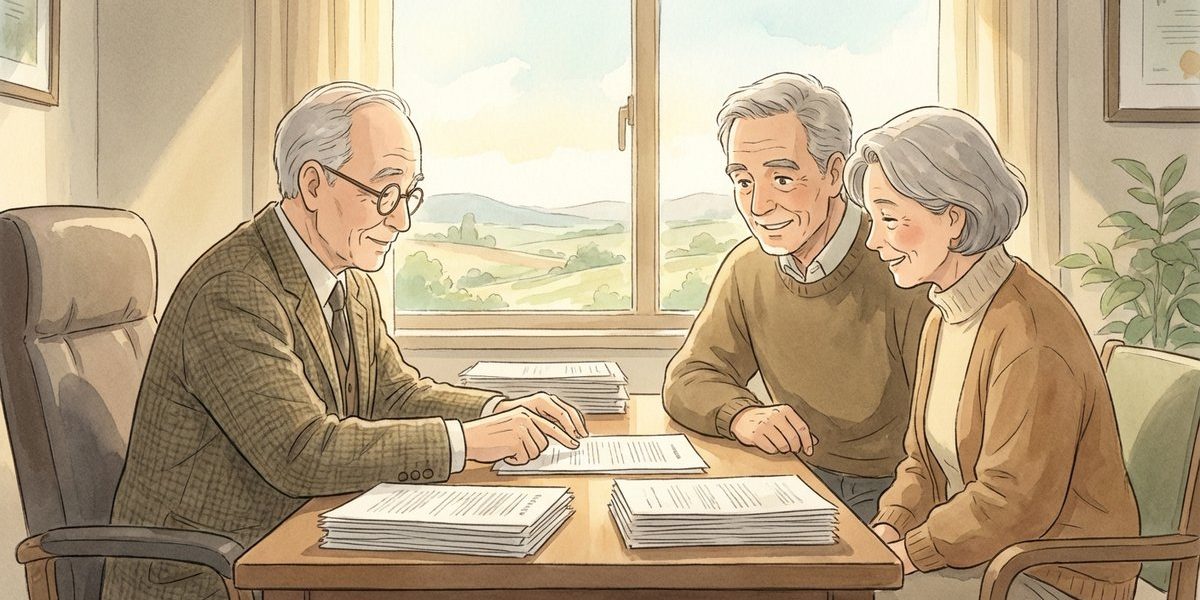
What do we need to do to clear the house deed when it’s still in both spouses’ names years after the death? – North Carolina
Short Answer
In North Carolina, the first step is to confirm how the home was titled. If the deed shows the spouses owned the home as “tenants by the entirety” (the most common way married couples hold a home), the surviving spouse became the sole owner automatically at death, but the public records often still need a recorded document (and a death certificate) to “clear” the title for a sale. If the deed was not a survivorship form of ownership, clearing the deed usually requires opening an estate with the Clerk of Superior Court so the correct heirs/devisees can sign a deed or a personal representative can transfer title.
Understanding the Problem
In North Carolina probate practice, the question is what must be filed or recorded so a Register of Deeds and a closing attorney can treat the surviving spouse (or the correct heirs) as the only owner when a deed still shows both spouses’ names years after one spouse died. The key decision point is how the home was titled at the time of death, because survivorship ownership clears differently than property owned in one spouse’s name alone or as tenants in common. The same “title clean-up” issue often shows up at the same time with a vehicle title that still lists the deceased spouse.
Apply the Law
North Carolina treats some property as passing automatically at death (survivorship property) and other property as passing through an estate (probate property). For real estate owned by spouses as tenants by the entirety, the surviving spouse owns the whole property immediately upon the other spouse’s death, but a buyer and title insurer usually still require recorded proof of the death and survivorship to make the chain of title clear. If the property was not held with survivorship rights, then probate (or another court-approved method) is typically needed to establish who has authority to sign a deed.
Key Requirements
- Confirm the deed’s ownership type: The deed language controls whether the home passed automatically to the surviving spouse or became part of the decedent’s estate.
- Create record proof for the land records: Even when ownership passed automatically, the public record often needs a recorded document (commonly an affidavit of survivorship and a certified death certificate) so a closing can proceed smoothly.
- Use the right court process if survivorship does not apply: If the deed was not survivorship ownership (or there are other title issues), an estate proceeding with the Clerk of Superior Court may be required to transfer marketable title.
What the Statutes Say
- N.C. Gen. Stat. § 41-56 (Tenancy by the entirety; creation) – Explains when a deed to spouses creates a tenancy by the entirety unless the deed says otherwise.
- N.C. Gen. Stat. § 41-64 (Tenancy by the entirety; effect of death) – Provides that, on a spouse’s death, entireties property belongs to the surviving spouse by survivorship (with limited exceptions).
- N.C. Gen. Stat. § 31-39 (Probate of will and effect on title) – Addresses when a will is effective to pass title and timing rules that can matter when real estate is involved.
- N.C. Gen. Stat. § 20-77 (DMV transfer by operation of law) – Describes how DMV can issue a new title when ownership changes by inheritance or similar events, including affidavit-based transfers in certain situations.
Analysis
Apply the Rule to the Facts: The facts describe a home deed still listing both spouses years after one spouse died and no estate opened. If the home was owned as tenants by the entirety, North Carolina law generally treats the surviving spouse as the full owner at death, but the land records may still need a recorded survivorship document and a certified death certificate to satisfy a buyer, lender, or title insurer. If the deed was not survivorship ownership (for example, tenants in common or the decedent owned an interest individually), then clearing title usually requires opening an estate so the correct person(s) can sign a deed into the proper owner(s).
Process & Timing
- Who files: Typically the surviving spouse (or the person trying to sell/transfer). Where: For the house, the Register of Deeds in the North Carolina county where the property is located; for probate steps, the Clerk of Superior Court (Estates) in the county with proper jurisdiction. What: Obtain a certified death certificate and the recorded deed; then prepare the appropriate title-clearing instrument (often an affidavit of survivorship) and record it with the Register of Deeds.
- If the deed is not survivorship ownership: Open the appropriate estate proceeding with the Clerk of Superior Court so authority exists to transfer title (for example, by qualifying a personal representative or using an available simplified procedure when it fits). The Clerk’s office and local closing practice can affect what documentation is required.
- Vehicle title clean-up (often handled in parallel): Work with the North Carolina Division of Motor Vehicles (often through a local license plate agency) to retitle the vehicle using the documents DMV requires for a transfer by operation of law, which may include an affidavit signed by heirs in certain “no administration expected” situations.
Exceptions & Pitfalls
- Deed language surprises: Not every “husband and wife” deed is identical, and some deeds intentionally avoid survivorship ownership. A title review is often needed before choosing the paperwork.
- Slayer rule and other unusual facts: Entireties survivorship has limited statutory exceptions, and unusual circumstances can change the analysis.
- Old liens, judgments, or deed of trust issues: Even if survivorship is clear, a closing can still stall if there are unreleased liens, name variations, or missing recordings.
- Assuming the vehicle works like the house: DMV has its own forms and proof requirements. A death certificate alone may not be enough, and DMV may require an heirs’ affidavit or clerk-issued documentation depending on the situation.
- Waiting until a buyer is under contract: Title curative work can take time (especially if probate is needed), and delays can jeopardize a closing timeline.
For more background on simplified probate options, see small-estate versus full probate and what documents are typically needed for a small-estate affidavit.
Conclusion
To clear a North Carolina house deed that still shows both spouses years after a death, the key is how the deed was titled. If it was a tenancy by the entirety, the surviving spouse generally became the sole owner at death, but the land records usually still need a recorded survivorship document (often with a certified death certificate) to make the title sale-ready. If survivorship does not apply, the next step is to open the proper estate proceeding with the Clerk of Superior Court so a deed can be signed by the right party.
Talk to a Probate Attorney
If a home deed (and possibly a vehicle title) still shows a deceased spouse’s name and it is blocking a sale or transfer, our firm has experienced attorneys who can help identify the correct North Carolina process and get the right documents filed with the right offices. Call us today at [919-341-7055].
Disclaimer: This article provides general information about North Carolina law based on the single question stated above. It is not legal advice for your specific situation and does not create an attorney-client relationship. Laws, procedures, and local practice can change and may vary by county. If you have a deadline, act promptly and speak with a licensed North Carolina attorney.

