
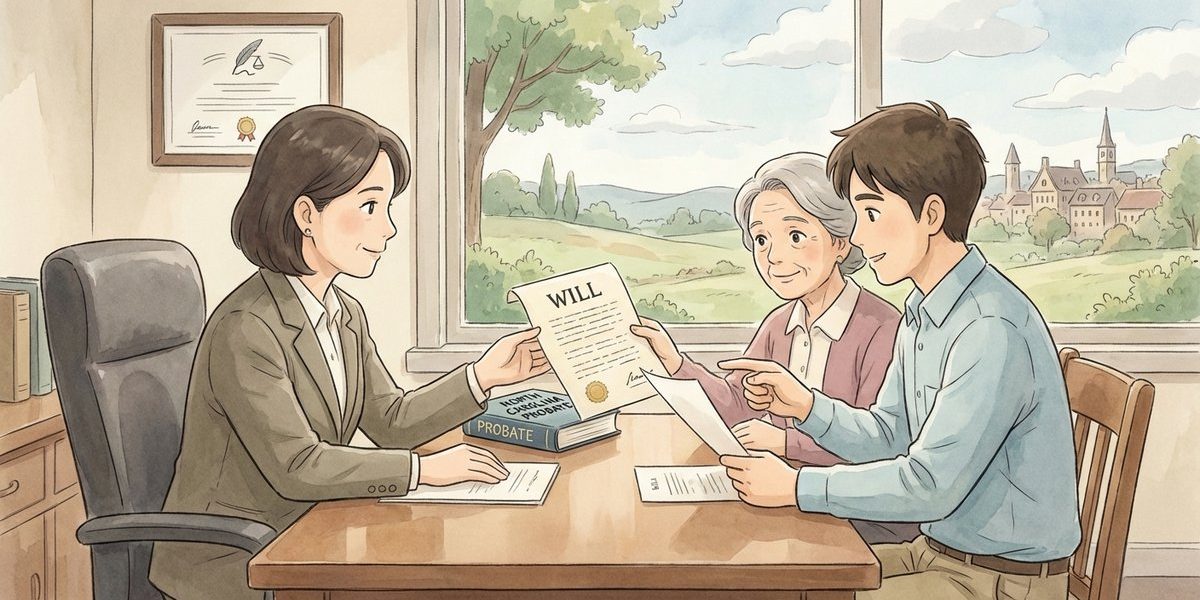
Can family members challenge a will that leaves most personal property to non-family friends and seems unclear about who gets what? – North Carolina
Short Answer
Yes. In North Carolina, family members (and others) with a financial stake in the estate can challenge a will’s validity by filing a “caveat” after the will is probated, usually within three years. But a will that seems unclear about who gets certain personal property is not always “invalid”—sometimes the right fix is a court proceeding to interpret the will and direct the executor how to distribute property.
Understanding the Problem
In a North Carolina estate, can family members challenge a will when the will leaves most personal property to non-family friends and the wording seems unclear about who gets what? The key decision point is whether the problem is that the will is legally invalid (which is handled through a caveat) or that the will is valid but confusing (which is handled through a construction/interpretation proceeding to clarify distributions). This question often comes up when an executor is trying to distribute property while other estate-related issues are pending, such as uncertainty about who is entitled to proceeds connected to the decedent’s property.
Apply the Law
North Carolina generally allows a person with a direct financial interest in an estate to challenge a will’s validity through a caveat filed with the Clerk of Superior Court. A caveat is the procedure used to decide whether the document offered as the will should stand as the decedent’s will. Separately, if the will was properly executed and is otherwise valid but its terms are unclear, the dispute may be resolved by asking the court to interpret the will and declare who is entitled to specific property or proceeds. The executor (personal representative) still has to administer the estate and make distributions, but may need court direction when the will’s language creates real uncertainty.
Key Requirements
- Standing (a financial stake): The challenger must be an “interested” person—someone who would gain or lose money or property depending on whether the will is upheld or set aside.
- A valid legal ground: Common grounds include improper execution, lack of testamentary capacity, undue influence, fraud/duress, mistake, or revocation. Disliking the outcome (for example, friends receiving personal property instead of family) is not, by itself, a legal ground.
- Timing and the right forum: A caveat must be filed after the will is probated and generally within the statutory time limit; once filed, the dispute is handled in Superior Court rather than decided finally by the clerk.
What the Statutes Say
- N.C. Gen. Stat. § 31-32 (Filing of caveat) – Allows an interested person to file a caveat to challenge a will, generally within three years after probate (with limited extensions for certain disabilities).
- N.C. Gen. Stat. § 31-3.1 (Will invalid unless statutory requirements complied with) – States that a will is not valid unless it meets North Carolina’s statutory requirements.
- N.C. Gen. Stat. § 31-11.6 (Self-proved wills) – Explains how a will can be made “self-proved,” which can streamline proof of proper execution in probate.
Analysis
Apply the Rule to the Facts: The facts describe a death followed by foreclosure of real property and a pending surplus-funds proceeding, with concerns that family members were not notified in time and uncertainty about who is entitled to proceeds and whether the executor should have prevented foreclosure. Those facts can overlap with a will dispute in two ways: (1) if the will’s validity is in question (capacity, undue influence, improper execution, revocation), a caveat may be the tool; and (2) if the will is valid but unclear about who receives certain personal property or proceeds, a court interpretation may be needed so the executor distributes correctly. Either way, the person challenging the will generally needs a direct financial interest in the estate’s outcome.
Process & Timing
- Who files: An interested person (often an heir who would inherit more if the will is set aside, or a beneficiary under a different will). Where: File the caveat in the estate file with the Clerk of Superior Court in the county where the estate is administered. What: A caveat pleading challenging the will’s validity. When: Generally within three years after the will is probated in North Carolina.
- What happens next: After the caveat is filed, the dispute is transferred to North Carolina Superior Court for resolution under the caveat procedure. The parties with interests under the will are notified and can participate.
- If the issue is “unclear wording,” not “invalid will”: The estate may need a separate proceeding to interpret the will and declare who gets what. This is often handled in Superior Court (commonly through a declaratory judgment-type request) or, in some situations, as an estate proceeding before the clerk, depending on the issue and posture of the case.
Exceptions & Pitfalls
- “Unfair” is not the same as “invalid”: A will can legally leave personal property to friends instead of family. The challenge must be based on a recognized legal ground (for example, undue influence or lack of capacity).
- Confusing gifts may require interpretation, not a caveat: If the will is properly executed and the dispute is about what the words mean (for example, which items count as “personal property,” or which friend gets which category), a construction/interpretation proceeding may be the right path.
- Probate posture matters: A caveat is tied to a will that has been probated. If no will has been admitted to probate, there may be nothing to caveat yet.
- Deadline traps: The three-year period is treated as a hard limit in many situations, with only narrow exceptions (such as certain legal disabilities). Waiting to “see what happens” can forfeit the ability to challenge validity.
- Parallel proceedings can create confusion: A pending surplus-funds case and an estate administration can involve different files and different legal questions (who is entitled to proceeds versus whether the will is valid). Coordinating the strategy and record requests early helps avoid inconsistent positions.
For more context on disputes over who is entitled to proceeds when estate information appears incomplete, see what to do if estate paperwork lists the wrong heirs or leaves out rightful family members and how the court decides who gets surplus funds when the former owner is deceased.
Conclusion
In North Carolina, family members can challenge a will that favors non-family friends if they have a direct financial interest and a valid legal ground (such as improper execution, lack of capacity, undue influence, fraud, mistake, revocation). If the problem is that the will is unclear about who gets what, the solution may be a court proceeding to interpret the will rather than a challenge to validity. The key next step is to confirm the probate date and, if appropriate, file a caveat with the Clerk of Superior Court within three years.
Talk to a Probate Attorney
If a will seems unclear, favors non-family friends, or the estate is tangled up with foreclosure surplus funds, our firm has experienced attorneys who can help explain options, deadlines, and the right court process. Call us today at [919-341-7055].
Disclaimer: This article provides general information about North Carolina law based on the single question stated above. It is not legal advice for your specific situation and does not create an attorney-client relationship. Laws, procedures, and local practice can change and may vary by county. If you have a deadline, act promptly and speak with a licensed North Carolina attorney.

