
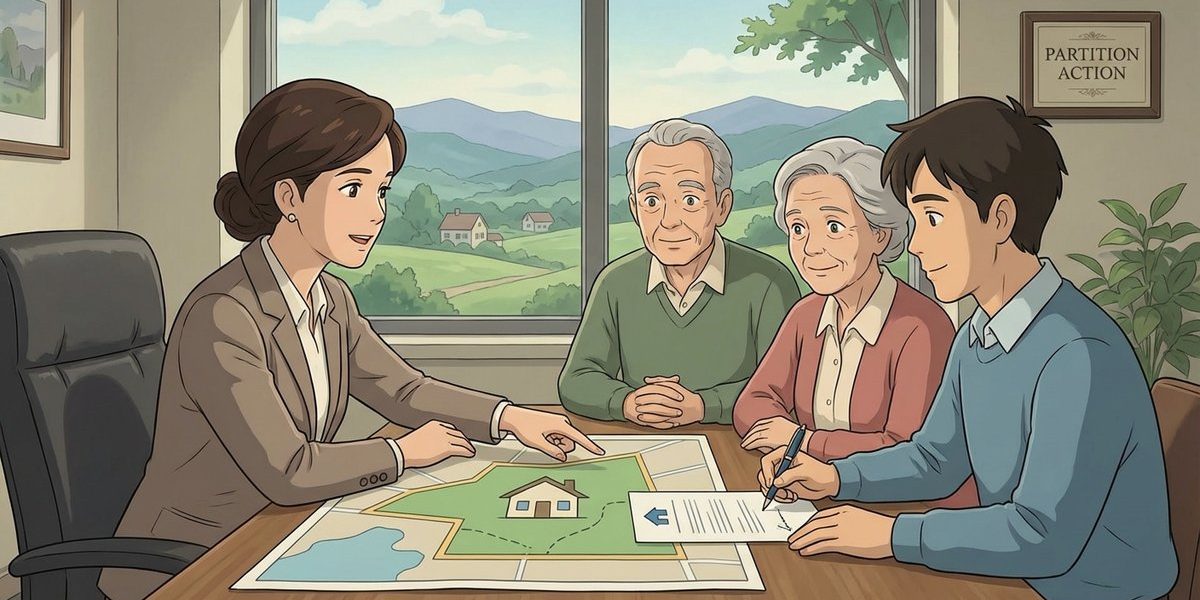
What happens to a house that sits on estate land when one heir claims the house is theirs but the heirs believe it belongs to everyone? – North Carolina
Short Answer
In North Carolina, a house is usually treated as part of the real property (the land) unless a valid deed or other valid title document separates ownership. If heirs inherited the land after an estate closed, the heirs commonly own the property together as cotenants, and one heir generally cannot take the house for themselves just by recording a self-created deed. When title is disputed, the heirs typically resolve it through a title challenge (often alongside or before a partition case) and, if needed, a partition proceeding in Superior Court to divide or sell the property.
Understanding the Problem
When heirs inherit North Carolina real estate after a grandparent’s estate closes, a common question is: can one heir claim the house alone even though the house sits on the inherited land and the other heirs believe the property was inherited together? The decision point is whether the heir claiming the house has a valid ownership document that actually changes title (for example, a properly executed deed) or whether the house remains part of the inherited real estate owned by all heirs as cotenants. If the claim rests on a deed the other heirs say they never signed, the dispute becomes a title problem that can affect whether and how a partition action can move forward.
Apply the Law
Under North Carolina law, when multiple people inherit real property, they commonly hold it as tenants in common (cotenants), meaning each has an undivided ownership share and equal rights to possess the whole property unless a valid instrument says otherwise. A recorded deed can affect title only if it was validly executed and delivered; recording alone does not make an invalid deed valid. If the heirs cannot agree on ownership or use of the property, a partition proceeding in Superior Court can divide the property (partition in kind) or order a sale (partition by sale), and the court can move the partition forward even if some title issues are disputed, with the ownership dispute resolved afterward in the same case or a separate case.
Key Requirements
- Shared ownership (cotenancy): The land (and typically the house on it) is owned by two or more heirs as undivided shares, unless a valid deed or other valid title document says otherwise.
- Valid title change: A person claiming the house alone generally must show a valid conveyance (such as a properly executed deed) that actually transferred that interest to them.
- Proper forum to force a resolution: If the heirs cannot agree, a partition petition in Superior Court can force a division or sale, and title disputes can be handled within or alongside that process.
What the Statutes Say
- N.C. Gen. Stat. § 41-81 (Tenancy in common; characteristics) – Explains that cotenants hold undivided interests and each has a right to possess the property; intestate shares are determined under Chapter 29.
- N.C. Gen. Stat. § 29-13 (Intestate descent and distribution) – Provides that property of a person who dies without a will descends to heirs, subject to administration and lawful claims.
- N.C. Gen. Stat. § 46A-21 (Partition petition; parties) – Allows a cotenant to petition to partition real property in Superior Court and requires joining all cotenants.
- N.C. Gen. Stat. § 46A-52 (Partition when title is disputed) – Allows partition to proceed even when some ownership interests are disputed, with the dispute decided later in the same or a separate proceeding.
- N.C. Gen. Stat. § 14-122 (Forgery of deeds) – Makes forging a deed a felony; alleged forgery often triggers a need to challenge the deed’s validity in court.
Analysis
Apply the Rule to the Facts: The facts describe heirs who inherited family land and a house after the estate closed, which commonly means the heirs own the real property together as tenants in common. One relative allegedly recorded a self-created deed claiming the house and a small portion of the land, using signatures the other heirs say are not theirs; if the signatures were not genuine or the deed was not properly executed, that deed may not validly transfer ownership even if it is recorded. Because the claim is about ownership of the house and a portion of the land, the dispute is a title issue that often must be resolved through a deed challenge/quiet-title type claim, sometimes coordinated with a partition case so the property can ultimately be divided or sold.
Process & Timing
- Who files: Any heir claiming to be a cotenant. Where: Superior Court in the county where the land is located (partition is filed in Superior Court). What: A partition petition naming and serving all cotenants and other interested parties (like lienholders). When: After confirming the current record title and identifying all heirs/cotenants; timing can matter if a disputed deed is being used to sell, mortgage, or exclude other heirs.
- Title dispute handling: If a respondent claims a different share (or claims the house alone), the court can still move the partition forward and reserve the ownership dispute for later resolution in the same case or a separate case, depending on what is being disputed and what relief is needed.
- Outcome step: If the property cannot be fairly divided, the court can order a partition sale and later distribute proceeds according to the ownership interests as determined by the court after resolving any title disputes.
Exceptions & Pitfalls
- “House vs. land” confusion: In most situations, the house is part of the real estate. Treating the house as separately owned usually requires a valid legal basis (not just family understanding or unilateral paperwork).
- Recorded does not mean valid: A deed in the Register of Deeds records can still be challenged. But if a third party later claims to have relied on the record, the case can become more complex and time-sensitive.
- Wrong case type or wrong sequencing: Some disputes need more than partition alone (for example, setting aside a deed, quieting title, or seeking injunctive relief). Filing only for partition without addressing the deed dispute can lead to delays or an incomplete fix.
- Missing parties: Partition requires joining all cotenants and often lienholders. If an heir is left out, the result may not fully resolve ownership.
- Accounting issues: If one cotenant has been collecting rent, excluding others, or paying taxes/insurance/repairs, the court may need an accounting so the final distribution is fair.
For more context on how deed problems and ownership disputes interact with partition, see partition versus deed correction or quiet title and setting aside a recorded deed based on forgery or improper preparation.
Conclusion
In North Carolina, a house on inherited land is usually part of the inherited real estate, so the heirs commonly own it together as tenants in common unless a valid deed or other valid title document separates ownership. A self-created, disputed deed does not automatically make the house belong to one heir just because it was recorded. The practical next step is to file a partition petition in the Superior Court where the land is located and, as needed, ask the court to resolve the deed/title dispute so the property can be divided or sold and the interests properly determined.
Talk to a Partition Action Attorney
If a co-heir is claiming the house (or part of the land) based on a disputed recorded deed, a partition case and a title challenge may be needed to protect everyone’s rights and get a clear, enforceable outcome. Our firm has experienced attorneys who can help explain options, required filings, and timelines. Call us today at [919-341-7055].
Disclaimer: This article provides general information about North Carolina law based on the single question stated above. It is not legal advice for your specific situation and does not create an attorney-client relationship. Laws, procedures, and local practice can change and may vary by county. If you have a deadline, act promptly and speak with a licensed North Carolina attorney.

