
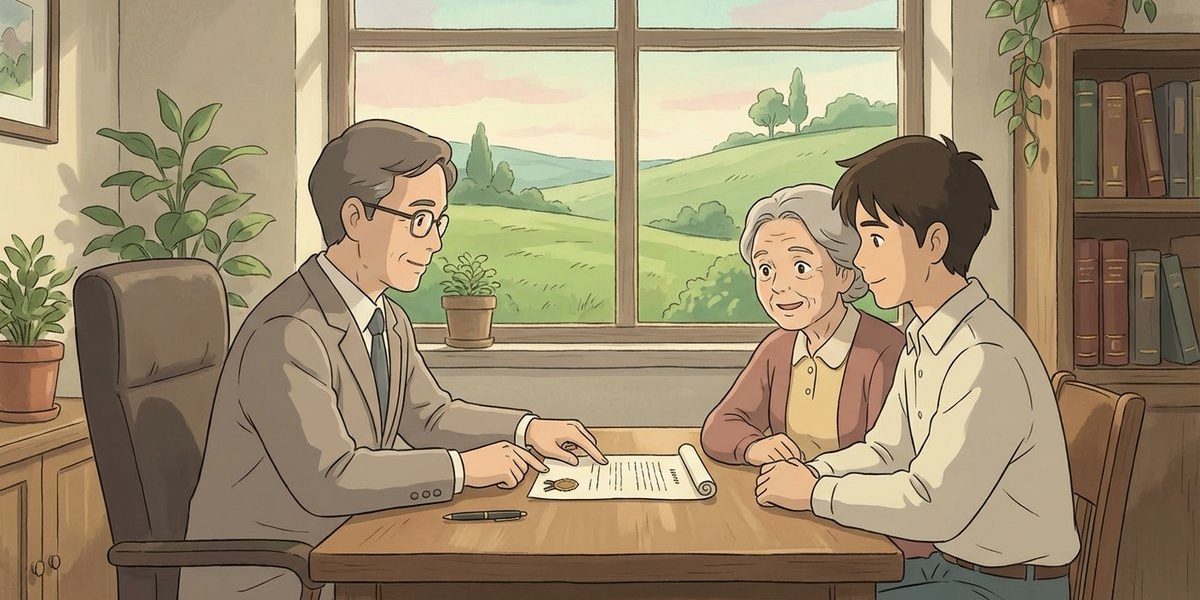
How do I find out what type of deed it is and whether the house automatically passed to the person added to the deed? – North Carolina
Short Answer
In North Carolina, the recorded deed itself usually answers both questions: it shows the deed type (for example, warranty deed or quitclaim deed) and, more importantly, the type of co-ownership (for example, “joint tenants with right of survivorship” versus “tenants in common”). If the deed added the child as a co-owner with right of survivorship, the home typically passes to the surviving co-owner outside of probate. If the deed does not create survivorship, the decedent’s share generally becomes part of the intestate estate and passes to heirs under North Carolina’s intestate succession rules.
Understanding the Problem
In North Carolina probate, the key question is whether adding a child to a deed changed how ownership transfers at death. The decision point is whether the recorded deed created a survivorship form of ownership (so the surviving co-owner takes automatically at death) or a non-survivorship form of ownership (so the decedent’s share passes through intestate succession). This question often comes up when a family member lived in the home, the owner died without a will, and another family member’s name appears on the deed.
Apply the Law
North Carolina treats “what happens at death” as an ownership question first, and a probate question second. A deed can add someone to title in a way that creates survivorship (automatic transfer at death), or in a way that does not (the decedent’s share passes to heirs). The deed type (warranty vs. quitclaim) matters for title warranties, but survivorship language (or lack of it) is usually what determines whether the house automatically passed.
Key Requirements
- Get the recorded deed (the actual document): The controlling information is in the recorded instrument on file with the county Register of Deeds, not just a tax record or a mortgage statement.
- Identify the ownership language: The deed must clearly state survivorship intent to create “joint tenancy with right of survivorship.” Without that, North Carolina’s default for co-owners is usually “tenants in common,” which has no survivorship.
- Match the ownership type to the death outcome: Survivorship ownership generally transfers outside probate; non-survivorship ownership generally passes by intestacy when there is no will.
What the Statutes Say
- N.C. Gen. Stat. § 41-71 (Creation of a joint tenancy with right of survivorship) – A deed to two or more people creates a tenancy in common unless the instrument expresses an intent to create a joint tenancy with right of survivorship; certain survivorship phrases are treated as sufficient.
Analysis
Apply the Rule to the Facts: Here, a child of the decedent was added to the deed before death, and the decedent died without a will. If the recorded deed says the decedent and the child held title “with right of survivorship” (or similar statutory language), the decedent’s interest typically passed automatically to the surviving co-owner at death, and the home is usually not inherited through intestate succession. If the deed does not include survivorship language, the more common result is that the decedent’s share became part of the intestate estate and passed to the decedent’s heirs, which can include multiple family members depending on who survived the decedent.
Process & Timing
- Who pulls the deed: Any interested family member or attorney. Where: The Register of Deeds office in the North Carolina county where the property is located (or the Register of Deeds online search portal for that county). What: The most recent recorded deed (and often the prior deed as well), plus the recording book/page or instrument number.
- How to read it for “type of deed” and “automatic transfer”: The first page and signature pages usually identify the deed type (for example, “General Warranty Deed,” “Special Warranty Deed,” or “Quitclaim Deed”). Then review the grantee/vesting language (often near the legal description) for phrases like “joint tenants with right of survivorship” or “with right of survivorship.” If that survivorship intent is missing, the safer assumption is that the co-owners held as tenants in common, meaning no automatic transfer of the decedent’s share.
- Next step after confirming the deed language: If survivorship applies, the surviving co-owner typically records a certified death certificate (and sometimes an affidavit of survivorship, depending on local practice and title requirements) to update the public record. If survivorship does not apply, the usual next step is opening an estate (or another appropriate clerk-supervised procedure) so the heirs can establish authority to deal with the property and eventually record the correct heirship/estate conveyance documents.
Exceptions & Pitfalls
- Deed type vs. ownership type confusion: A “warranty deed” or “quitclaim deed” label does not, by itself, answer whether the home passed automatically. The survivorship (or tenancy-in-common) language is usually the deciding factor.
- Assuming “added to the deed” means “inherits it all”: If the deed did not create survivorship, adding a child may have created a shared ownership interest during life, but the decedent’s remaining share can still pass to multiple heirs at death.
- Title and creditor issues: Even when survivorship applies, the transfer can still raise estate administration issues (for example, whether assets must be brought back into the estate to address valid claims) and title companies often require specific recorded documents to insure a later sale.
- Using tax records as proof of ownership: County GIS/tax listings can be wrong or incomplete for legal title. The recorded deed controls.
For more background on survivorship deeds and what they mean in an estate context, see a house with right of survivorship automatically pass and who legally inherits land when there is no will.
Conclusion
In North Carolina, the way to confirm the deed type and whether the home passed automatically is to obtain the recorded deed from the county Register of Deeds and read the ownership language. If the deed created “joint tenancy with right of survivorship,” the surviving co-owner typically takes the property at death outside probate. If the deed did not clearly create survivorship, the decedent’s share generally passes through intestate succession, and the next step is usually to open an estate with the Clerk of Superior Court.
Talk to a Probate Attorney
If you’re dealing with a North Carolina home where someone was added to the deed before death and it is unclear whether the property passed automatically or through intestate succession, our firm has experienced attorneys who can help explain the deed language, the probate steps, and the timelines. Call us today at [CONTACT NUMBER].
Disclaimer: This article provides general information about North Carolina law based on the single question stated above. It is not legal advice for your specific situation and does not create an attorney-client relationship. Laws, procedures, and local practice can change and may vary by county. If you have a deadline, act promptly and speak with a licensed North Carolina attorney.

