
What should be included in our response to show there’s no need to sell the property? – North Carolina
Short Answer
In a North Carolina partition case, a court should order a sale only if the party asking for a sale proves (by the greater weight of the evidence) that dividing the property “in kind” cannot be done without substantial injury to one or more co-owners. A strong response focuses on facts and supporting documents that show the property can be physically divided fairly, or that any fairness issues can be handled with an equalizing payment (owelty) instead of a sale. The response should also point out gaps in the other side’s proof and ask the court to require specific findings before ordering any sale.
Understanding the Problem
In a North Carolina partition action, the key question is whether the jointly owned house/land must be sold or whether it can be divided among the co-owners. The issue usually comes up when one group of co-owners asks the Clerk of Superior Court to order a sale, while another co-owner (the respondent) asks for an “actual partition” (a physical division of the land) instead. The decision turns on whether an actual partition would cause “substantial injury” to any party and what evidence is presented to support or oppose a sale.
Apply the Law
North Carolina law favors an actual partition (division in kind) unless the party pushing for a sale proves that dividing the property cannot be done without substantial injury to one or more parties. The Clerk of Superior Court is typically the judicial official handling partition proceedings, and if the court orders a sale, the sale process generally follows the special proceeding sale procedures used in North Carolina. When a sale is ordered, the court must support that decision with specific findings of fact and conclusions of law.
Key Requirements
- Burden on the party seeking a sale: The co-owner asking for a sale must prove substantial injury if the property is divided instead of sold.
- Substantial injury analysis: The court looks at whether a physical division would materially reduce value compared to selling the whole, materially impair a co-owner’s rights, and whether an equalizing payment (owelty) could fix or reduce the problem.
- Evidence-based decision with findings: The court considers evidence on both sides, and an order for sale should include specific factual findings and legal conclusions supporting why a sale is necessary.
What the Statutes Say
- N.C. Gen. Stat. § 46A-75 (Sale in lieu of actual partition) – Allows a sale only if the party seeking sale proves by a preponderance of the evidence that actual partition cannot be made without substantial injury; lists factors the court must consider and requires specific findings if a sale is ordered.
- N.C. Gen. Stat. § 46A-76 (Sale procedure) – Explains that partition sales generally follow North Carolina’s judicial sale procedures, with additional notice requirements for public sales.
Analysis
Apply the Rule to the Facts: Here, other co-owners want a sale, but the respondent wants the property divided. A persuasive response should focus on the “substantial injury” test: it should show that a fair physical division is feasible (or that an equalizing payment could address any imbalance) and that the sale side cannot prove that division would materially reduce value or materially impair rights. The response works best when it attaches concrete documents (maps, surveys, valuations) rather than relying on general statements that division is “possible.”
Process & Timing
- Who files: The respondent (or respondent’s attorney) files an answer/response and may also file a motion requesting actual partition (division in kind) and opposing any requested sale. Where: The Clerk of Superior Court in the county where the property is located (partition is typically handled as a special proceeding). What: A written response that (1) admits/denies key allegations, (2) states the request for relief (actual partition), and (3) attaches supporting exhibits. When: Deadlines depend on how and when the respondent was served and any scheduling orders entered in the case.
- Evidence development: Before the hearing on whether to order sale vs. actual partition, the respondent should be prepared to present practical evidence that a division can be made without substantial injury—often through a survey, proposed division plan, and value comparisons.
- Hearing and order: The Clerk (or judge, if the matter is before a judge) decides whether actual partition is feasible without substantial injury. If the court orders a sale, the order should include specific findings supporting that decision under the statutory factors.
Exceptions & Pitfalls
- “It can be divided” without a plan: A common pitfall is opposing a sale without offering a workable division plan. A response is stronger when it includes a proposed boundary layout, access plan, and how utilities/driveways/easements would work.
- Ignoring value comparisons: Because the court considers whether each share’s fair market value would be materially less after division than after a whole-property sale, it helps to include credible valuation support (for the whole and for the proposed parcels) rather than only arguing fairness.
- Access and use rights problems: If a proposed split landlocks a parcel, creates unusable shapes, or leaves one co-owner without reasonable access, the other side may argue “material impairment.” Address access, easements, road frontage, and any shared improvements in the response.
- Not addressing owelty as a solution: If one side of the property has the house or other improvements, the response should explain whether an equalizing payment could offset that imbalance instead of forcing a sale.
- Undeveloped record: Under North Carolina’s statute, the court weighs evidence for actual partition and evidence for sale. A thin evidentiary record can make it easier for the sale side to frame division as impractical.
What to Include in a Strong North Carolina Response Opposing Sale
To show there is no need to sell, the response should be organized around the statutory “substantial injury” factors and should attach practical proof. Common items to include are:
- A clear request for relief: Ask for actual partition (division in kind) and ask the court to deny any request for a partition sale unless the moving party meets the burden under North Carolina law.
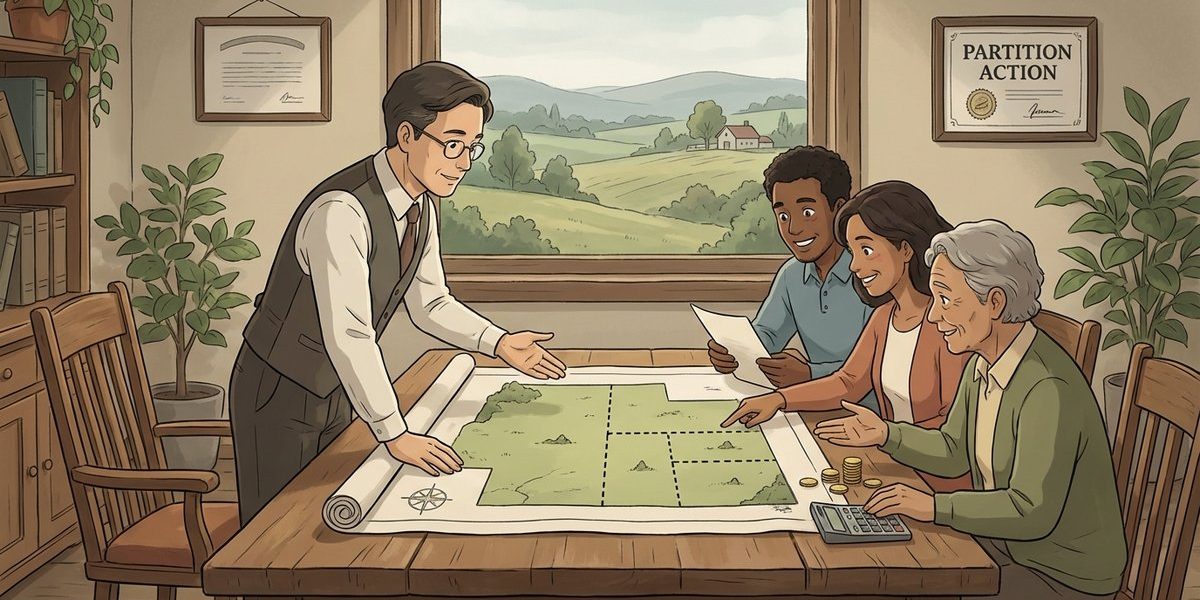
- A proposed division plan: A simple sketch can help early, but a survey or proposed plat is stronger. The plan should show proposed parcel lines, acreage, road frontage, and access points.
- Access and easement plan: If any parcel needs a driveway easement, shared well access, septic easements, or utility easements, the response should identify them and propose how they would be handled.
- Value support tied to the statute: Provide information showing that the fair market value of each co-owner’s share after division would not be materially less than what each would receive from a sale of the whole (for example, a broker price opinion, appraisal, or other credible valuation information).
- Use-and-rights explanation: Explain how the proposed division avoids materially impairing any co-owner’s rights (for example, preserving reasonable access, preserving use of improvements, and avoiding landlocked or unusable parcels).
- Owelty proposal (if needed): If one parcel would include the house or other improvements, include a proposal for an equalizing payment so the division remains fair without forcing a sale.
- Point-by-point challenges to the sale request: Identify what the sale side has not proven (for example, no survey, no valuation comparison, no explanation of why easements or owelty would not solve the issue).
- Request for specific findings: If the court considers a sale, ask the court to make the specific findings required by statute before ordering a sale.
For background on how these cases typically work, see the discussion of what happens when co-owners do not agree to sell and what happens when the court orders division instead of a sale.
Conclusion
In North Carolina, a response opposing a partition sale should focus on the legal standard: a sale should be ordered only if the party seeking it proves that dividing the property cannot be done without substantial injury, considering value impact, impairment of rights, and whether an equalizing payment could fix any imbalance. The most effective next step is to file a timely response requesting actual partition and attach a workable division plan (often supported by a survey and value information) so the court has evidence to deny a sale.
Talk to a Partition Action Attorney
If you’re dealing with a partition case where other co-owners are pushing for a sale but a division may be possible, our firm has experienced attorneys who can help explain options, evidence to gather, and timelines. Call us today at [919-341-7055].
Disclaimer: This article provides general information about North Carolina law based on the single question stated above. It is not legal advice for your specific situation and does not create an attorney-client relationship. Laws, procedures, and local practice can change and may vary by county. If you have a deadline, act promptly and speak with a licensed North Carolina attorney.

