
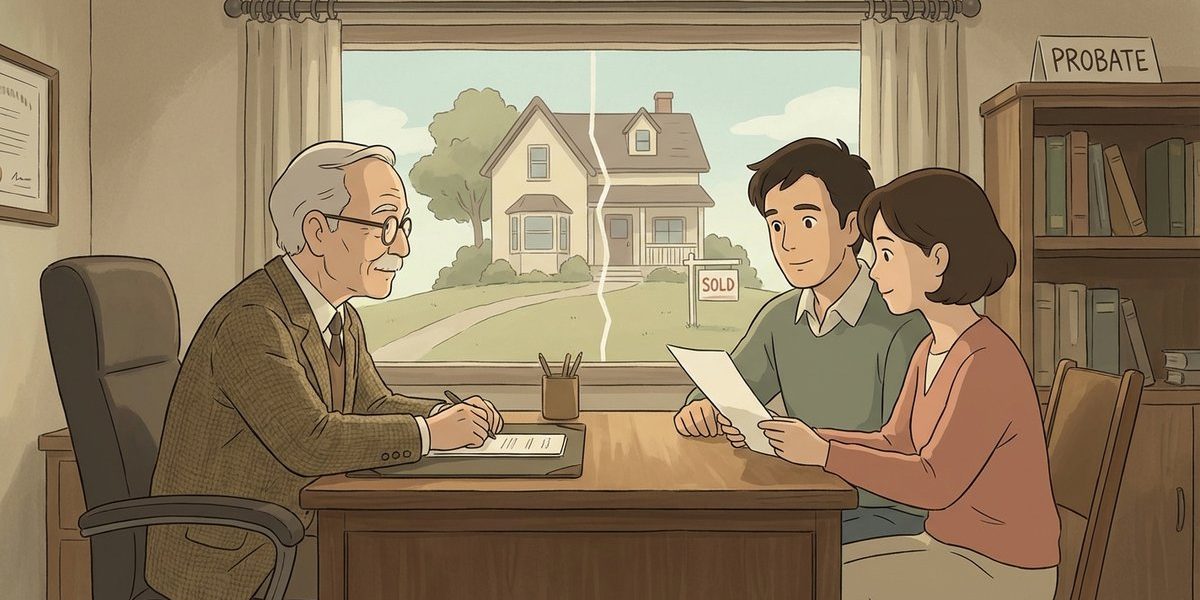
Can probating the will stop a relative from forcing a sale through a partition action? – North Carolina
Short Answer
Usually, no. In North Carolina, probating a will can clarify who owns the house (the devisees under the will), but it does not automatically prevent a co-owner from filing a partition case in Superior Court to divide the property or ask the court to order a sale. Probate can still matter because it can clean up title, confirm the correct owners, and sometimes change who has authority to act while the estate is being administered.
Understanding the Problem
In North Carolina probate, the issue is whether admitting a parent’s old will to probate can block a family member who claims co-ownership of the inherited house from filing (or continuing) a partition action to force a sale. The key decision point is whether probate changes the ownership and authority picture enough to stop the partition case, or whether the relative can still pursue partition as a cotenant even after the will is probated.
Apply the Law
Partition is a property-right remedy. If multiple people own North Carolina real estate together as tenants in common (common with “heir property”), any cotenant can generally petition the Superior Court to partition the property. The court can order a physical division if feasible, or it can order a partition sale if an actual division would cause “substantial injury” under the partition statutes. Probating a will, on the other hand, is the process handled through the Clerk of Superior Court (estate division) to recognize the will and administer the estate; it often helps establish who the proper owners are and can trigger deadlines for will challenges.
Key Requirements
- Cotenancy (shared ownership): A person seeking partition must claim an ownership interest as a tenant in common or joint tenant.
- Proper forum and parties: A partition petition is filed in Superior Court, and all cotenants must be joined and served.
- Method of partition (division vs. sale): The court decides whether to order an actual partition or a partition sale, and a sale generally requires proof that dividing the land would cause substantial injury.
What the Statutes Say
- N.C. Gen. Stat. § 46A-21 (Who may petition for partition) – Allows a cotenant (and in some situations a personal representative) to petition for partition in Superior Court.
- N.C. Gen. Stat. § 46A-26 (Methods of partition) – Lists the court’s options, including actual partition or partition sale, and notes the court cannot force a cotenant to remain in cotenancy over objection.
- N.C. Gen. Stat. § 46A-75 (Sale in lieu of actual partition) – Sets the “substantial injury” standard and places the burden on the party seeking a sale.
- N.C. Gen. Stat. § 31-39 (Probate necessary to pass title) – Explains that a duly probated will is effective to pass title and addresses timing issues for protecting title against certain creditors and purchasers.
Analysis
Apply the Rule to the Facts: The facts describe a house left to four children under a will that was never probated, with the property treated as “heir property.” Even if the will is probated now, the likely end result is still four co-owners (as devisees under the will), which means any one of them can usually still file a partition case as a cotenant. Probate can help by confirming the correct ownership and improving marketable title, but it typically does not remove a co-owner’s basic right to seek partition.
Process & Timing
- Who files: For probate, the named executor (or another qualified person) files to probate the will. For partition, any cotenant can file. Where: Probate is handled through the Clerk of Superior Court (Estates) in the county with proper estate jurisdiction; partition is filed in Superior Court in the county where the land is located. What: Probate typically uses North Carolina AOC estate forms (the clerk’s office provides the correct packet depending on whether an executor qualifies). Partition starts with a petition/complaint naming and serving all cotenants. When: If a will is probated in common form, North Carolina law provides a window for an interested person to challenge it by caveat; timing can be critical once probate occurs.
- What probate changes (and what it does not): Probate can establish the will as the controlling document unless later set aside in a proper challenge, and it can reduce uncertainty about who owns what. But if the will still leaves the house to multiple people, the ownership remains shared, and shared ownership is what allows partition.
- How the partition case can end: The court may order an actual division if workable. If not, the court can order a sale if the party seeking a sale proves “substantial injury” from trying to divide the property, and the proceeds are then divided according to each owner’s share.
Exceptions & Pitfalls
- Probate may still be strategically important: If the property has been treated as heir property, probating the will can help correct the ownership record and reduce title disputes that otherwise complicate a sale, refinancing, or settlement in the partition case.
- Partition can move forward even with title disputes: North Carolina partition law can allow the case to proceed even if some ownership claims are disputed, with certain disputes resolved later. See N.C. Gen. Stat. § 46A-52.
- Estate administration can affect control of the property: Depending on the estate’s needs (for example, paying valid debts and expenses), a personal representative may have authority to take steps involving the property during administration. That can change the practical leverage in a family dispute, even if it does not erase partition rights long-term.
- County-to-county recording issues: If probate occurs in one county but the land is in another, additional filing steps may be needed for the will to be effective as to that real estate against certain third parties. See N.C. Gen. Stat. § 31-39.
- Common mistake: Treating probate as a “shield” against partition. Probate often clarifies ownership; it does not usually eliminate a co-owner’s ability to ask the court to end co-ownership.
Conclusion
In North Carolina, probating a parent’s will usually does not stop a relative who is a co-owner from pursuing a partition action to divide the property or seek a court-ordered sale. Probate mainly helps determine and document who the owners are and can trigger important deadlines to challenge the will. The most practical next step is to probate the will with the Clerk of Superior Court (Estates) in the proper county as soon as possible if the will is intended to control ownership.
Talk to a Probate Attorney
If a family member is threatening a partition sale and the house has been treated as heir property even though a will exists, our firm has experienced attorneys who can help explain the probate and partition timelines and options. Call us today at 919-341-7055.
Disclaimer: This article provides general information about North Carolina law based on the single question stated above. It is not legal advice for your specific situation and does not create an attorney-client relationship. Laws, procedures, and local practice can change and may vary by county. If you have a deadline, act promptly and speak with a licensed North Carolina attorney.

