
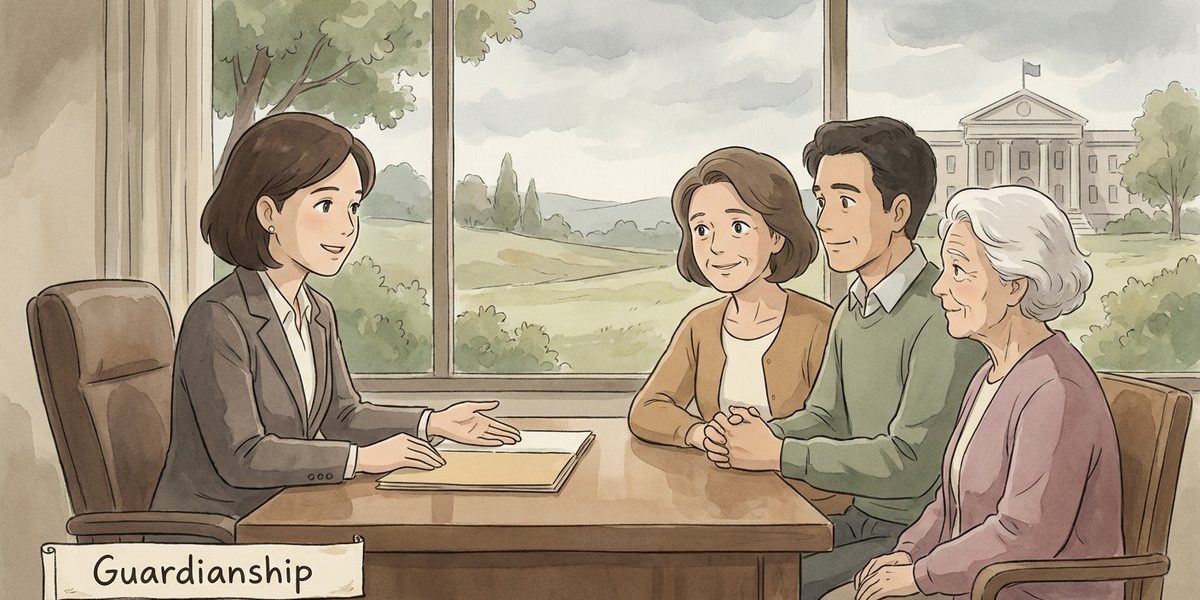
Can the family ask a court to appoint a guardian or conservator to replace the current caregiver managing everything? – North Carolina
Short Answer
Yes. In North Carolina, family members (and other interested people) can ask the Clerk of Superior Court to appoint a court-supervised guardian for an adult who is legally found to be incompetent. If the court appoints a guardian of the person, guardian of the estate, or a general guardian, that guardian can take over decision-making authority that a private caregiver has been exercising informally (and in some cases can override a power of attorney, depending on what exists and what the clerk orders).
Understanding the Problem
In North Carolina guardianship, the key question is: can a family member ask the Clerk of Superior Court to step in and give someone court authority to make an elderly adult’s care and/or financial decisions when a non-relative caregiver is currently “managing everything”? This usually comes up when the older adult is in hospice or has serious cognitive decline, the family is not local, and there is concern that the caregiver controls access, money, or important decisions without clear oversight.
Apply the Law
North Carolina does not use the term “conservator” for adult protective decision-making in the same way some states do. Instead, North Carolina uses a guardianship system under Chapter 35A, where the Clerk of Superior Court can appoint a guardian after an incompetency determination. The clerk can appoint a guardian of the person (care decisions), a guardian of the estate (money/property decisions), or a general guardian (both). The case is handled as a special proceeding before the clerk, and the clerk’s authority includes choosing a qualified guardian and setting the scope of powers.
Key Requirements
- Incompetency must be established: The court process generally requires a legal finding that the adult lacks sufficient capacity to manage important affairs or make/communicate important decisions in a way that protects health, safety, or property.
- The right type of guardian must be requested: The filing should match the need—care decisions (guardian of the person), finances (guardian of the estate), or both (general guardian).
- A suitable guardian must qualify: The clerk considers qualifications and conflicts. A nonresident can serve, but extra steps may apply (such as submitting to North Carolina jurisdiction, appointing a resident agent for service, and bonding for estate authority).
What the Statutes Say
- N.C. Gen. Stat. § 35A-1210 (Application for appointment of guardian) – Lists what information must be included when asking the clerk to appoint a guardian (who the person is, next of kin, assets, and what type of guardian is needed).
- N.C. Gen. Stat. § 35A-1213 (Qualifications of guardians) – Explains who may serve as guardian and additional requirements for nonresident guardians (including resident agent and bonding for estate authority).
- N.C. Gen. Stat. § 35A-1204 (Venue) – Addresses which county is the proper place to file for appointment of a guardian.
- N.C. Gen. Stat. § 35B-1 (UAGPPJA purpose) – Explains North Carolina’s jurisdiction framework when more than one state may be involved in an adult guardianship situation.
Analysis
Apply the Rule to the Facts: The reported concern is that an elderly grandparent in hospice in North Carolina has a long-time non-relative caregiver who controls the elder’s affairs while the family lives out of state. If the grandparent can no longer manage finances or make/communicate decisions reliably, the family can file in North Carolina for an incompetency determination and request appointment of a guardian of the person, guardian of the estate, or a general guardian. If the family wants to “replace” the caregiver’s control, the most direct legal path is a court order appointing a guardian with defined powers and court supervision.
Process & Timing
- Who files: Typically a family member or other interested person. Where: The Clerk of Superior Court in the proper North Carolina county (venue depends on the person’s situation and any prior incompetency/guardianship filings). What: A filing that seeks (1) an incompetency determination and (2) appointment of the appropriate guardian type (person, estate, or general), with the information required by statute. When: As soon as there is a real need for legal authority or concern about control of care/finances; timing can matter if decisions must be made quickly.
- Notice and hearing steps: The clerk sets the matter for hearing and requires notice to required parties. The process often includes gathering medical/capacity information and identifying the proposed guardian’s qualifications and any conflicts.
- Appointment and oversight: If the clerk finds incompetency and appoints a guardian, the guardian receives letters of appointment and must follow court supervision requirements (especially for estate authority, which commonly includes bonding and accountings).
Exceptions & Pitfalls
- Existing documents may change the strategy: If the elder signed a durable power of attorney or health care power of attorney while competent, the caregiver may be acting under that authority. Guardianship can still be requested, but the court will focus on current capacity and what arrangement best protects the elder.
- Out-of-state family members can serve, but plan for extra requirements: A nonresident guardian may need to appoint a North Carolina resident agent for service of process and may face bonding requirements for estate authority.
- “Caregiver control” is not the same as legal authority: Families often assume a caregiver has legal power because they have practical control. The clerk will focus on legal authority (documents) and the elder’s capacity, not just who has been handling day-to-day tasks.
- Jurisdiction can be complicated when multiple states are involved: If the elder recently moved, owns property in multiple states, or another state already has a case, jurisdiction rules can affect where and how a guardianship can proceed.
Conclusion
Yes—under North Carolina law, a family can ask the Clerk of Superior Court to appoint a guardian (guardian of the person, guardian of the estate, or a general guardian) if the elderly adult is found legally incompetent. That court appointment can replace a caregiver’s informal control and put decision-making under court supervision. The next step is to file an incompetency/guardianship matter with the Clerk of Superior Court in the proper North Carolina county and request the specific type of guardianship needed.
Talk to a Guardianship Attorney
If a non-relative caregiver is controlling an elderly family member’s care or finances in North Carolina and the family needs court authority to step in, our firm has experienced attorneys who can help explain options, required filings, and timelines. Call us today at 919-341-7055.
Disclaimer: This article provides general information about North Carolina law based on the single question stated above. It is not legal advice for your specific situation and does not create an attorney-client relationship. Laws, procedures, and local practice can change and may vary by county. If you have a deadline, act promptly and speak with a licensed North Carolina attorney.

