
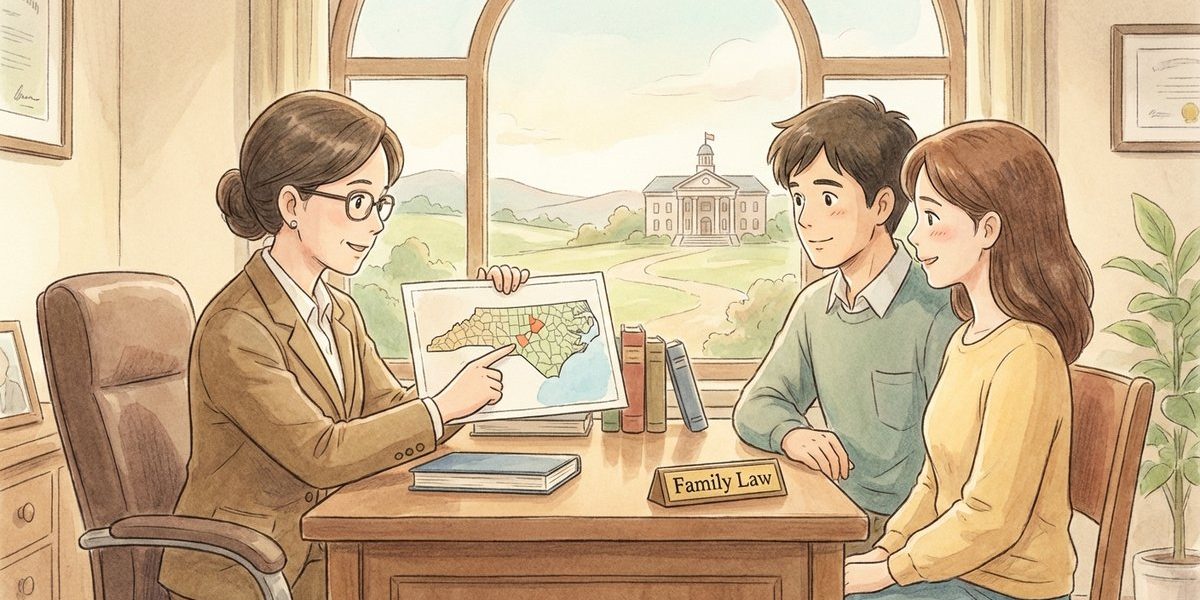
How do I find a divorce lawyer who handles cases in the county where the divorce needs to be filed? – North Carolina
Short Answer
In North Carolina, a divorce case is generally filed in the county where either spouse resides, and the case is handled in District Court. The practical way to find a lawyer who will take the case is to first confirm the correct filing county (based on residency and any nonresident issues), then search for North Carolina family law attorneys who list that county as part of their service area and confirm they appear in that county’s District Court. If a firm limits its geographic coverage, it is usually because local filing, service, and court practices vary by county and affect cost and scheduling.
Understanding the Problem
In North Carolina family law, the key question is: can a divorce be filed in the county where the case needs to be filed, and can a lawyer appear in that county’s District Court to handle the divorce from start to finish? This issue often comes up when a family member calls on behalf of an adult child and learns that a law firm only accepts divorce matters in certain counties. The decision point is the filing county, because venue rules and local court procedures can determine whether a particular attorney or firm will take the case.
Apply the Law
North Carolina allows an absolute divorce when statutory requirements are met, and the case is filed in the proper county (venue). Venue for divorce is typically the county where either spouse resides, but there are special venue rules when the filing spouse is a nonresident. Divorce and related domestic cases are handled in North Carolina District Court, and county-to-county differences in scheduling and local filing practices are a common reason firms limit where they accept cases.
Key Requirements
- North Carolina residency (jurisdiction): At least one spouse must have lived in North Carolina long enough to meet the state’s residency requirement before filing.
- Proper county (venue): The divorce is generally filed in the county where either spouse resides; if the filing spouse is not a North Carolina resident, venue rules can narrow the proper county.
- Correct court division: Divorce actions are filed and heard in the District Court Division in the county where the case is filed.
What the Statutes Say
- N.C. Gen. Stat. § 50-3 (Venue; removal of action) – A divorce case is generally filed in the county where either spouse resides, and the case may be moved in certain situations.
- N.C. Gen. Stat. § 50-8 (Contents of complaint; verification; venue and service in action by nonresident) – Requires allegations about North Carolina residency and includes special venue/service rules when the filing spouse is a nonresident.
- N.C. Gen. Stat. § 7A-244 (Domestic relations) – Places divorce and related domestic matters in North Carolina District Court.
Analysis
Apply the Rule to the Facts: Here, the adult child needs a divorce lawyer, but a firm declined because the divorce would be filed in a county outside the firm’s service area. Under North Carolina law, the filing county generally depends on where either spouse resides, and the case will proceed in that county’s District Court. So the practical solution is to confirm the correct venue county first, then focus the attorney search on lawyers who regularly file and appear in that county.
Process & Timing
- Who identifies venue: The spouse who will be the plaintiff (the person filing). Where: The Clerk of Superior Court’s office in the county where the divorce will be filed (the divorce case is heard in District Court, but filing is typically through the clerk’s office). What: Confirm which county is proper based on where each spouse resides and whether either spouse is a nonresident. When: Before contacting lawyers, because many firms screen new cases by filing county.
- How to find lawyers who handle that county: Search for North Carolina family law attorneys who list that county (or the judicial district) in their service area; then ask directly whether the attorney will file and appear in that county’s District Court for an absolute divorce and any related claims that may be filed with it.
- How to confirm fit during intake: Ask whether the lawyer routinely files in that county, whether the lawyer expects any venue challenges, and whether the firm uses local counsel for court appearances (some firms do; others do not). If the case may involve a nonresident filing, ask whether the lawyer will handle the additional venue and service requirements.
Exceptions & Pitfalls
- Nonresident filing issues: If the filing spouse is not a North Carolina resident, venue and service rules can be stricter, which can limit where the case can be filed and how the other spouse must be served.
- Assuming “any NC lawyer can file anywhere”: A North Carolina-licensed attorney can practice statewide, but firms often limit counties for practical reasons (travel time, local scheduling, filing procedures, and cost control).
- Mixing divorce with other claims without planning: If the situation also involves issues like property division, support, or custody, the preferred filing strategy can change. A quick screening call should confirm whether the attorney will handle the full set of issues in the county where the case belongs.
Conclusion
To find a divorce lawyer who will handle the case in the county where it must be filed in North Carolina, first confirm the proper venue county (usually where either spouse resides, with special rules if the filing spouse is a nonresident) and that the case will proceed in that county’s District Court. Then contact family law attorneys who list that county as part of their practice area and confirm they will file and appear there. The most important next step is to identify the correct county and schedule an intake with a lawyer who serves that county.
Talk to a Family Law Attorney
If you’re dealing with a divorce that must be filed in a specific North Carolina county and firms are turning the case away based on location, our firm has experienced attorneys who can help explain venue, timing, and practical next steps. Call us today at [919-341-7055].
Disclaimer: This article provides general information about North Carolina law based on the single question stated above. It is not legal advice for your specific situation and does not create an attorney-client relationship. Laws, procedures, and local practice can change and may vary by county. If you have a deadline, act promptly and speak with a licensed North Carolina attorney.

