
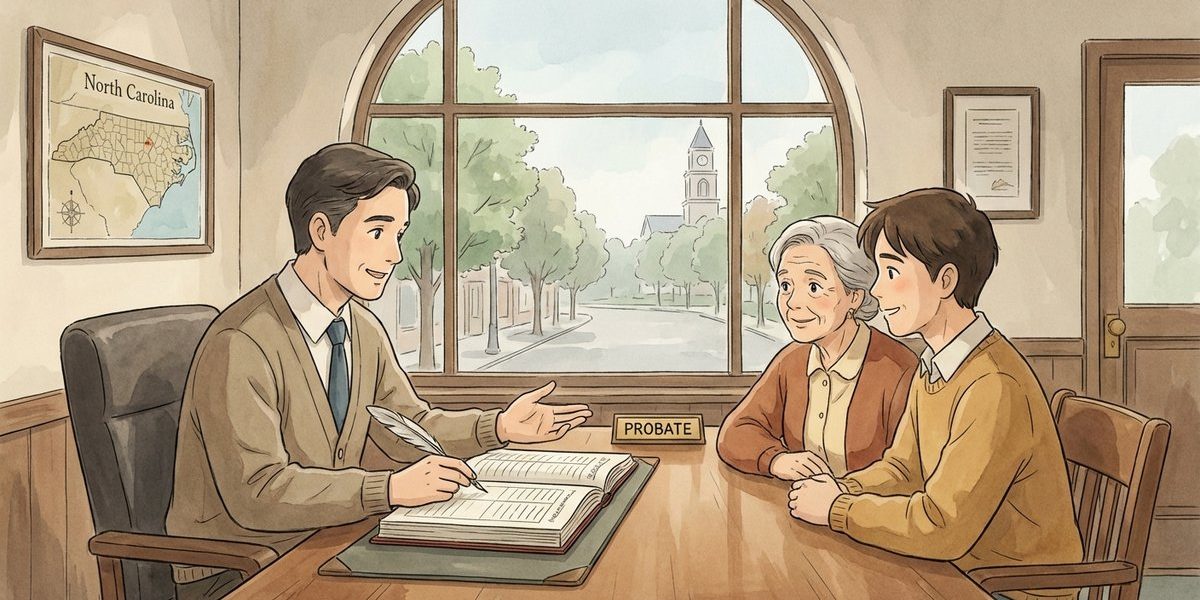
How can I find and access the probate court file for my parent’s estate if it isn’t showing up online? – North Carolina
Short Answer
In North Carolina, the probate (estate) file is kept by the Clerk of Superior Court in the county where the estate was opened, and it can usually be reviewed in person even if it does not appear in an online search. The most reliable way to locate it is to contact the Estates Division and search by the decedent’s full legal name and date of death, then request to view the file or order copies. If the estate involved a will challenge or removal of an executor, there may be more than one file number (an “estate” file plus a separate “special proceeding”), so asking the clerk to check both can solve the “not showing online” problem.
Understanding the Problem
Under North Carolina probate practice, the key question is: how can an interested family member locate and review the Clerk of Superior Court’s estate file when an online case search does not show it? This comes up when a parent dies with a will, an executor is appointed and later removed, and there are concerns about whether the final accounting and distributions were handled correctly. The practical issue is that online portals do not always display every estate record, and related disputes (like a will challenge) may be filed under a different case type than the main estate administration.
Apply the Law
In North Carolina, the Clerk of Superior Court has original jurisdiction over the probate of wills and the administration of decedents’ estates, and the clerk’s office maintains the estate file. In general, once a will is offered for probate, the estate administration becomes a court-supervised process handled through the clerk’s Estates Division. Many filings in an estate administration are treated as court records kept by the clerk, but online access is not guaranteed, and the most dependable access method is through the clerk’s office (in person, by phone, or by written request for copies).
Key Requirements
- Correct county and case type: The estate file is maintained by the Clerk of Superior Court in the county where the estate was opened, and related disputes may appear under a different case category than “estate.”
- Enough identifying information: The clerk typically needs the decedent’s full name (including middle name/initial if used), date of death, and sometimes the last known address to locate the right file.
- Proper request for inspection or copies: Viewing is usually handled at the Estates Division counter (or records area), while copies (especially certified copies) often require a formal request and fees.
What the Statutes Say
- N.C. Gen. Stat. § 7A-241 (Probate jurisdiction of the clerk) – Places probate and estate administration under the Clerk of Superior Court as judge of probate.
- N.C. Gen. Stat. § 1-301.3 (Estate matters decided by the clerk; appeal timing) – Confirms the clerk decides many estate issues and sets a short deadline to appeal certain clerk orders.
- N.C. Gen. Stat. § 31-11 (Wills held for safekeeping; not public until offered for probate) – Explains that a will is not public while the testator is alive, but it becomes part of the probate process once offered for probate.
Analysis
Apply the Rule to the Facts: Here, a parent died with a will, an executor was initially appointed, and later removed after a challenge involving allegations of undue influence and dementia/Alzheimer’s. That fact pattern often creates more than one “track” of paperwork: (1) the main estate administration file (where inventories, accountings, receipts, and distributions are filed), and (2) one or more related proceedings (where removal, disputes over the will, or other contested issues are handled). If an online search is missing the file, the most common explanation is that the portal is incomplete, the case is indexed under a slightly different name, or the contested matter is filed under a different case type than the estate file.
Process & Timing
- Who looks up the file: Any interested person (for example, a beneficiary named in the will or someone who would inherit if there were no will). Where: The Clerk of Superior Court (Estates Division) in the county where the estate was opened. What: Ask the clerk to search for (a) the estate file and (b) any related special proceeding or contested estate file tied to the same decedent. When: As soon as there is a concern about accounting or distribution, because some challenges and appeals have short deadlines.
- Request to inspect: Once the file is located, request to review the physical file (or scanned images if the county uses an internal system). Ask specifically for the will, letters, inventories, interim accountings, the final accounting, receipts/releases, and any orders approving an accounting or authorizing distribution.
- Request copies (and certified copies if needed): If documents are needed for a dispute, request copies from the clerk. If a document must be used in another court proceeding, ask whether a certified copy is required and what the fee is.
Exceptions & Pitfalls
- Wrong county: Estates are usually opened where the decedent was domiciled, but families sometimes assume the wrong county based on where property is located or where a relative lives.
- Name mismatch: Online searches often fail when the estate is indexed under a middle name/initial, a suffix, a hyphenated name, or a slightly different spelling. Searching multiple variations with the clerk can locate the file.
- More than one file number: A will challenge, executor removal, or other dispute may be filed separately from routine estate administration. Asking the clerk to search for related proceedings can uncover the missing records.
- Assuming “not online” means “doesn’t exist”: Some counties post limited information online, and older estates may not be fully digitized. In-person review is often the fastest way to confirm what was filed.
- Waiting too long after an order: If the file shows an order affecting rights (like approval of an accounting or a removal order), deadlines to challenge that order can be short.
For more context on reviewing what has been filed in an estate over time, see what the estate administrator has done or failed to do. If the concern centers on the final accounting, see how the court handles a final accounting.
Conclusion
In North Carolina, the probate court file for a parent’s estate is maintained by the Clerk of Superior Court in the county where the estate was opened, and it can often be accessed through the Estates Division even when it does not appear online. The most common fix is to have the clerk search by the decedent’s full name and date of death and check for both the estate file and any related contested proceeding. The next step is to request inspection and copies of the will, inventories, and final accounting from the clerk’s office promptly, especially if a recent clerk order may trigger a short appeal deadline.
Talk to a Probate Attorney
If a parent’s estate file cannot be found online and there are concerns about removal of an executor, a contested will, or a final accounting and distribution, our firm has experienced attorneys who can help clarify what records should exist and what timelines may apply. Call us today at [919-341-7055].
Disclaimer: This article provides general information about North Carolina law based on the single question stated above. It is not legal advice for your specific situation and does not create an attorney-client relationship. Laws, procedures, and local practice can change and may vary by county. If you have a deadline, act promptly and speak with a licensed North Carolina attorney.

