
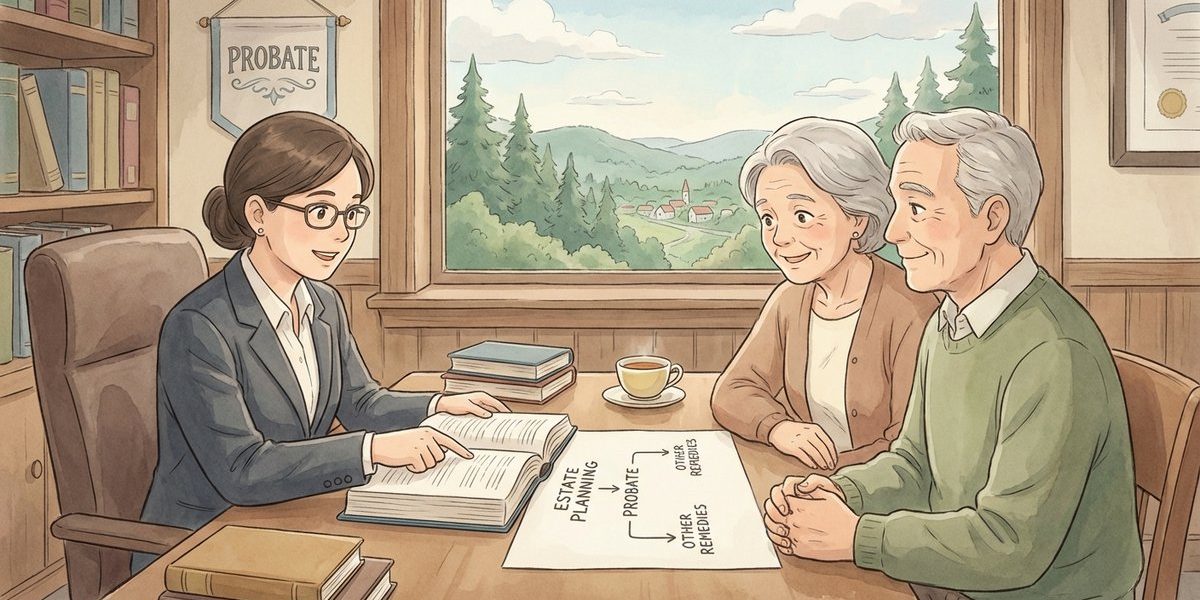
Do I need probate, estate planning, or something else for my situation? – North Carolina
Short Answer
In North Carolina, the right legal service depends on the trigger: planning for a living person (estate planning), handling property and debts after someone has died (probate/estate administration), or resolving shared ownership disputes (often a partition action). Many “elder law” situations start with estate planning documents like powers of attorney, but if someone has already died and assets were in that person’s name, the Clerk of Superior Court may require an estate to be opened. A consultation usually focuses on identifying the trigger, the assets involved, and whether the matter is administrative or likely to turn into litigation.
Understanding the Problem
In North Carolina probate practice, the decision point is what problem needs solving: can a living person put decision-making authority and a plan in place, or does a deceased person’s property need to be collected, paid out, and transferred to heirs? A related question is whether the issue is cooperative and paperwork-driven (typical estate planning or estate administration) or whether it involves a dispute that may require a lawsuit. This matters because different offices handle different tasks, and the timeline and documents change depending on whether the situation involves a living person, a decedent’s estate, or co-owners who cannot agree.
Apply the Law
North Carolina generally routes estate administration (often called “probate”) through the Clerk of Superior Court, who acts as the judge of probate for most estate matters. When an estate requires administration, a personal representative (executor or administrator) typically must qualify with the Clerk, take an oath, and sometimes post a bond; the Clerk then issues “letters” showing the representative’s authority. North Carolina also provides streamlined options for certain small estates, commonly handled by affidavit, which can avoid full administration in the right circumstances.
Key Requirements
- Identify the trigger: Is the goal to plan for incapacity/after death (estate planning), or to handle assets after a death (probate/estate administration), or to resolve shared ownership (partition)?
- Identify how assets are titled: Assets in a deceased person’s sole name often require a personal representative with authority from the Clerk; jointly owned assets or beneficiary-designated accounts may not.
- Identify whether the matter is administrative or disputed: Routine qualification, notices, inventories, and distributions are usually handled in estate administration; will contests and undue influence claims are different proceedings and may require litigation counsel.
What the Statutes Say
- N.C. Gen. Stat. Chapter 28A (Administration of Decedents’ Estates) – Governs most probate/estate administration steps, including qualification and the Clerk’s role.
- N.C. Gen. Stat. Chapter 32A (Powers of Attorney) – Covers key planning tools used in many “elder law” situations, including health care powers of attorney.
- N.C. Gen. Stat. § 46A-1 (Partition is a special proceeding) – Establishes that partition is its own court proceeding, separate from routine probate administration.
Analysis
Apply the Rule to the Facts: The facts describe an “elder law” type concern where the needed service is unclear, and the firm can handle estate planning, probate, and partition actions but may not take on litigation like a will contest or undue influence claim. Under North Carolina practice, the first step is to determine whether the situation involves a living person needing authority documents (often estate planning), a death requiring someone to qualify before the Clerk of Superior Court (probate/estate administration), or a property co-ownership problem that may require a partition special proceeding. If the situation is already disputed (for example, someone plans to challenge a will), that typically moves beyond routine administration and into litigation planning.
Process & Timing
- Who files: For probate/estate administration, the proposed personal representative (often a named executor or an eligible family member). Where: The Clerk of Superior Court in the county that is the proper venue (often where the decedent lived). What: An application to qualify, an oath, and (when required) a bond; the Clerk then issues letters showing authority. When: As soon as access to the decedent’s solely owned assets is needed or deadlines are approaching; local Clerk practices can affect timing.
- Estate planning track: The living person signs planning documents (commonly including financial and health care decision-making documents) so someone can act during incapacity without a guardianship. Timing depends on health and urgency, but earlier is usually easier because capacity and notarization/witnessing requirements matter.
- Partition track: A co-owner files a partition special proceeding in superior court when co-owners cannot agree on what to do with the property. The court process can take time and often requires clear title work first, which may overlap with probate steps if a deceased owner’s interest was never administered.
Exceptions & Pitfalls
- Small-estate options may avoid full administration: North Carolina has abbreviated procedures for certain small estates, but eligibility depends on the asset mix and other details; using the wrong shortcut can create delays later.
- Bond and local Clerk practices: Whether a bond is required can depend on the role, residency, and the will’s terms, and Clerks may have county-specific procedures and preferences for forms and filing steps.
- Disputes change the service needed: A will contest, undue influence claim, or damages claim is not the same as routine probate administration. Even when an estate is open, some disputes may need to be handled in a different forum or as a transferred matter, and a firm that focuses on administration may refer out litigation.
- Title problems can look like “probate” but be something else: If multiple people are on a deed, or a deceased owner’s interest was never cleaned up, the solution may involve probate, a title-curative process, and sometimes partition.
Conclusion
In North Carolina, “probate” usually means qualifying a personal representative with the Clerk of Superior Court to collect and distribute a deceased person’s assets, while “estate planning” focuses on documents and planning for a living person’s incapacity and eventual death. A separate service, partition, applies when co-owners cannot agree about real property. The next step is to identify whether there has been a death, how the key assets are titled, and whether the matter is cooperative or disputed, then file the appropriate qualification paperwork with the Clerk if estate administration is required.
Talk to a Probate Attorney
If an “elder law” situation involves uncertainty about whether the right path is estate planning, probate/estate administration, or a property solution like partition, an attorney can help identify the correct process and the timelines that matter. Call us today at [919-341-7055].
Disclaimer: This article provides general information about North Carolina law based on the single question stated above. It is not legal advice for your specific situation and does not create an attorney-client relationship. Laws, procedures, and local practice can change and may vary by county. If you have a deadline, act promptly and speak with a licensed North Carolina attorney.

